Goutam Ghose Reflects on Five Decades of Filmmaking and Industry Evolution
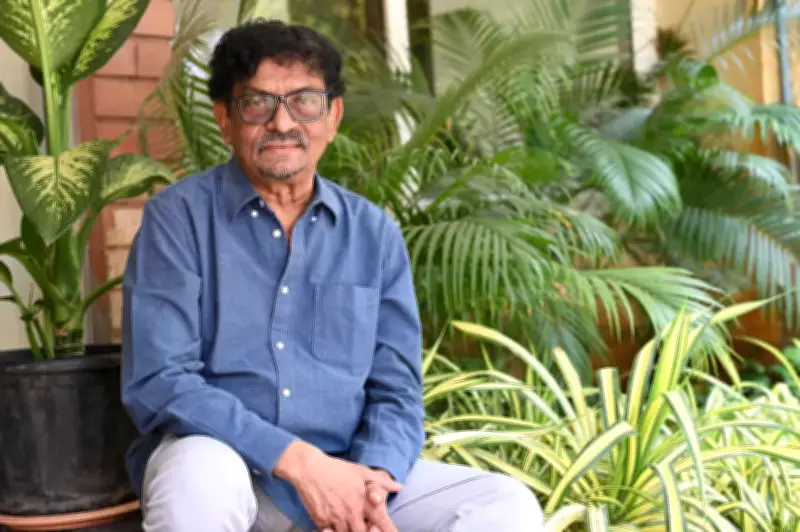
Renowned Bengali filmmaker Goutam Ghose recently visited Chennai for the restoration of his earlier cinematic works. In an exclusive conversation, he reflected on his illustrious five-decade-long journey, expressing relief that his films will not only survive but thrive in restored condition. "I'm ageing, but it's a big sigh of relief that my films will not just survive but will also remain in a restored condition," Ghose shared, highlighting the importance of preservation in the digital age.
South Indian Cinema Marketing: A Model for Bengali Producers
Ghose emphasized the robust marketing strategies of South Indian cinema, noting its global reach. "Cinema is still surviving in the South. You see a Tamil, Telugu, or Malayalam movie releasing worldwide. Their diaspora audience is waiting for those films," he observed. He pointed out examples like Malayalam films running in Dubai theatres and Rajinikanth movies having fans in Japan.
"The marketing in the South is very good. In Bengal film culture, footfall was so high at one point. After the '70s, it declined," Ghose stated. He urged young Bengali distributors and producers to learn from Southern counterparts on marketing films globally, especially given the vast Bengali population worldwide.

Technological Shifts and the Art of Attention in Filmmaking
Reflecting on technological evolution, Ghose recounted his experience from black-and-white films to digital formats. "My first film was in black and white; then came colour; then, it was analogue sound, and later, digital," he said. While he appreciates digital convenience, he still loves the softer palette of celluloid.
He noted that restoration awareness came earlier in Europe, with India gradually adopting these practices. "Many old, famous films are now being re-released, and it's good," he added. Ghose also highlighted how the absence of monitors in earlier days fostered greater unit attention. "Mistakes were there, but the attention level of the entire unit was much stronger back then because you couldn't play back and see what you had done."
AI's Inevitable Impact on Cinema and the Rise of Prompting
Ghose addressed the transformative role of artificial intelligence in filmmaking, drawing parallels to past technological shifts. "There will be changes in filmmaking due to AI. You have to accept it," he asserted. He compared AI's emergence to the introduction of VFX, which was initially overused but later integrated intelligently.
He warned that resistance to change could lead to job losses, as seen during the analogue-to-digital transition. "Many people may lose jobs, but prompting will become a key skill," Ghose predicted. He noted that AI prompting is already emerging as a profession, with proper prompts being essential for desired outputs.
Multilingual Filmmaking and Plans for a Telugu Project
Ghose revealed plans to make a film in Telugu, possibly set in Araku Valley, inspired by the cult status of his debut film Maa Bhoomi in the region. "I believe you can make a film in any language if you have a good interpreter," he said, advocating for multilingual cinema.
He praised the acting quality of new-generation Southern actors, noting their cinematic nuance over earlier theatrical styles. "Most of us understand at least two or three languages, and cinema should become multilingual," Ghose emphasized, encouraging cross-cultural collaborations.
Urban Identity and Architectural Heritage Concerns
Ghose expressed concern over the loss of urban architectural identity in Indian metro cities, including Chennai and his hometown. "Now, all the metro cities look alike. In India, each and every city has its own architectural characteristics," he lamented.
He contrasted this with European cities' consciousness about heritage preservation. "I feel we don't respect the character of a city's architecture or heritage. That is not in our culture. I don't know why," Ghose said, calling it a real pity and stressing the importance of maintaining unique urban identities.