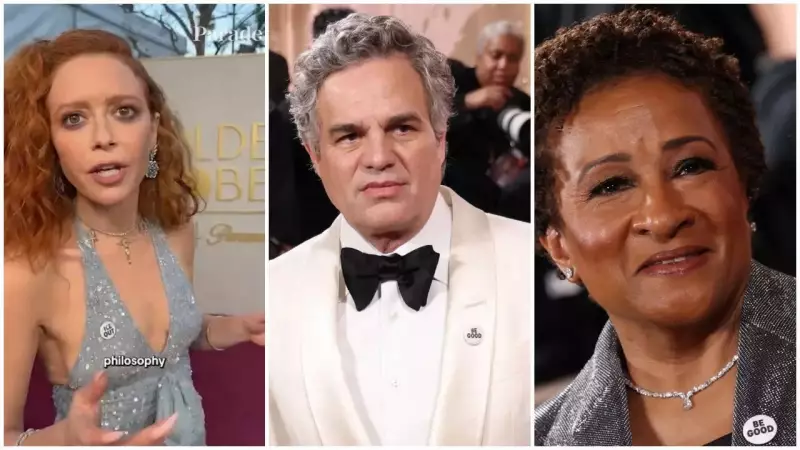
Hollywood's biggest awards night took a sharp political turn this year. Celebrities arrived at the Golden Globes wearing distinctive black-and-white pins. These accessories carried messages like "BE GOOD" and "ICE OUT." They served as a tribute to Renee Good, a woman shot and killed by an Immigration and Customs Enforcement officer in Minneapolis earlier in the week.
A Red Carpet Statement
The pins introduced a clear political angle to the ceremony. Last year's event was relatively quiet on this front. This time, stars made their stance visible from the moment they stepped onto the red carpet. Mark Ruffalo, Wanda Sykes, and Natasha Lyonne proudly displayed the pins outside the venue. Once inside the ballroom, Jean Smart and Ariana Grande joined them. Smart even wore the pin on her dress as she accepted the award for best performance by a female actor in a musical or comedy television series.
Protests and Political Backdrop
The shooting of Renee Good on Wednesday sparked immediate reactions. Protests erupted across the United States. People demanded accountability for her death. They also referenced a separate shooting incident in Portland where Border Patrol agents wounded two individuals. In Minneapolis, some demonstrations led to clashes with law enforcement. This occurred as ICE conducted what officials called its largest immigration enforcement operation to date.

"We need every part of civil society to speak up," said Nelini Stamp of Working Families Power. Her organization helped coordinate the anti-ICE pin campaign. The idea originated from a late-night text exchange earlier in the week between Stamp and Jess Morales Rocketto. Rocketto leads a Latino advocacy group named Maremoto.
Administration's Defense and Another Case
The Trump administration firmly defended the ICE officer involved in Good's shooting. Officials stated the officer acted in self-defense. They claimed he believed Good would hit him with her car. This incident was not isolated. Just a week before, an off-duty ICE officer fatally shot 43-year-old Keith Porter in Los Angeles. Porter's death also triggered local protests calling for the officer's arrest.
A Conspicuous Silence on Iran
While the anti-ICE message dominated, another major international issue received no mention. Thousands of people are currently protesting against the government in Iran. The Golden Globes telecast did not address this situation. This silence seemed strange to many observers. Notably, Iranian director Jafar Panahi attended the ceremony. His film "It Was Just An Accident," a thriller about victims of Iranian political torture, was nominated for best film. Yet, no speaker referenced the protests in Iran where reports suggest about 2,000 people have been killed.
Analyzing the Omission
Why did Hollywood ignore Iran? Analysts suggest two primary reasons. First, some call it a symptom of "Trump Derangement Syndrome" still prevalent in Hollywood. Reports indicate some Iranians view the former U.S. president as a potential hope for liberation. For many celebrities, being seen on the same side as Donald Trump remains problematic.
The second reason points to the nature of celebrity activism itself. It often relies on a simple narrative of powerful versus powerless. The complex situation in Iran, with its history of Western involvement, does not fit this clear-cut paradigm. The regime can draw on narratives of Western oppression, which complicates the typical activist stance.
Contrast with Other Issues
The report contrasts this with reactions to Israel and Palestine. That conflict appears simpler to many activists. Israel is a strong U.S. ally with substantial resources. Palestinians are often portrayed as helpless and destitute. Supporting the Palestinian cause, while ignoring nuances, can feel emotionally satisfying and carries little social cost for celebrities.
Iran presents a more complicated picture. Even when Hollywood films criticize the Iranian regime, they often include context about Western actions. The 2012 film Argo, which showed the regime at its brutal worst, included a prologue about the 1953 CIA-backed coup. It seemed the producers felt slightly embarrassed to tackle the subject without that explanation.

Apart from a few figures like author J.K. Rowling and singer Pink, most celebrities chose to ignore the Iran protests. The Golden Globes red carpet became a platform for one political message while conspicuously avoiding another, highlighting the selective nature of fame-driven activism.