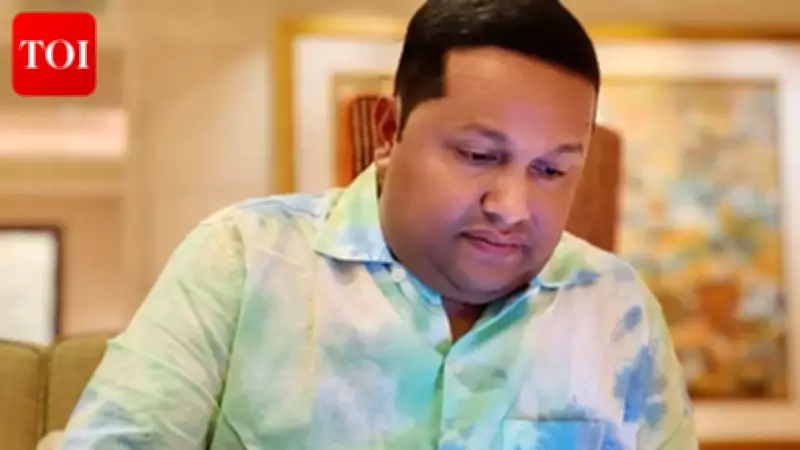
Kerala Film Producer Joby George Sentenced to Four Years in Prison for Visa Fraud
In a significant legal development, film producer Joby George has been handed a prison sentence after being convicted in a high-profile visa fraud case. The order was issued by the Prevention of Money Laundering Act (PMLA) Court in Kochi, marking a decisive moment in a long-standing legal battle.
Court Imposes Four-Year Sentence and Heavy Fine
According to reports from Asianet News, the court sentenced Joby George to a total of four years of rigorous imprisonment. Additionally, a substantial fine of Rs 66.5 lakh was imposed. The punishment stems from two separate cases where the producer allegedly deceived individuals by promising opportunities in the United Kingdom.
The victims in these cases were residents of Muvattupuzha and Mulanthuruthy in Kerala. The court order explicitly states that if Joby George fails to pay the imposed fine, he will have to serve an additional one year in prison, underscoring the severity of the financial penalty.

First Case: Complaint by Rajesh Mathew from Muvattupuzha
One of the cases was filed by Rajesh Mathew, a resident of Muvattupuzha, with the incident dating back to 2011. According to the complaint, Joby George convinced Rajesh that he could arrange a job visa in the United Kingdom and also promised to assist him in starting a business there.
Trusting these assurances, Rajesh Mathew paid Rs 50 lakh in two instalments. However, the visa was never arranged, and the money was not returned. After waiting for an extended period, Rajesh approached the police and filed a formal complaint.
During the trial, the court meticulously examined the evidence and concluded that the cheating charges against Joby George were proved beyond doubt. In a move to provide restitution, the court directed that Rs 50 lakh from the fine amount should be given to Rajesh Mathew as compensation.
Second Case: Complaint by Mulanthuruthy Couple
Another complaint was filed by Biju Varghese and his wife Darly Biju from Mulanthuruthy. According to their statement, Joby George had promised them a business partnership in the UK and a student visa. Based on these assurances, the couple travelled to the United Kingdom.
However, they later realised they had been cheated. When they demanded their money back, they alleged that Joby George threatened them. In this case, the court sentenced him to two years of imprisonment and ordered him to pay a fine of Rs 16.52 lakh.
Combining the punishments from both cases, the court imposed a total prison term of four years and fines amounting to Rs 66.5 lakh.
Case History and Court Observations
The case was originally registered by the Muvattupuzha Police in August 2012 and was later transferred to the special court for further proceedings. During the investigation, Joby George’s wife was also named as an accused. However, the court acquitted her after finding insufficient evidence against her.
After thoroughly examining witness testimonies and documentary evidence, the court concluded that the cheating charges against the producer were clearly established, leading to the conviction and sentencing.
Recent Statement on Film Distribution Loss
In unrelated recent news, Joby George had spoken about the financial performance of the film Valathuvashathe Kallan, directed by B. Unnikrishnan and starring Biju Menon. The discussion emerged after allegations that the actor had skipped promotional activities for the film.
During an interview, Joby George admitted that the project turned out to be a loss for his banner, Goodwill Entertainments. As reported by Asianet News, he clarified that the banner had only handled distribution and not production. He said, “Valathuvashathe Kallan is Goodwill’s first loss-making film. But it’s not a film owned by Goodwill Entertainments. We only distributed it.”
Explaining the reason for supporting the project, he added, “Goodwill had stepped in to help someone. I’m someone who believes that we must remember the kindness shown to us in life. We must show gratitude for the food we eat.” The film reportedly reached theatres with a total expenditure of around Rs 16 crore.

Disclaimer: This report is a journalistic account of a recent court development. While every effort has been made to ensure accuracy based on available information, this is not a substitute for the official court order or legal advice. The final ruling, which will be published by the court, is the definitive source of information. This article serves as a report on the current status of the case and should not be considered legal guidance.