Divya Dutta's Pivotal Lesson from Amitabh Bachchan on Distinguishing Reel from Real
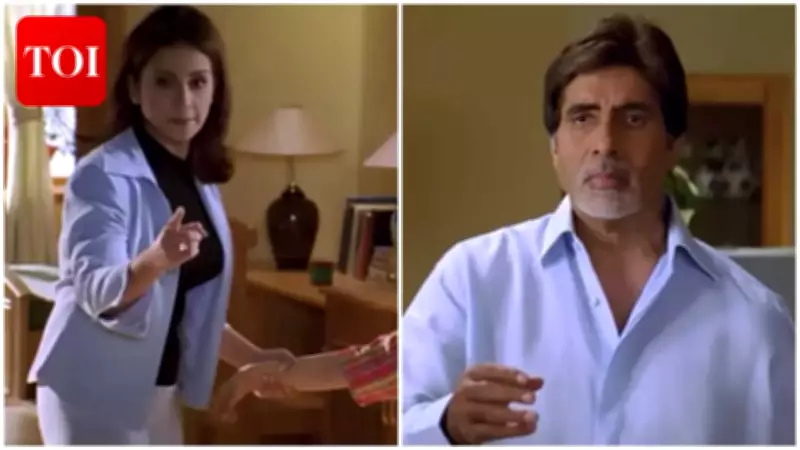
For acclaimed actress Divya Dutta, an early career collaboration with legendary actor Amitabh Bachchan transformed into an enduring life lesson that has profoundly shaped her professional journey. Reflecting on her formative experience during the filming of the iconic family drama Baghban, Dutta candidly revealed how she initially struggled to separate her on-screen persona from her real-life identity.
The Struggle of a Young Actress
"Mr. Bachchan played a pivotal role early on in my career. I didn't know how to distinguish between reel and real," Divya Dutta confessed during a recent intimate conversation on After Hours with All About Eve. The actress, who was merely 17-18 years old during the production of Baghban, found herself emotionally entangled with her character's negative traits.
Dutta elaborated on this challenging phase, stating, "I love him, who doesn't, but in Baghban, I played a very nasty woman, and I was a child myself at that time." This psychological overlap between actress and character created an unexpected internal conflict that would ultimately require intervention from the industry veteran himself.

The Gradual Transformation On Set
Opening up about how the demanding role began subtly influencing her off-screen behavior, Dutta shared revealing details about her evolving interactions with Bachchan. "Earlier, during the initial days, I was my exuberant self and I would wish him good morning. Happy that I am with Mr. Bachchan... It was a dream come true," she reminisced with evident nostalgia.
However, the actress noticed a troubling shift as filming progressed. "But gradually the nasty bit of the role started getting onto me and my good mornings just dimmed away," Dutta admitted, describing how her character's negative attributes began seeping into her personal demeanor on set. This behavioral change did not escape the observant eyes of her senior co-star.
Amitabh Bachchan's Gentle Intervention
It was Amitabh Bachchan who first recognized the young actress's struggle and compassionately stepped in to provide guidance. Recalling this transformative moment, Divya Dutta revealed, "He called me and told me that I am not being nice to him in the film. He came to my defence."
When Dutta attempted to explain herself by saying, "No sir, I'm just saying my lines," Bachchan responded with profound wisdom through his silence. "He didn't say anything, he was quiet, but what he wanted to say was, 'Exactly, you are saying your lines, you are not saying it to me, so don't feel so bad about it,'" Dutta interpreted, highlighting the veteran actor's subtle yet powerful mentorship approach.
The actress further described how Bachchan eased her discomfort with characteristic grace. "And then he pampered me with food, and I was so normal and happy," she shared, illustrating how the megastar combined professional guidance with personal kindness to help her navigate this challenging phase.
The Lasting Impact of a Cinematic Lesson
This pivotal interaction left an indelible mark on the young actress's career and personal development. "So a young girl of 17-18 would never forget that. After that I got to know how to distinguish between real and reel," Dutta emphasized, acknowledging how this experience fundamentally shaped her approach to acting and character interpretation throughout her subsequent career.
Baghban, which featured an ensemble cast including Hema Malini alongside Bachchan and Dutta, remains one of the most memorable films in the actress's extensive filmography. Beyond its cinematic achievements, the production served as an unexpected classroom where Dutta learned a crucial professional lesson that extended far beyond the screen's boundaries.

This revelation offers fascinating insight into the mentorship dynamics within the Indian film industry and highlights how senior artists like Amitabh Bachchan often play crucial roles in nurturing the next generation of talent. Divya Dutta's experience underscores the psychological complexities actors face when embodying challenging characters and the importance of maintaining healthy boundaries between performance and personal identity.