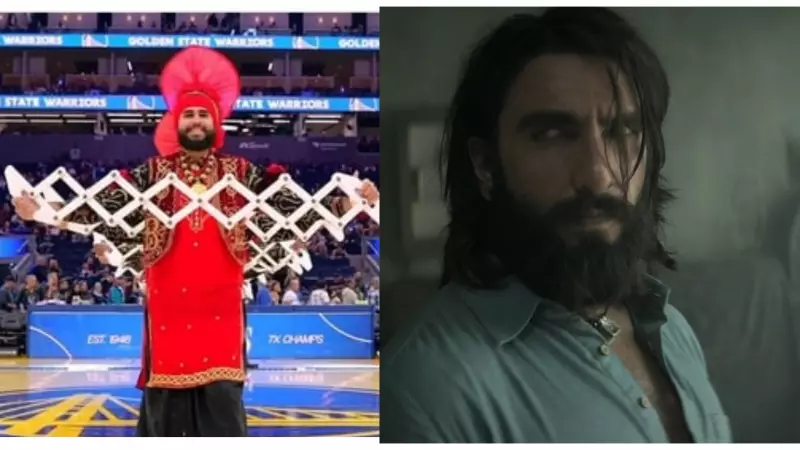
On January 8, at San Francisco's Chase Centre, something extraordinary happened during the halftime of an NBA game. What is typically a disposable spectacle between two halves of serious basketball became the main event itself. As the lights shifted and dancers took to the hardwood, the arena was filled with the thunderous beats of 'Dhurandhar', the title track from the upcoming Bollywood film starring Ranveer Singh and directed by Aditya Dhar.
The Viral NBA Moment That Crossed Borders
Thousands of American fans responded instinctively, leaning into the Punjabi rhythm with an unselfconscious enthusiasm usually reserved for buzzer-beaters. The performance went viral within minutes. Clips spread across social media, garnering applause from corners of the internet that often hesitate when confronted with Indian cultural expressions presented without footnotes or cultural framing. There were no subtitles, no attempts to soften the moment for unfamiliar sensibilities. The music played, bodies moved, and the NBA crowd followed, proving rhythm can succeed where lengthy explanations fail.
The irony of the moment sharpened once the soundtrack was identified. Back in India, Dhurandhar has become one of the most hotly contested films in recent cinema. Critics have labeled it nationalist propaganda, accusing it of abandoning moral ambiguity for ideological certainty. Yet, in that American arena, the song was embraced by an audience with no stake in India's culture wars and no patience for decoding political subtext. They arrived ready to feel something, and the song delivered.

The Contradiction at Dhurandhar's Core
This contradiction sits at the heart of the film's current moment. Domestically, it is dissected as political messaging. Internationally, its music moves freely, untethered from the baggage critics insist it must carry. The track's opening line—"Ladies and gentlemen, you are not ready for this"—now reads less like bravado and more like prophecy.
The pattern of outrage is familiar. A section of critics, whose cultural dominance once passed as neutral taste, remains baffled when audiences prefer visceral storytelling over curated moral instruction. For decades, a certain grammar in Hindi cinema, often centered on reconciliation themes, held sway. Dhurandhar reflects an India shaped by lived memory—terror attacks, policy decisions, and geopolitical reality—rather than imagined harmony. Its inclusion of actual audio from the 26/11 Mumbai attacks collapses the distance between reel and real, making neutrality an impossible position.
Propaganda or Powerful Storytelling? The Art Debate
Cinema has always served national narratives. From Leni Riefenstahl's work for the Third Reich to Hollywood's glorification of military might, every powerful country tells stories that flatter its self-image. The question often is whose propaganda has become invisible through repetition.
Dhurandhar unsettles critics because it refuses to be aesthetically dismissible. Unlike earlier films in the genre that could be waved away as crude, this one is crafted with controlled performances, grounded action, and a surgically precise background score. Its tone echoes the revenge fantasies of Quentin Tarantino, where historical wrongs are answered through cinematic catharsis. The accusation of propaganda begins to fray here, as any film can be declared ideological with sufficient motivation. Films like Rang De Basanti or Chak De! India carried their own potent messages.
What truly irritates some critics may be simpler: the film is well-made. The monopoly of a single worldview being synonymous with "good cinema" has eroded. When one grows accustomed to ideological privilege, pluralism can feel like oppression.
The NBA halftime show brought the story full circle. While political rhetoric in some American circles hardens against India, popular culture continues to absorb Indian rhythm without hesitation. The NBA, understanding spectacle and collective emotion, provided a perfect stage. Bhangra, with its joy and stamina forged in Punjabi fields, fit naturally.

When Dhurandhar echoed through the Chase Centre, it cut across policy and prejudice with the efficiency of compelling art. The crowd moved, the internet followed, and critics debated. The film that provoked so much contention at home found a pure, unburdened reception abroad, not because Americans understood its politics, but because they did not need to. True art travels differently, ignoring borders and speaking directly to the body. As the dancers left the court and the game resumed, the rhythm lingered, carrying a quiet confirmation: perhaps they truly were not ready for this.