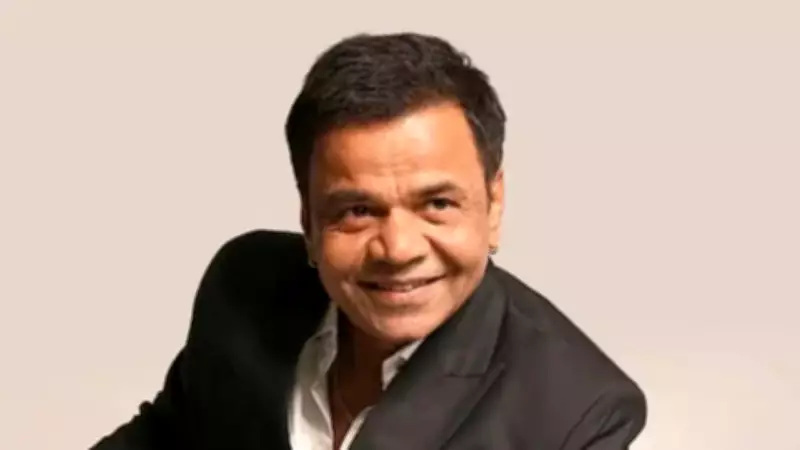
Delhi High Court Reserves Judgment in Rajpal Yadav's ₹9 Crore Cheque Bounce Case
Actor Rajpal Yadav finds himself at the center of a significant legal controversy, with the Delhi High Court reserving its verdict in a long-standing ₹9 crore cheque bounce case. The court's decision came on April 2 after multiple attempts to broker a settlement between the parties failed, despite sustained judicial intervention.
Court Expresses Dissatisfaction with Inconsistent Stance
Justice Swarana Kanta Sharma, who presided over the hearing, expressed clear dissatisfaction with the actor's inconsistent position regarding repayment of the substantial dues. "I am not getting my answers. The undertaking said something else, and now you are saying something else," the judge remarked during the proceedings, highlighting the conflicting statements made by Yadav's legal team.
Complainant's Arguments and Legal Position
Advocate Avneet Singh Sikka, representing the complainant Murali Projects Pvt Ltd, presented several compelling arguments:

- The actor had already accepted his conviction and could not now avoid financial liability
- A revision petition filed in 2024 came with an unexplained delay of 1894 days
- The petition lacked sufficient justification for condonation of this substantial delay
- Completing a prison sentence does not eliminate financial responsibility under the law
Sikka emphasized that despite repeated assurances from Yadav, the dues remained unpaid, leaving the complainant with no alternative but to proceed under Section 138 of the Negotiable Instruments Act.
Failed Settlement Attempts and Emotional Courtroom Exchange
The court made several concerted efforts to facilitate a settlement between the conflicting parties. At one stage, the complainant agreed to accept ₹6 crore as a full and final settlement of the nearly ₹9 crore outstanding amount.
However, Rajpal Yadav rejected this offer during an emotional courtroom exchange. Appearing virtually before the court, the actor stated that he had already faced significant financial hardship, having sold five flats and paid considerable amounts toward the debt. "I am not emotional... send me to jail five more times," Yadav told the court in a dramatic moment.
Judicial Proposal and Final Impasse
In a further attempt to resolve the deadlock, Justice Sharma suggested a structured payment plan of ₹3 crore within a stipulated timeline. The judge clarified that this was merely a judicial proposal rather than a binding agreement. Even this carefully considered suggestion failed to yield consensus between the parties.
The court also addressed the conduct of the proceedings, cautioning, "Never think the judge weak if the judge is nice to you," while noting that valuable judicial time was being consumed by the protracted dispute.
Case Background and Legal History
The origins of this legal battle trace back to 2010 when Rajpal Yadav borrowed ₹5 crore from Delhi-based Murali Projects Pvt Ltd to finance his directorial venture Ata Pata Laapata (2012). The film's poor box office performance resulted in substantial financial losses, eventually leading to the current dispute.
The legal timeline includes:
- 2018: A magisterial court convicted the actor under the Negotiable Instruments Act for cheque dishonor, sentencing him to six months imprisonment
- 2019: A sessions court upheld this ruling
- Over time, the outstanding amount escalated to nearly ₹9 crore due to accumulated interest and penalties
Recent Developments and Bail Conditions
Rajpal Yadav was granted interim bail and released from Tihar Jail on February 16. The Delhi High Court subsequently extended his interim bail until March 18, with specific conditions set by Justice Swarana Kanta Sharma:
- Submission of a ₹1 lakh bail bond
- Provision of one surety
- Earlier direction to deposit ₹1.5 crore by 3 PM to secure interim relief
Bail was granted after the complainant's counsel confirmed that the ₹1.5 crore amount had been credited to the company's bank account against the bounced cheque.

With no agreement reached and fundamental differences persisting between the parties, the Delhi High Court has now reserved its judgment in this high-profile case that has spanned over a decade and involved multiple legal proceedings, emotional courtroom exchanges, and failed settlement attempts.