Congress MP Demands Ban on 'Lawrence of Punjab' Docuseries Over Bhagat Singh Depiction
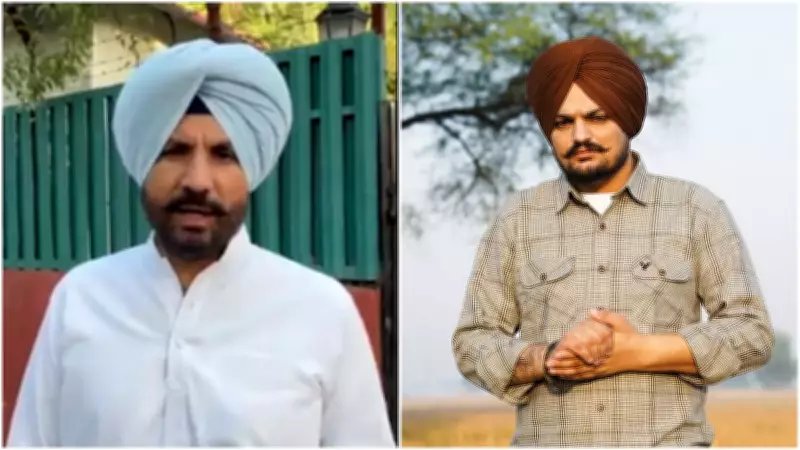
In a significant development that has ignited a political and cultural firestorm, Congress Member of Parliament Gurjeet Singh Aujla has formally called for a ban on the docuseries titled 'Lawrence of Punjab.' The controversy centers on allegations that the series inaccurately portrays the revered freedom fighter Bhagat Singh, depicting him in a manner that equates him with gangsterism, a claim that has drawn sharp criticism from political figures and cultural commentators across Punjab.
Allegations of Misrepresentation and Historical Distortion
The docuseries, which explores various aspects of Punjab's history and society, has come under intense scrutiny for its treatment of Bhagat Singh. According to MP Aujla and other critics, the production misrepresents Singh's legacy by framing him in a context that suggests criminal activities, rather than honoring his role as a nationalist icon who sacrificed his life for India's independence. This portrayal, they argue, not only distorts historical facts but also insults the collective memory and identity of the Punjabi people, for whom Bhagat Singh is a symbol of pride and resistance.
In his appeal for a ban, Aujla emphasized that Bhagat Singh is "Punjab's identity, not a gangster," highlighting the deep emotional and cultural connection that the state holds with the freedom fighter. The MP's statement underscores a broader concern about the potential for media to rewrite history in ways that could undermine national heroes and erode public respect for their contributions.

Political and Public Reactions to the Controversy
The call for a ban has sparked a heated debate, with reactions pouring in from various quarters. Supporters of the ban argue that such depictions are irresponsible and could mislead younger generations about India's freedom struggle. They contend that Bhagat Singh's legacy should be preserved with accuracy and reverence, free from sensationalism or fictionalized accounts that blur the lines between fact and fiction.
On the other hand, some voices in the entertainment and academic communities have cautioned against outright censorship, suggesting that while historical accuracy is crucial, creative expressions should be allowed to explore complex narratives. However, they acknowledge the need for sensitivity when dealing with figures of national importance, especially in a region like Punjab, where historical memory is deeply intertwined with cultural identity.
The controversy has also drawn attention to the role of documentary filmmaking in shaping public perception. As docuseries and similar formats gain popularity, questions arise about the ethical responsibilities of creators in handling sensitive historical topics. This incident serves as a reminder of the fine balance between artistic freedom and historical integrity, particularly in a diverse and politically charged landscape like India.
Broader Implications for Media and Cultural Representation
Beyond the immediate uproar, the 'Lawrence of Punjab' docuseries issue raises larger questions about how historical figures are represented in modern media. In an era where content is rapidly consumed and shared, the potential for misinterpretation or oversimplification of complex legacies is high. This case highlights the need for rigorous fact-checking and consultation with historians or cultural experts when producing works that touch on significant national events or personalities.
Moreover, the demand for a ban reflects ongoing tensions between political authority and creative expression in India. As similar controversies have emerged in the past over films, books, and other media, this episode adds to a growing discourse on censorship, freedom of speech, and the protection of cultural heritage. It underscores the challenges faced by content creators in navigating these sensitive areas while engaging audiences.

In conclusion, the call to ban 'Lawrence of Punjab' over its portrayal of Bhagat Singh has ignited a vital conversation about history, identity, and media responsibility. As authorities consider the MP's request, the outcome could set a precedent for how such issues are handled in the future, impacting not only this docuseries but also the broader landscape of Indian entertainment and historical storytelling.