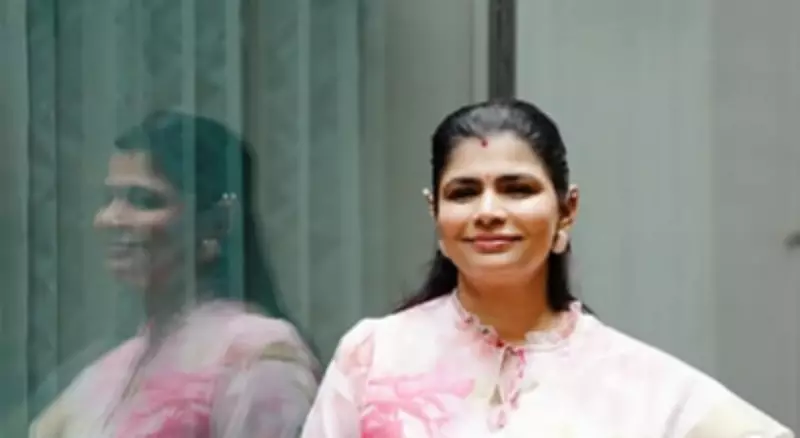
Chinmayi Sripada Condemns Jnanpith Award for #MeToo Accused Vairamuthu as 'Systemic Signal'
In a powerful and searing interview, acclaimed singer and #MeToo activist Chinmayi Sripada has sharply criticized the decision to award the prestigious Jnanpith Award to Tamil writer and lyricist Vairamuthu, who faces at least 17 public allegations of sexual harassment and misconduct. Sripada labeled the move a 'systemic signal' that devalues the safety and testimony of women in India.
Award for Accused Perpetrator Sends Dangerous Message
'When the nation’s highest literary honor is bestowed on an individual facing multiple allegations, what does it say about the value the state places on women?' Sripada questioned. She expressed deep alarm at a societal trend where not only are victims of sexual abuse becoming younger, but so are the perpetrators. 'This systemic change does not happen overnight. It happens because children continue to see that adults will get away with something like this,' she stated, highlighting a culture that often silences women.
Sripada emphasized that the lack of repercussions for alleged offenders, coupled with political parties and institutions continuing to platform them, directly emboldens more men. 'Two-three people can talk about it on social media, and on the third day, everything is back to business. There is no repercussion,' she lamented, pointing to a cycle of impunity.

Calling Out Cinema Legends Rajinikanth and Kamal Haasan
The singer was particularly critical of Tamil cinema legends Rajinikanth and Kamal Haasan for their public congratulatory posts on Vairamuthu receiving the award. 'I asked them this question because as people who have come from cinema and segued into politics, you have not attempted to set any safeguards in place in your own industry,' Sripada explained.
She noted that both figures, as senior pillars of Tamil cinema with political ambitions, have a responsibility to enact change. 'And you come out and speak about safety for women. How am I supposed to take you seriously?' she challenged, addressing the disconnect between their public statements and actions. Sripada clarified that her critique stems from their influential positions, not merely their fame, and she faced backlash from fans who missed this nuance.
The False Luxury of 'Separating Art from the Artist'
Addressing arguments that a literary award should only judge the work, Sripada dismissed this as a 'luxury' that ignores the power and platform such honors grant. She pointed out that the Tamil literary community itself has protested, with writers like B Jeyamohan questioning the award's quality control.
'They keep saying to separate the art from the artist, but why didn't they do it in my case?' she asked, referencing the professional blacklisting she faced after speaking out. 'The argument was, 'Oh, she has accused someone in power, so let's punish her.' How does the rule suddenly become very different for the man accused of the crime?' Sripada highlighted the double standard where survivors must prove their worth and validity, while accused men face no such scrutiny.
Systemic Failures in Film Industries and Legal Battles
Sripada contrasted the situation with the Hema Committee Report in Kerala's film industry, which investigated sexual harassment but saw many cases closed due to alleged lack of cooperation. 'I think the Tamil film industry will fall over backwards to make sure something like the Hema Committee Report never ever happens here,' she asserted, citing internal resistance.
Regarding her own protracted legal struggle with the South Indian Cine and Television Artistes and Dubbing Artistes Union, Sripada revealed it has been a war of attrition. 'I don't think any industry in the world literally sent out a ban for a person, for an accuser to stop working, like our film industry,' she said, expressing disappointment in a state that prides itself on progressivism. Thankfully, her lawyers have supported her pro bono, providing crucial stamina for the fight.

Evolving Tactics of Silencing: From Blacklists to Deepfakes
The nature of silencing women has evolved, Sripada noted, from professional blacklisting to technological character assassination via deepfakes and online harassment. 'This is definitely not how we were as a culture,' she reflected, describing an orchestrated machinery of abuse aimed at deterring survivors from speaking up. 'It is just the system and society churning and bending over backwards to make sure that survivors don't speak up. That is the actual end goal.'
Bitter-Sweet Professional Vindication and Hopes for the Future
Despite industry resistance, Sripada's recent performance of the song 'Muththa Mazhai' went viral, which she found surprising as it showcased no new talent. 'The Gen Zs got up and said, 'Chinmayi akka, our support is with you.'' She described this as heartwarming, with many women viewing it as a personal win. 'Such public win is required for other women to get support,' she affirmed.
As a mother facing threats for her activism, Sripada is determined to teach her children that speaking truth to power 'always comes at a price.' She hopes for a safer future but is realistic: 'I know for sure that sexual abuse and sexual harassment are not going to stop. All I don’t want is retraumatisation by society and the system on the survivors.'
Her message remains clear: systemic change is urgently needed to protect women and hold perpetrators accountable, starting with institutions like the Jnanpith Award and influential figures in cinema and politics.