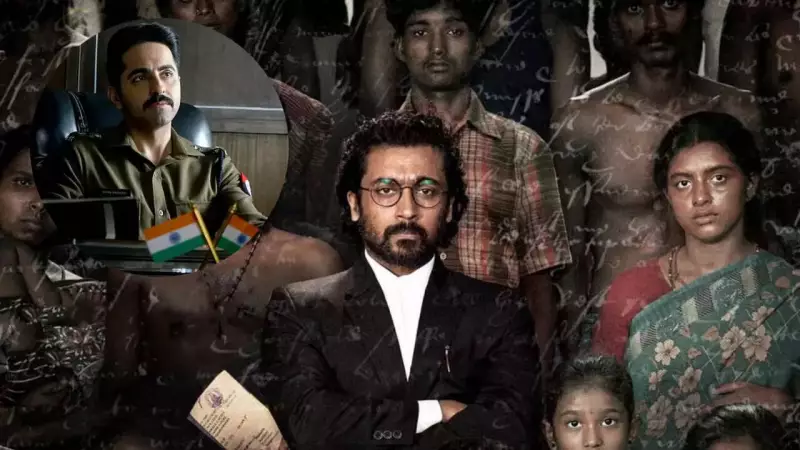
The Constitution of India stands as far more than a historical document preserved in archives. It represents a vibrant, living framework that pulses through the very essence of justice, equality, liberty, and fraternity promised to every citizen. These foundational principles are not merely abstract concepts inscribed on parchment; they are intended to actively shape and guide our collective existence. Indian cinema has remarkably captured this spirit, sometimes presenting these grand ideals with bold clarity, and at other times weaving them subtly into narrative threads. Here are five unforgettable scenes that do more than reference the Constitution—they make you viscerally experience what it truly signifies.
Jai Bhim: The Raw Power of Equality Before Law
Jai Bhim delivers an unflinching portrayal of systemic injustice. The film follows Chandru, portrayed by Suriya, a determined lawyer who challenges a legal apparatus that has historically marginalized tribal communities. Based on true events, one particularly gripping courtroom sequence sees Chandru dismantling police fabrications with relentless precision. His refusal to yield transforms the constitutional guarantee of "equality before the law" from a distant ideal into a tangible, urgent reality. The scene is a potent mix of pain, resilience, and hope, showcasing the Constitution as an active shield for those too long neglected by society.
Article 15: A Silent Pledge Against Discrimination
As the title directly indicates, Article 15 draws from the constitutional provision prohibiting discrimination. In a profoundly understated moment, police officer Ayan Ranjan, played by Ayushmann Khurrana, witnesses the horrors of caste-based violence. His response is not a grand declaration but a quiet, resolute act: he pins a copy of Article 15 to his office wall. This simple gesture carries immense weight, embodying the personal choice to either uphold these principles or ignore them. The scene masterfully illustrates the corrosive impact of prejudice and underscores the law's vital role as a corrective and healing force in a fractured society.

Newton: Democracy in the Most Unlikely Places
The film Newton presents a compelling narrative about electoral integrity. Newton, embodied by Rajkummar Rao, is a government clerk tasked with conducting elections in a conflict-ridden region. Despite immense pressure and apathy, he adamantly refuses to compromise on procedure. A standout scene features him establishing a polling booth deep in the forest, passionately encouraging villagers to exercise their franchise amidst palpable danger. Here, Article 326 and the fundamental right to vote transcend legal text. They become a gritty, tangible act of participation. The film, much like its protagonist, serves as a powerful reminder that democracy is not confined to urban centers or peaceful areas—every single vote, cast under any circumstance, holds profound significance.
Mulk: Secularism and Liberty Under Siege
Mulk thrusts viewers into a tense courtroom drama where a Muslim family is unjustly branded as anti-national. While the film does not explicitly quote the Constitution, its spirit permeates every frame. In a climactic moment, the character portrayed by Taapsee Pannu delivers a fiery monologue championing secularism and equality. Her defiance against bigotry gives visceral meaning to Articles 14 and 21—the rights to equality and to life and personal liberty. The scene powerfully argues that true justice must be blind to identity, making constitutional safeguards feel like essential lifelines rather than dry legal provisions.

Swades: The Quiet Revolution of Civic Duty
Swades offers a gentler, yet equally potent, interpretation of constitutional values. Eschewing legal jargon, the film depicts the Preamble's ideals in action through community development. Mohan, played by Shah Rukh Khan, addresses a village gathering, advocating for basic amenities like schools, electricity, and clean water. His approach is not one of grandiosity but of earnest persuasion. This narrative celebrates the power of ordinary citizens taking initiative and supporting one another—a direct reflection of the constitutional vision for a participatory democracy. The film suggests that meaningful, sustainable change often begins with small, collective steps at the grassroots level.
These five films demonstrate Indian cinema's unique ability to translate the Constitution's grand principles into relatable, human stories. They move beyond theoretical discussion, creating emotional connections that make concepts like justice, equality, and democratic participation feel immediate and personal. Through powerful storytelling, they remind audiences that the Constitution is not a relic but a dynamic guide for everyday life and national progress.