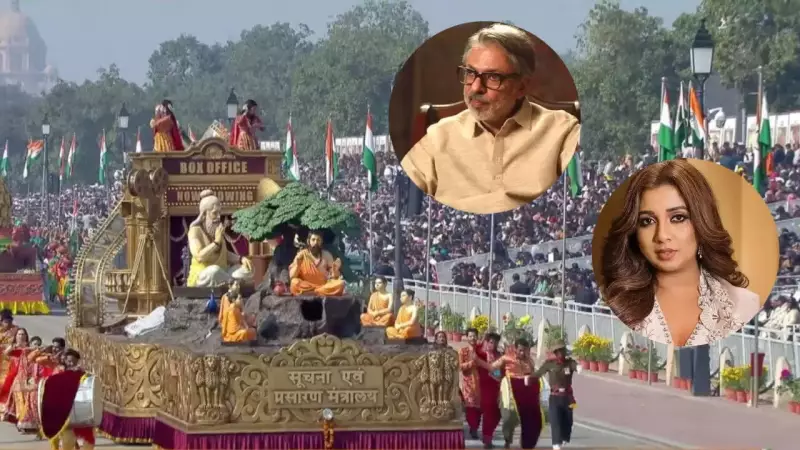
For enthusiasts of Indian cinema and cultural heritage, this year's Republic Day celebration offered a particularly distinctive and memorable experience. The 77th Republic Day Parade witnessed an unprecedented collaboration between the Ministry of Information and Broadcasting and acclaimed filmmaker Sanjay Leela Bhansali, resulting in a special tableau titled 'Bharat Gatha'. This marked a significant moment for Indian cinema, securing prominent attention during the nation's most prestigious national event.
Historic First for Indian Cinema
This occasion represents the inaugural instance where an Indian film director has been entrusted with designing a Republic Day tableau. Bhansali assumed creative leadership, and adding to the grandeur, the celebrated playback singer Shreya Ghoshal recorded an exclusive new composition specifically for this presentation. Her resonant voice, echoing across Kartavya Path, infused the entire display with an enchanting and magical quality.
Understanding 'Bharat Gatha'
'Bharat Gatha' delves into the historical evolution of storytelling within India. Its intricate design, musical accompaniment, and artistic elements each symbolized a distinct facet of this developmental journey. The float commenced with a visual representation of primordial creation sounds, embodied by the sacred syllable Aum, and progressively advanced through depictions of ancient wisdom and knowledge. The narrative culminated in an era symbolized by vintage movie cameras and cinematic film, creating a seamless historical arc.

The tableau was both culturally profound and historically significant. For the first time, Indian cinema was positioned alongside the nation's other venerable symbols—not merely as a form of entertainment but as an integral component of India's enduring storytelling tradition. The underlying message was unequivocal: cinema in India transcends mere filmmaking. It represents the contemporary continuation of a narrative spanning millennia, evolving from ancient myths and folk tales through traditional theater and music to modern screens.
Sanjay Leela Bhansali's Artistic Vision
Bhansali's renowned filmography, including masterpieces like 'Devdas', 'Bajirao Mastani', and 'Padmaavat', attests to his exceptional talent for crafting large-scale, visually spectacular productions. The 'Bharat Gatha' tableau exemplified this same artistic prowess. Bhansali skillfully merged dramatic elements with his distinctive cinematic vision, portraying a harmonious union of culture and cinema through a uniquely traditional yet innovative approach.
Bhansali has expressed profound appreciation for the opportunity to represent Indian cinema and the broader artistic community through this platform. According to the director, this tableau symbolizes both India's rich legacy of storytelling and the potential of film to perpetuate these narratives into the future, ensuring their relevance for generations to come.
The Musical Touch: Shreya Ghoshal's Contribution
Complementing Bhansali's visual artistry, the acclaimed vocalist Shreya Ghoshal contributed her own distinctive magic to the project. Her emotive and profound voice served as the unifying thread, seamlessly integrating all elements of the presentation.
For those unfamiliar with their association, Ghoshal and Bhansali share a longstanding professional relationship. Bhansali provided Ghoshal her breakthrough opportunity in Bollywood with the film 'Devdas', and since that pivotal moment, they have collaboratively created numerous unforgettable milestones in Indian music and cinema. Her specially composed song for 'Bharat Gatha' added a rich, emotional dimension to the tableau, effectively bridging traditional heritage with contemporary expression.