Berlinale Director Addresses Global Fractures and Cinema's Enduring Role at Festival Closing
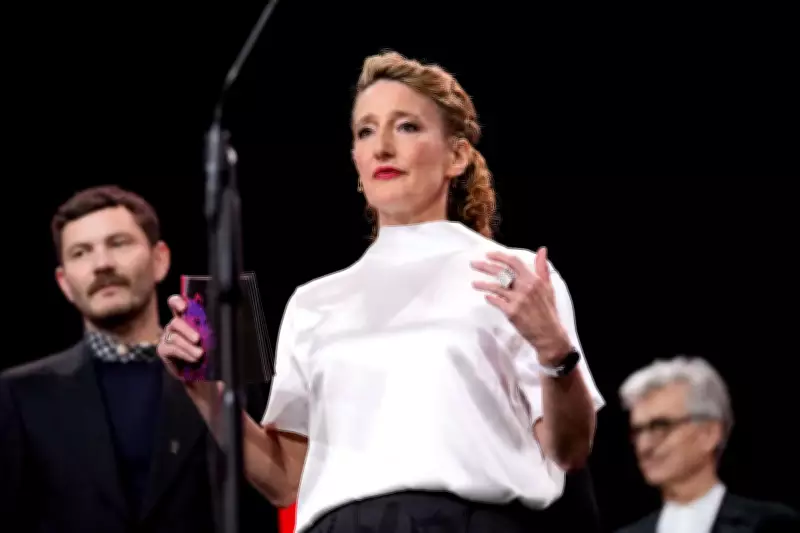
At the prestigious closing ceremony of the Berlin International Film Festival, widely known as the Berlinale, Festival Director Tricia Tuttle delivered a poignant reflection on the event's tone and profound significance over the past ten days. She openly acknowledged the intense global tensions surrounding the festival while powerfully reaffirming the critical role cinema continues to play in fostering essential dialogue and human connection.
A Festival in a "Raw and Fractured" World
"This Berlinale has taken place in a world that feels raw and fractured," Tuttle stated emphatically, just before the highly anticipated announcement of the festival's awards. "Many people arrived carrying grief, anger and urgency about what is happening far beyond these cinema walls. Those feelings are real. They belong in our community. We hear them." Her candid remarks concluded a festival edition that unfolded against a stark backdrop of intense global political debate and considerable public scrutiny.
Tuttle also directly addressed the criticism the festival faced during its run, noting that such challenges are inherent to operating as a major cultural institution in today's polarized climate. "We have also been publicly challenged this year. That comes with being a visible cultural institution in a polarised moment," she explained. "Criticism is part of democracy. So is disagreement. We respect people speaking out, even when we do not agree with every claim that is made about us."

Commitment to Cinema's Founding Purpose
Despite the palpable tensions and external pressures, Tuttle strongly emphasized that the Berlinale had remained unwaveringly committed to its core founding purpose: bringing diverse audiences together through the transformative power of cinema. "What I am proud of is this: over these ten days, the Berlinale has remained what it was founded to be — a place where people gather in public, where everyone is welcome, across difference, to sit together in the dark and look at the world through the eyes of others."
This year's robust edition showcased an impressive 278 films from 80 different countries, presenting a rich tapestry of stories that addressed urgent themes such as:
- Violence and systemic injustice
- Collective memory and historical survival
- The enduring power of art and creativity
- Universal narratives of love and friendship
Free Expression as Many Contradictory Voices
Tuttle elaborated on the festival's philosophy of free expression, describing it not as a singular voice but as a vibrant chorus of many perspectives. "Free expression at the Berlinale is not one voice. It is many voices," she declared. "Sometimes calm. Sometimes angry. Sometimes it looks silent but it is speaking through cinema. These voices can be contradictory."
She pragmatically acknowledged that a film festival cannot single-handedly resolve the world's deep-seated conflicts, but she passionately argued that it can create vital space for reflection, complexity, and empathy. "A festival does not resolve the world's conflicts. But it can make space for complexity, listening and humanising each other."
Complexity Reflected in Award-Winning Films
According to Tuttle, this essential diversity of viewpoints was vividly reflected in the films celebrated and recognized during the festival's closing ceremony. "And we see this complexity reflected in the films - these do not offer one perspective. Though they do all share something: a deep care about this world and about people. They urge, they inspire, they demand, and they quietly or loudly insist that we see."
In her powerful concluding statement, Tuttle framed the festival's charged atmosphere not as a failure, but as a testament to its vital function. "If this Berlinale has been noisy and emotionally charged, that is not a failure of cinema. That is the Berlinale doing its job. This is cinema doing its job." Her words served as a resonant affirmation of the festival's mission to engage with the world's complexities through the universal language of film.