Balakrishna's Dismissive 2021 Remark About AR Rahman Gains Fresh Attention
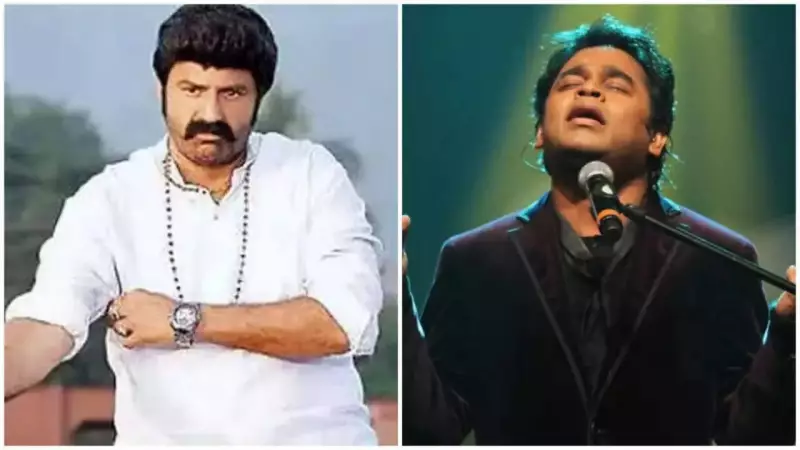
A controversial statement made by Telugu film star Nandamuri Balakrishna about Oscar-winning composer AR Rahman has resurfaced on social media, gaining renewed attention amid Rahman's recent comments about alleged bias in the Hindi film industry. The original remark was made during a 2021 interview and has frequently been discussed online since then.
"I Don't Know Who Rahman Is": Balakrishna's Controversial Claim
Speaking to TV9 in 2021, Balakrishna made a surprising declaration about the internationally acclaimed music director. "I don't know who Rahman is. I don't care. Once in a decade, he gives a hit and gets an Oscar award," the Telugu superstar stated dismissively.
This comment sparked immediate backlash from Rahman's extensive fan base, with many pointing out the irony that Rahman had actually composed background music for Balakrishna's 1993 Telugu film Nippu Ravva. The apparent contradiction between Balakrishna's claim of not knowing Rahman and their previous professional collaboration added fuel to the controversy.

AR Rahman Faces Backlash Over Bollywood Bias Comments
Meanwhile, AR Rahman himself has been facing significant criticism for recent remarks about what he described as potential "communal" bias within the Hindi film industry. The composer's comments have triggered intense debate across various social media platforms, with opinions divided about his observations.
Rahman's Heartfelt Instagram Response
Responding to the mounting criticism, Rahman took to Instagram to share his perspective through a heartfelt video message. "Dear friends, music has always been my way of connecting, celebrating and honouring a culture," the composer began.
He continued with a powerful declaration of his identity: "India is my inspiration, my teacher and my home. I understand that intentions can sometimes be misunderstood, but my purpose has always been to uplift, honour and serve through music. I have never wished to cause pain and I hope my sincerity is felt."
Rahman further expressed his gratitude for being Indian and working in an environment that allows freedom of expression while celebrating multicultural voices.
Reflecting on a Purpose-Driven Journey
The Oscar-winning composer reflected on various projects that have strengthened his artistic purpose over the years. He mentioned several significant milestones:
- Presenting Jala at the Wave Summit before the Honourable Prime Minister and Ruhi Noor
- Collaborating with young Naga musicians to create a string orchestra
- Mentoring the Sunshine Orchestra
- Building Secret Mountain, India's first multicultural virtual band
- The honor of scoring Ramayana alongside legendary composer Hans Zimmer
Towards the conclusion of his video message, Rahman expressed profound gratitude to India and reiterated his commitment to creating music that "honours the past, celebrates the present and inspires the future."
Rahman's Observations About Bollywood Opportunities
Earlier, during an interaction with BBC Asian Network, Rahman had spoken candidly about receiving limited offers from Bollywood. "People who are not creative have the power now to decide things, and this might have been a communal thing also, but not in my face," he observed.
The composer shared specific experiences: "It comes to me as Chinese whispers that they booked you, but the music company went ahead and hired their five composers. I said, 'Oh, that's great, rest for me, I can chill out with my family.'"
These comments about potential bias in Bollywood hiring practices have sparked widespread discussion about representation and opportunity within India's largest film industry.
Parallel Controversies Create Complex Narrative
The simultaneous attention to both Balakrishna's 2021 remarks and Rahman's recent comments about Bollywood has created a complex narrative about recognition, artistic value, and industry dynamics in Indian cinema. While Balakrishna's statement questioned Rahman's consistent relevance despite his Oscar achievement, Rahman's observations highlight systemic challenges within the entertainment industry.

Both controversies underscore the ongoing conversations about artistic recognition, professional respect, and the intersection of regional and national cinema cultures in India's diverse entertainment landscape.