Badshah Opens Up About Impulsive Rolls-Royce Purchase and Luxury Lifestyle Philosophy
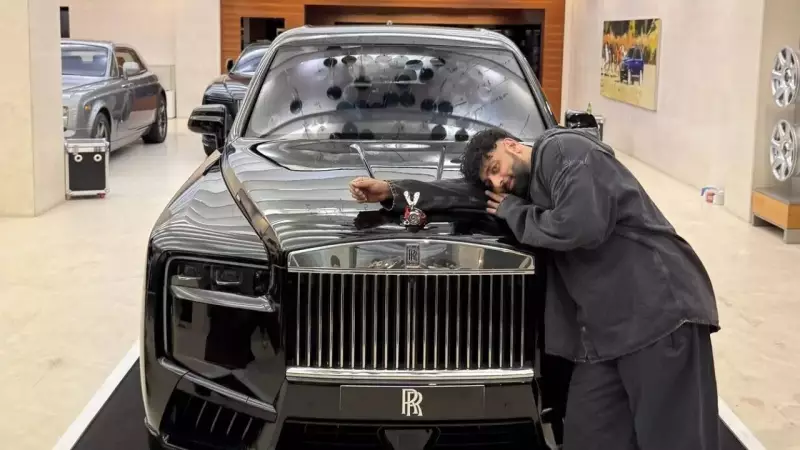
In a remarkably candid revelation, popular Indian rapper and music producer Badshah has shared intriguing details about his high-profile acquisition of a Rolls-Royce Cullinan Series II last year. The musician, who made history as the first India-born artist to own this prestigious luxury SUV, has now disclosed that the monumental purchase was driven primarily by impulse rather than careful planning.
The Fleeting Thrill of Luxury Acquisition
During an exclusive interview with Curly Tales, Badshah confessed that the excitement surrounding his Rs 12.45 crore on-road Mumbai purchase lasted merely 10-15 minutes before the initial thrill dissipated. "I think buying the car was very impulsive. Jaldi se decide kar liya ki aaj lena hai (I decided quickly that I will buy it today). Badshah Wali feeling hai. Its a good car. 10-15 minute raha tha uska high and then you are like what next?" he revealed with refreshing honesty.
With this acquisition, Badshah joined an elite circle of Rolls-Royce Cullinan owners that includes business magnate Mukesh Ambani and Bollywood superstars Shah Rukh Khan and Ajay Devgn. Despite the vehicle's prestigious status, the rapper's admission highlights the transient nature of material satisfaction, even when dealing with ultra-luxury items.

Philosophy of Luxury and Technological Aspirations
When discussing his broader approach to luxury, Badshah articulated a clear philosophy centered around experiencing the best that technology has to offer. "Mera mann karta hai ki jo bhi best hai technologically wo mere paas ho (I wish to have all best things technologically). Log kehte hai naa ki best gadi hai (When people say it is the best car). So I want to have all those things," he explained, indicating that his luxury purchases form part of a deliberate bucket-list approach to life.
This perspective became particularly evident when the rapper was presented with hypothetical scenarios during the interview. When asked what luxury item he would save if his house were on fire, Badshah responded without hesitation: "I would save the car. I will have to live in the car then." Similarly, when choosing between Rs 5 crore in cash or limited-edition watches, he instantly selected the watches, reasoning that "Every limited watch would be worth more than Rs 5 crore."
Balancing Extravagance with Financial Awareness
Despite his willingness to indulge in high-value purchases, Badshah emphasized that he maintains financial mindfulness in his approach to luxury. "I have to see the price tag first. I hope it never comes to the point that I don't check the price tag," he admitted, suggesting a grounded perspective that balances extravagance with practical awareness.
This balanced approach extends to how he manages perceptions about his lifestyle. Frequently labeled as materialistic, Badshah offered his own nuanced definition of the term: "I don't feel anything when people say I am a materialist. What is being materialistic? It is that you love things. I value my relationships more than I value material things. But I love my material things too. I love wearing good clothes, driving good cars, wearing good shoes...I like it."
Personal Values and Family Considerations
The rapper was quick to clarify that people always take precedence over possessions in his life. He illustrated this principle with a hypothetical scenario: "Agar koi mera bahut achchha dost hai, usne meri gaadi thok di to main pehle poochunga if he is fine (If my good friend ever hits my car, I will first ask if he is okay). Only when I am sure of his well-being then I will take his class."
Interestingly, Badshah also revealed that he deliberately avoids discussing the actual costs of his luxury items with his parents. "I never tell my parents how much my watches cost. I didn't think they will even believe that a watch can cost this much," he shared, highlighting the generational and experiential gaps in understanding luxury valuation.

Early Career Insights and Social Observations
Before achieving fame in the music industry, Badshah worked as a civil engineer in government service. He recalled a particularly memorable incident from this period that revealed his early tendency to question social norms. While posted at Mount Sundar Nagar in Himachal Pradesh, he posed a provocative question to a retiring IAS officer during a farewell session.
"I asked him, 'When businessman or athlete drive Mercedes then people credit their hard work, but when a government employee does that, they call him a thief.' To which he replied very beautifully. He said it depends what your Mercedes is in your life. Matlab aapki life mein aapki Mercedes kya hai," Badshah recounted.
The young engineer's bold questioning stunned his colleagues, who immediately urged him to sit down. "Everyone around me asked me to sit down, saying what type of question you are asking, I was very young. I remember I was 23," he added, reflecting on how this early experience shaped his understanding of societal perceptions about wealth and success.
Through these multifaceted revelations, Badshah presents a complex portrait of a successful artist navigating the intersections of luxury, value, and personal philosophy in contemporary India's entertainment landscape.