Bad Bunny Transforms Super Bowl Stage into Puerto Rican Homage
Bad Bunny's Super Bowl Halftime Show on February 8 was far more than a typical performance of chart-topping hits under dazzling lights. The Grammy-winning artist leveraged the immense platform of Super Bowl LX to cast a spotlight on Puerto Rico, weaving together elements of history, cultural pride, and subtle political commentary into a spectacle that felt deeply personal as well as visually stunning.
A Visual Journey from Sugar Cane Fields to Stadium Lights
He commenced the show with "Tití Me Preguntó," set against a backdrop depicting sugar cane fields reminiscent of his hometown, Bayamón. Dancers adorned in traditional pava straw hats encircled him, creating a sharp and intentional visual narrative. Even before the music intensified, the underlying message was unmistakable: this was not a generic halftime entertainment segment but a heartfelt tribute to his roots.
La Casita: The Heart of the Performance
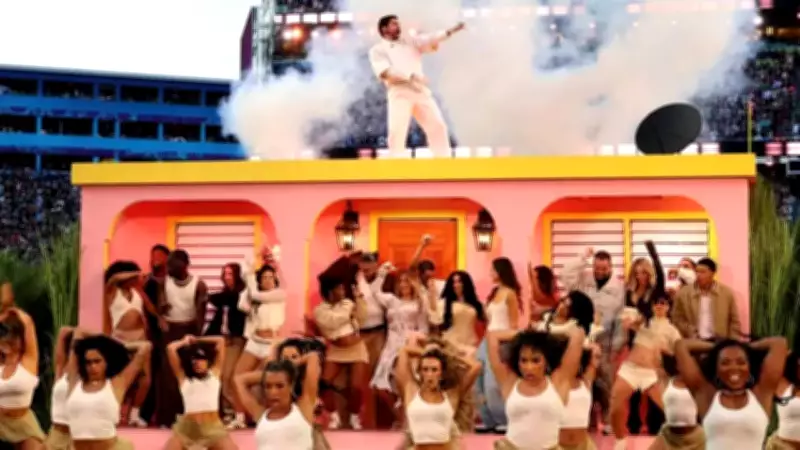
The centerpiece of Bad Bunny's Super Bowl Halftime Show stood prominently at midfield. La Casita, a symbolic house from his Puerto Rican residency, was recreated on a grand scale for Levi's Stadium in Santa Clara, California. Following his recent Grammy victories and the release of his sixth studio album, Debí Tirar Más Fotos, Benito Antonio Martínez Ocasio transported this emblematic structure to the NFL stage.

He energetically ascended its steps to perform "Yo Perreo Sola," transforming the house into both a dynamic set piece and a powerful statement. Celebrities such as Pedro Pascal, Cardi B, Jessica Alba, Karol G, and Young Miko made appearances inside, continuing a tradition from his 31-day "No Me Quiero Ir de Aquí" residency in San Juan, where invited guests observed the show from within the house itself.
Origins and Legal Complexities of La Casita
The original home belongs to 84-year-old Román Carrasco Delgado in Humacao. It first gained prominence in a short film associated with Debí Tirar Más Fotos and later inspired the main stage for his residency. The replica, designed for large-scale production, maintained the essence of the original while adapting the layout for functionality. According to reports from The New York Times, designer Mayna Magruder Ortiz noted that certain parts, like the kitchen, preserved the authentic appearance but were reimagined as a functional bar for concert attendees.
However, the use of the real property has led to complications. Carrasco Delgado reportedly filed a lawsuit seeking $1 million, alleging that the depiction of his home caused him "emotional distress" due to a surge in daily visitors taking photos and videos, which has turned the once-quiet residence into an unintended tourist attraction.
Collaborative Effort to Recreate Puerto Rican Energy
For the Super Bowl rendition, production designer Julio Himede and creative director Harriet Cuddeford collaborated with Puerto Rican designer Mónica Monserrate to replicate the vibrant energy of the residency on football's grandest night. The outcome was meticulously crafted, with every detail, from the wooden planks to the paint colors, deliberately echoing the island's aesthetic.
Bad Bunny did not merely headline a halftime show; he constructed a cultural bridge to Puerto Rico and extended an invitation to millions of viewers worldwide to traverse it, making this performance a landmark moment in Super Bowl history.