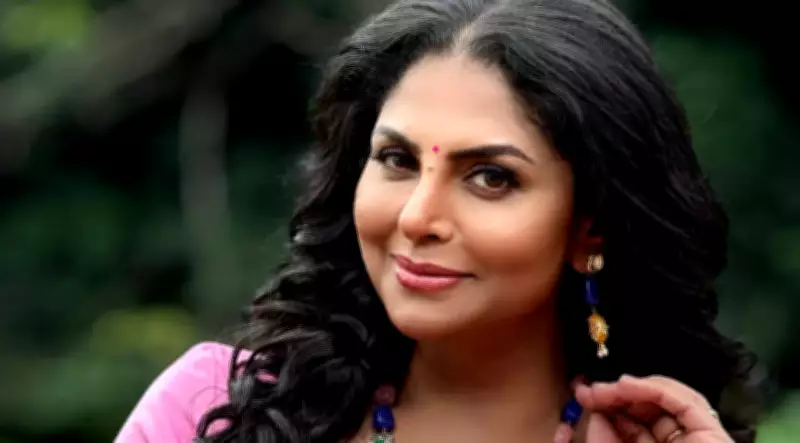
Asha Sharath Reveals Why Reprising IG Geetha Role in Multiple Drishyam Films Never Felt Monotonous
As anticipation builds for the upcoming release of Mohanlal's 'Drishyam 3', scheduled for April 2, 2026, attention is turning to the beloved franchise's unique aspects. One fascinating element is actress Asha Sharath, who has portrayed the pivotal role of IG Geetha Prabhakar across multiple language versions of the film.
A Unique Achievement in Indian Cinema
Originally created in Malayalam, the Drishyam franchise has seen successful remakes in several Indian languages. Remarkably, Asha Sharath stands as the only actress to have played the same character in both the original Malayalam version and two of its remakes – specifically the Tamil and Kannada adaptations. This rare continuity across language barriers presents an interesting case study in character portrayal and actor adaptation.
Why Repetition Never Felt Repetitive
In a revealing interview with Cue Studio, Asha Sharath explained why reprising the role of IG Geetha Prabhakar never felt monotonous or repetitive despite playing the same character multiple times. "Never felt that I was doing the same thing over and over again," the actress emphasized. "All the actors opposite me were different, and these were in different languages."

She elaborated on how each leading actor brought a distinct approach to their character, which fundamentally changed her own performance dynamics. "Especially because how Mohanlal conceived the character was not how Kamal Haasan did, and Ravi Kumar also approached it differently. They did it like three different characters. So it does not feel like it is the same scene, same film," Sharath added.
Contrasting Approaches: Mohanlal vs. Kamal Haasan
The actress provided specific examples of how her co-stars' differing acting styles created unique on-screen chemistry. She explained that Kamal Haasan approached his character with heightened emotional intensity, while Mohanlal portrayed Georgekutty with subtlety and restraint.
Sharath cited the climactic scene as a particularly telling comparison. "In the original Malayalam film, Mohanlal's Georgekutty keeps facts clean, without being dramatic, but on the other hand, Kamal Haasan's Suyambulingam had a rather emotional approach," she recalled. "It was high on emotions that Asha Sharath feared that she would be moved by it during the scene."
What to Expect from Drishyam 3
Meanwhile, the franchise continues to expand with 'Drishyam 3' set to explore the next chapter in Georgekutty's life. Director Jeethu Joseph revealed during the film's launch that "The film focuses on what happens in Georgekutty's life after four-and-a-half years. That is the crux of the story."
The production team acknowledged the overwhelming response to the first two installments as motivation for continuing the narrative. "The phenomenal response to the first two parts convinced us that Georgekutty's journey had more to tell," the makers stated. "Only after detailed talks with Jeethu did we finalize this new version."
The Enduring Appeal of a Cross-Language Franchise
Asha Sharath's unique experience highlights several interesting aspects of Indian cinema's remake culture:
- Character Consistency Across Languages: Maintaining the same actress for a key role across multiple language versions is rare in Indian cinema
- Actor Adaptation: How performers adjust their approach based on different co-stars and directorial visions
- Cultural Translation: The subtle differences in how characters are portrayed across regional cinematic traditions
- Franchise Longevity: What makes certain stories resonate strongly enough to justify multiple installments and adaptations
As the Drishyam franchise prepares for its third major installment, Asha Sharath's insights provide valuable perspective on the collaborative nature of filmmaking and how even familiar characters can feel fresh when approached by different creative teams. Her experience demonstrates that repetition in acting isn't necessarily monotonous when each iteration presents new challenges and collaborative dynamics.