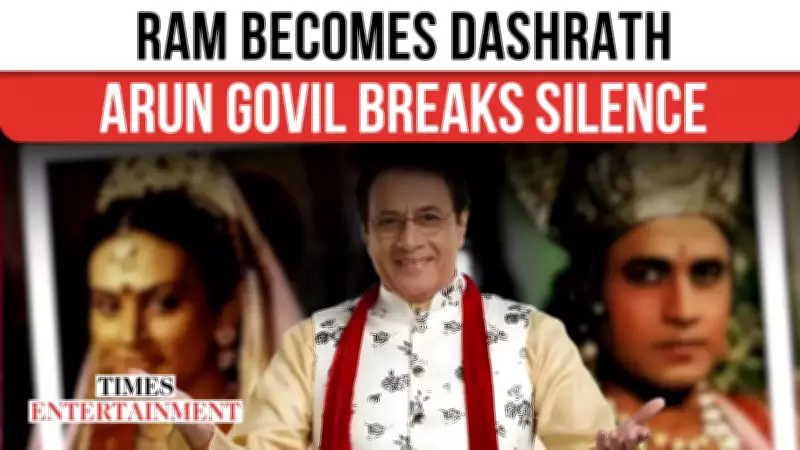
Arun Govil's Graceful Response to Ramayana Casting Debate: From Ram to Dashrath
Breaking his prolonged silence on the ongoing casting discussions surrounding the new adaptation of the epic Ramayana, veteran actor Arun Govil has responded with remarkable calmness and wisdom. The actor, who immortalized the role of Lord Ram in Ramanand Sagar's iconic 1987 television series, addressed recent comments made by his co-star Dipika Chikhlia regarding his potential casting as King Dashrath in the upcoming production.
A Measured Reaction to "Out of Context" Remarks
In what has become a significant moment for fans of Indian mythological cinema, Govil directly responded to Chikhlia's statements that had been circulating in media circles. The actress, who portrayed Goddess Sita opposite Govil's Ram in the original series, had made remarks about Govil's suitability for the role of Dashrath that were later described as being taken "out of context" by various entertainment portals.
Govil's response demonstrated both emotional maturity and professional grace, as he chose not to escalate the discussion into controversy. Instead, he acknowledged the comments while maintaining his characteristic dignity, a quality that has endeared him to audiences for generations.

Embracing New Interpretations and Praising Fresh Talent
What makes Govil's response particularly noteworthy is his open-minded approach to the new adaptation. Rather than expressing any resistance to reinterpretation of the classic epic, the veteran actor extended his support to the new cast members who will be stepping into these legendary roles.
"Every generation deserves its own interpretation of our cultural treasures," Govil seemed to suggest through his statements, embracing the evolving nature of mythological storytelling in contemporary Indian cinema. His willingness to welcome fresh perspectives on the Ramayana narrative reflects a progressive attitude rarely seen among actors so closely associated with iconic roles.
Softening Decades of Nostalgic Debate
The casting debate surrounding the new Ramayana adaptation taps into deep-seated nostalgia that has accumulated over nearly four decades since the original television series captivated the nation. For millions of Indians, Govil remains the definitive embodiment of Lord Ram, creating an emotional connection that transcends ordinary fandom.
Govil's measured response has effectively softened what could have become a heated controversy. By choosing diplomacy over confrontation and support over criticism, he has:
- Demonstrated respect for his colleague's perspective
- Maintained the dignity associated with his iconic status
- Created space for multiple interpretations of the epic
- Set a positive tone for discussions about the new adaptation
The Legacy of Ramanand Sagar's Ramayana
The original Ramayana television series, which aired from 1987 to 1988, became a cultural phenomenon that transcended entertainment to become a religious experience for many viewers. Sunday mornings became sacred viewing time as families gathered to watch the epic unfold, with Govil's portrayal of Ram becoming embedded in the national consciousness.
This deep cultural connection explains why casting decisions for new adaptations generate such passionate discussion. When beloved characters from childhood memories are reinterpreted for new generations, it inevitably stirs emotions and debates about authenticity, representation, and creative liberty.
A Lesson in Grace for the Entertainment Industry
In an industry often characterized by public feuds and sensational controversies, Arun Govil's response stands out as a masterclass in graceful communication. His approach demonstrates how veteran artists can:
- Address potentially sensitive topics without creating unnecessary drama
- Support new talent while honoring their own legacy
- Navigate nostalgic expectations with forward-looking optimism
- Maintain personal dignity while engaging in public discourse
As the entertainment industry continues to revisit and reinterpret cultural classics, Govil's measured response provides a valuable template for how such transitions can be managed with mutual respect and artistic integrity.

The actor's calm intervention in the casting debate has not only defused potential tension but has also reinforced why he remains such a respected figure in Indian entertainment—a man who embodies both on-screen divinity and off-screen dignity.