"They're just looking for some good vibes, man." When Anuv Jain delivers this line, it resonates with the weight of a final conclusion. In today's musical landscape, sandwiched between hook-driven Bollywood tracks, Instagram-driven discoveries, and international acts transforming concerts into grand spectacles, audiences ultimately gravitate toward one thing: music that feels genuinely good, even when it explores painful emotions.
The Hook-First Phenomenon: Not Necessarily Bad Writing
Anuv acknowledges that much of Bollywood music operates on a "hook-first" principle, engineered for catchiness and viral spread. However, he firmly rejects the notion that this approach ruins songwriting. "Making a good hook is a very, very difficult task. Trust me, I know it," he asserts with conviction.
For him, the real issue isn't the hook itself, but the misconception that it represents the entire musical picture. "I think people have forgotten where to look," he observes, noting that listeners often judge India's vast music industry solely by what trends on their social media feeds. "The songs that trend now are these two or three lines here and there." This creates a misleading assumption about India's musical output. "We literally have millions of songs," he reminds us, shaking listeners awake to the broader reality. If contemporary sounds feel narrow, it's because discovery channels have become constricted, not because creativity has diminished.

Instagram: The New Gatekeeper in Music Discovery
Anuv views Instagram not as a doom but as a significant opportunity. Historically, music reached audiences through curated systems like radio or MTV, where gatekeepers controlled access. Today, that dynamic has shifted dramatically. "The power is literally in the hands of every artist. You don't really need the radio, the contacts, or the record label," he explains. The gates are no longer locked.
The upside of this democratization is instant momentum: "Anybody who makes a good song that connects can go viral overnight and change their life." This accessibility allows raw talent to bypass traditional barriers, though it also floods the space with content, making standout quality crucial.
Why Everything Sounds Similar: A Listener's Comfort Zone
When critics complain about musical repetition, Anuv points toward listener psychology rather than artist laziness. "Human minds are used to listening to a certain kind of music; it gives them comfort. It's the same chords, the same way of making music," he notes. He ties this homogeneity to consumption patterns—people often prefer familiarity, and algorithms feed them more of what they already like.
"People like what they have," he observes. The perceived "sameness" frequently reflects what audiences are repeatedly served, not a lack of diversity in creation. Genuine variety exists but struggles for amplification in an attention economy dominated by predictable trends.
Spectacle Versus Softness: The Live Music Dilemma
As international tours increase in India, the live music landscape is undergoing a significant shift. Artists are grappling with whether audiences crave raw vocal intimacy or grand theatrical spectacles. "Everybody's confused," Anuv admits candidly. "Nobody has any idea what's working."
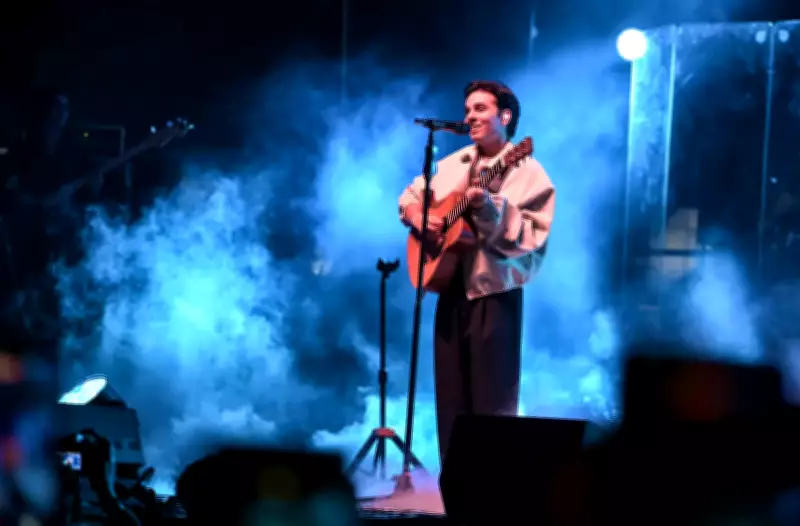
His own music leans toward subtlety rather than fireworks. "I make softer music. I'm not making the kind of music that can be turned into a spectacle, at least right now," he states. Yet, evolution is evident. Two months ago, he performed solo with just a guitar; now, he tours with a full band and time-coded sets featuring stunning visuals. His three recent sold-out shows suggest audiences are showing up for genuine feeling, not mere flash.
The 3AM Connection: Emotion Over Trends
Anuv attributes his success to emotional resonance rather than chasing trends. "They're looking to feel something. Not just joy, but a bit of sadness, pain, and depth... how you feel when you're staring at your ceiling at 3 in the morning," he describes. He maintains intimacy with his audience by sharing personal stories mid-set, creating a bond. "They want to feel like somebody out there knows what they feel."

AI in Music: A Tool, Not a Creator
On artificial intelligence, Anuv draws a firm ethical boundary. He uses AI for practical tasks like checking Urdu word meanings but rejects its application in creative processes. "If you put a guitar solo using AI, there is a guitarist who didn't get that job," he argues, highlighting the human cost. He hopes listeners continue valuing the human element: "something written by an actual human brain and sung by an actual human voice."
Ultimately, his music connects not through volume but through honesty—honest enough to hold the weight of 3am silence and resonate deeply with listeners seeking authenticity.
Additional Insights from Anuv Jain
On Nostalgia in Bollywood: "I think nostalgia is the word of the decade. I feel everybody is definitely trying to bank upon nostalgia and it's understandable because a lot of the people who were young back then are old enough now and are the final consumers of the content coming from Bollywood. Any time you give people something that reminds them of their childhood, it is going to make you the big bucks. However, I also think there is a lot of good original music coming from Bollywood as well. In fact, there are so many more artists that have come out, and are artists like me, like non-film artists. They are getting opportunities to sing for a film finally."
On the Resurgence of Lyrics and Poetry: "There were a lot of people who used to listen to poetry a lot, but I feel that words have once again become very important, and not just in a song. But in poetry, shayari, it's become so big, and everybody wants to go to such shows. As somebody who likes to think of himself as a songwriter first, I think it's an incredible time because people are generally focusing on the lyrics, they are trying to understand what these lyrics mean, and they're trying to explore these lyrics more and more. I think it's pretty amazing."