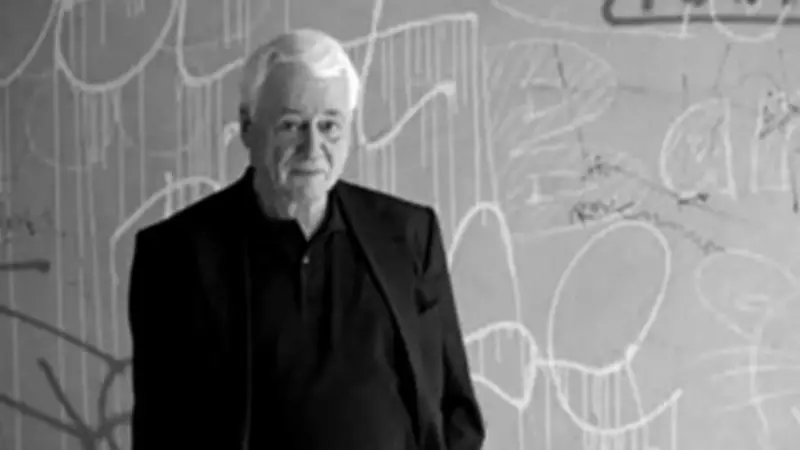
German Filmmaker Alexander Kluge, Pioneer of New German Cinema, Dies at 94
The world of cinema has lost one of its most intellectually profound voices. Alexander Kluge, the celebrated German filmmaker, author, and a central figure in the New German Cinema movement, has passed away at the age of 94. His death in Munich on Wednesday was officially confirmed by his long-time publisher, The Suhrkamp publishing house.
Kluge's Enduring Legacy in Film and Literature
Kluge was not merely a director; he was a visionary who transformed cinematic collages into a respected art form. His work was characterized by its intellectual depth and innovative narrative structures, earning him a reputation as a master of challenging, rewarding cinema. Beyond film, Kluge was an exceptionally productive writer of short fiction, seamlessly blending his literary and cinematic talents.
His influence extended far beyond his own projects. Kluge played a pivotal organizational role in the rule-breaking New German Cinema movement of the 1960s and 1970s. This movement served as a crucial platform that launched the careers of now-iconic auteurs such as Rainer Werner Fassbinder and Werner Herzog. Furthermore, Kluge was recognized as one of the last living torchbearers of the Frankfurt School of neo-Marxist cultural criticism, infusing his art with sharp socio-political commentary.

From War Survivor to Cultural Architect
Alexander Kluge's early life was marked by the tumult of global conflict. Born in 1932 in Halberstadt, western Germany, he narrowly survived the devastating Allied bombing of his hometown on April 8, 1945. In the post-war years, he pursued higher education at Frankfurt University, where he immersed himself in the study of law, history, and church music.
It was at Frankfurt University that Kluge found a formative mentor in the renowned philosopher Theodor Adorno. Although Kluge initially practiced law, he felt an irresistible pull toward the creative worlds of literature and film. This calling culminated in 1962 when he became a signatory of the historic Oberhausen Manifesto. This bold declaration demanded that the German film industry break free from the constraints of shallow melodramas and nationalistic Heimatfilme, advocating instead for a new, artistically ambitious cinema.
Historic Triumphs at the Venice Film Festival
Kluge's commitment to this new cinematic vision bore extraordinary fruit. His 1966 film, 'Abschied von Gestern' (released internationally as 'Yesterday Girl'), was one of the first major works to emerge from the Oberhausen movement. The film presented the jarring story of a Jewish woman struggling to find her place in West Germany after fleeing the East. Kluge told this tale using a groundbreaking, discontinuous style with non-sequential narratives and disjointed sound.
The artistic gamble paid off spectacularly. 'Yesterday Girl' won the Silver Lion at the Venice Film Festival, marking the first time a German director had received such a prestigious honor since the end of World War II. Kluge solidified his international reputation just two years later by winning the festival's top prize, the Golden Lion, for his 1968 film 'The Artists in the Big Top: Perplexed.' These victories were not just personal accolades; they were landmark moments that signaled the arrival of a bold new era for German cinema on the world stage.
Alexander Kluge's passing marks the end of an era. He leaves behind a rich legacy of films and writings that continue to challenge, inspire, and define the intellectual contours of modern European cinema.