Javed Akhtar Challenges AR Rahman's View on Bollywood's 'Communal Shift'
Veteran poet and lyricist Javed Akhtar has openly disagreed with his longtime collaborator, music composer AR Rahman. The disagreement centers on Rahman's recent claim that the Hindi film industry has become more communal over the past eight years. Akhtar firmly believes the industry has always been religion-agnostic, consistently choosing the best person for any job regardless of background.
Akhtar's Personal Experience with Devotional Music
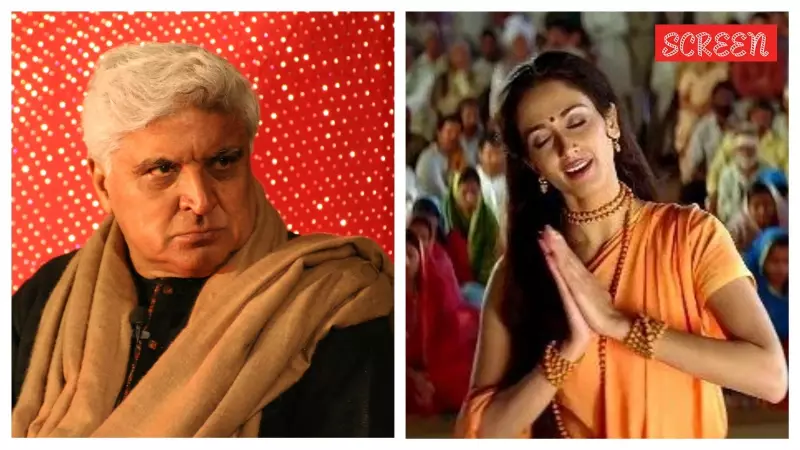
Javed Akhtar shared a personal anecdote to illustrate his point. He recalled being labeled a "liar" in the past for claiming to be an atheist. This accusation came despite him writing deeply devotional songs for major Bollywood films.
He penned lyrics for "O Paalanhaare" from the 2001 film Lagaan and "Pal Pal Hai Bhaari" from the 2004 film Swades. Both films were directed by Ashutosh Gowariker. The song from Swades was particularly significant as it featured in a Ramleela sequence, expressing Sita's perspective.

Roots in Ganga-Jamuni Tehzeeb
Akhtar attributes his ability to write such songs to his upbringing. He grew up in Lucknow during what he calls the "tail end" of the Ganga-Jamuni tehzeeb, a syncretic culture of the Awadh region.
"I must have witnessed the tail end of what we call the Ganga-Jamuni tehzeeb in Awadh, where I grew up. That's something rare," Akhtar told O2India last year.
He explained that although his family, including his communist father, was not religious and was perceived as Muslim, Hindu traditions were a natural part of his childhood environment.
"How did we know all of this? Ramleela, Krishna Leela? I can write Rama and Krishna aartis. How am I able to? Where did I get this from? They were a part of my growth. It wasn't a big deal either. That's how people were," Akhtar stated.
He fondly remembered his late aunt creating a jhanki for children in their courtyard every Janmashtami. The family also dressed in yellow on Basant Panchmi. Akhtar lamented that this inclusive culture of celebration seems to have faded today.
AR Rahman's Controversial Remarks and Clarification
The debate began after AR Rahman gave an interview to BBC Asian Network. In it, he suggested that fewer projects were coming his way due to a power shift within the Hindi film industry. He hinted this might be linked to communal factors.
"People who are not creative have the power now to decide things and this might have been a communal thing also but not in my face," Rahman said in the interview.
He described hearing "Chinese whispers" about music companies booking him but then hiring other composers instead.
Following significant backlash, Rahman posted a clarification video on social media this past Sunday. He expressed that his intentions may have been misunderstood.
"India is my inspiration, my teacher and my home. I understand that intentions can sometimes be misunderstood. But my purpose has always been to uplift, honour and serve through music. I have never wished to cause pain, and I hope my sincerity is felt," Rahman said in the video.
Reactions from the Film Fraternity
Rahman's comments sparked strong reactions from various industry figures:
- National Award-winning lyricist Varun Grover criticized the backlash on X. He wrote that the "greatest living composer" was attacked for sharing a polite opinion based on his lived experience and was forced to apologize.
- Actor and former BJP MP Paresh Rawal reposted Rahman's clarification with a supportive message, calling him "our pride."
- Filmmaker Rahul Dholakia urged respect for Rahman, acknowledging his monumental contribution to Indian music despite any disagreement with his words.
This exchange highlights a growing conversation about identity, culture, and perceived changes within India's premier entertainment industry. Akhtar's recollections of a more syncretic past contrast with Rahman's observations about present-day dynamics, framing a complex debate about Bollywood's evolving social landscape.