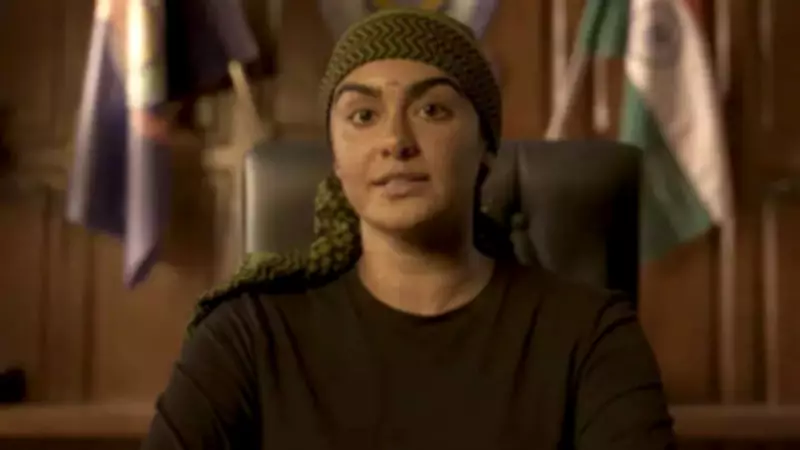
Adah Sharma Stands Firm on 'Bastar: The Naxal Story' Amid Controversy
In the midst of heated debates surrounding the film Bastar: The Naxal Story, actress Adah Sharma has openly addressed accusations of misrepresentation and calls for a ban. While some viewers have labeled the movie as brave filmmaking, others have criticized it for allegedly distorting regional realities. As an actor, Sharma navigates the fine line between artistic courage and social responsibility, drawing from profound personal experiences during the film's preparation.
Drawing from Harrowing Survivor Testimonies
Sharma revealed that her director facilitated meetings with real-life survivors, whose stories became the foundation of her performance. "Our director took us to meet those girls who I'm playing—characters with eyes blank and dead," she recounted. The actress described how these women endure daily horrors, including witnessing 30 to 60 dead bodies on roads, experiences so graphic that the film only captures 10% of their actual trauma.
She elaborated on the extreme conditions these survivors face, such as hiding behind trees for days without movement to avoid detection. "I asked them, 'How do you go to the bathroom?' They said, 'We can't even move because if the tree shakes, those people from far can see it,'" Sharma shared, highlighting the constant fear and physical strain, including carrying heavy weapons.

A Strong Stand Against Terrorism and for Women's Empowerment
For Sharma, Bastar: The Naxal Story aligns with her previous work in The Kerala Story, both films she views as anti-terrorism narratives centered on women's empowerment. She emphasized that these stories transcend caste and religion, focusing instead on female strength in adversity. "Both films are women empowerment films which show you two women... where a woman is very strong and she's being, I mean, the whole government is against her. The politicians are against her. They're not helping her out at all," she stated.
Sharma contrasted the protagonists: in Bastar, a resilient woman facing systemic opposition, and in The Kerala Story, a college girl making poor decisions but striving to stand up in a restrictive environment. "For me honestly, it was a film that I look at as inspiring young girls, inspiring young girls around the world, not just in our country," she affirmed, underscoring the global relevance of these tales.
Responding to Criticism and Ban Calls
Addressing the backlash, Sharma questioned whether the film might even underrepresent the brutality described by survivors. "I don't know maybe people should be misrepresented and it get gorier because it was so explicit the things that those girls told me," she reflected, suggesting that the reality is far more severe than depicted. Her stance is clear: these stories need to be told to highlight women's resilience and the fight against terror, regardless of controversy.
By sharing these insights, Adah Sharma not only defends her artistic choices but also calls attention to the urgent narratives of survival and empowerment that drive her work in cinema.