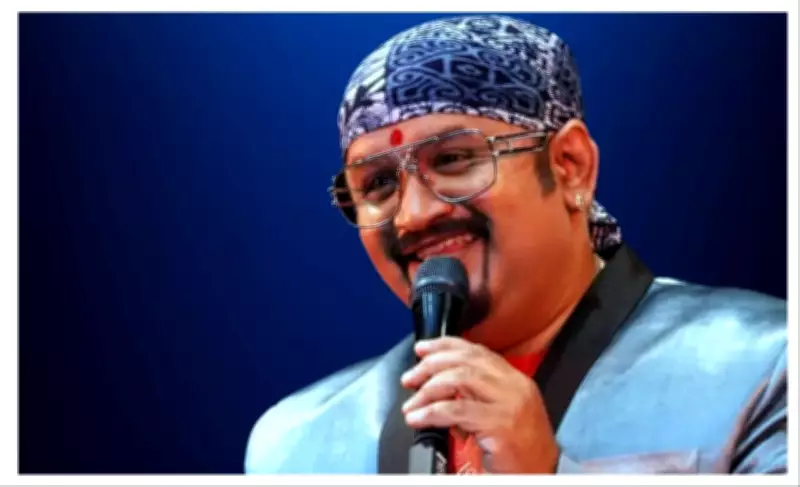
Abhijeet Ghoshal on Music's Power to Transcend Religion and Language
Singer and performer Abhijeet Ghoshal passionately advocates that music operates on a plane far beyond the confines of religion and spoken language. He posits that our connection to sound is primal and instinctual, rooted in the very beginning of human experience.
The Primal Rhythm of Existence
"Long before our minds are shaped by doctrines or beliefs, we are taught how to feel," Ghoshal asserts. "The earliest sensory response for a developing foetus is the rhythmic, comforting pulse of a mother's heartbeat. That foundational rhythm is, in its purest form, music itself." This perspective frames music not as a cultural construct, but as a biological and universal constant.
Devotion Beyond Doctrine in Classical Training
Recounting his formative years in classical Indian music, Ghoshal shares a profound lesson from his guru. He was taught a traditional bandish (composition) in the solemn Raag Bhairav, set to the words "Allah O Allah, Jale Shaan Allah."

"We were deeply immersed in the technical rigor of classical Indian tradition, yet the devotion expressed transcended any single religion," he reflects. "In that space, music required no theological permission. It simply was—a powerful, autonomous force of expression."
The Universal Language of Emotion
Ghoshal describes a powerful, illustrative moment when Vedanta saint Swami Premanand visited his home and sang devotional songs in Assamese. "Not a single person present understood the Assamese language," he recalls. "Yet, without exception, everyone was moved to tears. That was my definitive realization: music communicates raw, shared human experience, not vocabulary."
He elaborates on the emotional mechanics of music, explaining the concept of 'lau lag gayi'—the moment a perfect note resonates. "It's described as an awakening of the soul," he says. "This phenomenon has zero correlation with personal creed or dogma. It responds solely to artistic authenticity and emotional truth."
The Science of Sound and Universal Vibration
According to Ghoshal, the true mechanism of music is vibrational, not linguistic. "The seven notes—Sa, Re, Ga, Ma, Pa, Dha, Ni—exist as pure frequencies found across the globe," he explains. "Even animals, devoid of language comprehension, react instinctively to sound. This connection is not learned; it is innate and universal."
The Constant Heart of Diverse Expression
In his concluding thoughts, Ghoshal draws a powerful parallel. "Consider Sanskrit chants, Arabic ayat, Hebrew hymns, the 'Hallelujah,' or 'Hare Krishna'—strip away the specific words, and the underlying melodic and rhythmic patterns are remarkably similar," he observes. "The cultural and religious packaging may change, but the heart of music—its core vibrational intent—remains constant. Music does not argue, preach, or explain. Its only request is for us to listen."
Continuing a Blended Musical Journey
Abhijeet Ghoshal continues to perform extensively across India, skillfully blending deep devotional music with popular Bollywood melodies. His recent accolades include winning the prestigious Clef Music Award for his work "Damroo Bajaye." Looking ahead, fans can anticipate his upcoming releases: a series of heartfelt Khatu Shyam bhajans and a dynamic, fast-paced rendition of the "Superfast Hanuman Chalisa."