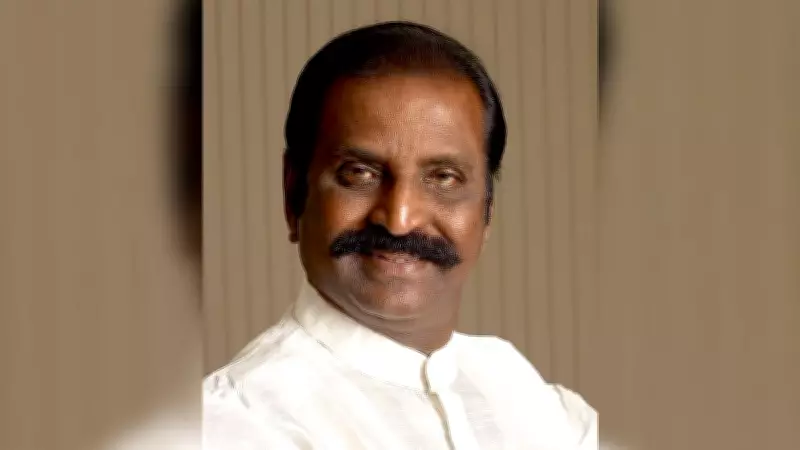
Jnanpith Award Sparks Major Controversy Over Vairamuthu's Selection
The prestigious Jnanpith Award, India's highest literary honor, has been embroiled in a significant controversy following the selection of renowned Tamil lyricist and poet Vairamuthu. The award, announced recently, has faced sharp criticism from within the literary community, most notably from acclaimed Tamil writer Jeyamohan.
Scathing Letter from Jeyamohan Criticizes Award Decision
In a strongly worded letter addressed directly to the Jnanpith Award selection committee, writer Jeyamohan expressed his vehement opposition to Vairamuthu's selection. The letter, which has since circulated widely in literary circles, contains harsh criticism of both the awardee and the committee's decision-making process.
Jeyamohan was particularly direct in his assessment of Vairamuthu's literary standing, describing him as a 'ridiculous film lyricist' who lacks the depth and substance expected of a Jnanpith awardee. This characterization has ignited a fierce debate about the criteria for India's most prestigious literary honor and whether popular film lyricists should be considered alongside traditional literary figures.

Literary Community Divided Over Award Criteria
The controversy has exposed deep divisions within India's literary establishment regarding what constitutes literary excellence worthy of the Jnanpith Award. Supporters of Vairamuthu point to his extensive body of work spanning decades, his profound influence on Tamil cinema music, and his contributions to Tamil poetry beyond film lyrics.
However, critics like Jeyamohan argue that the award should recognize pure literary achievement rather than popular success in commercial cinema. They contend that film lyricism, while culturally significant, represents a different artistic domain from the serious literature traditionally honored by the Jnanpith committee.
Background of the Controversial Awardee
Vairamuthu, born in 1953, has been one of Tamil cinema's most celebrated lyricists for over four decades, working with virtually every major music director and winning numerous national and state awards. Beyond film, he has published several collections of poetry and prose, positioning himself as both a popular entertainer and serious literary figure.
His selection marks a significant departure from previous Jnanpith awardees in Tamil literature, who have typically been novelists, poets, or playwrights with minimal involvement in commercial cinema. This shift in selection criteria appears to be at the heart of the current controversy.
Broader Implications for Indian Literary Awards
The backlash against Vairamuthu's Jnanpith Award raises important questions about:
- The evolving definition of literary excellence in contemporary India
- The relationship between popular culture and high literature
- Selection criteria for prestigious national awards
- The role of regional language writers in national recognition
As the literary community continues to debate this controversial selection, the Jnanpith Award committee faces increasing pressure to clarify its selection process and criteria. The controversy shows no signs of abating, with writers, critics, and cultural commentators taking strong positions on both sides of the debate.
The incident highlights the ongoing tension between traditional literary values and the recognition of artists who bridge popular and literary cultures in modern India.