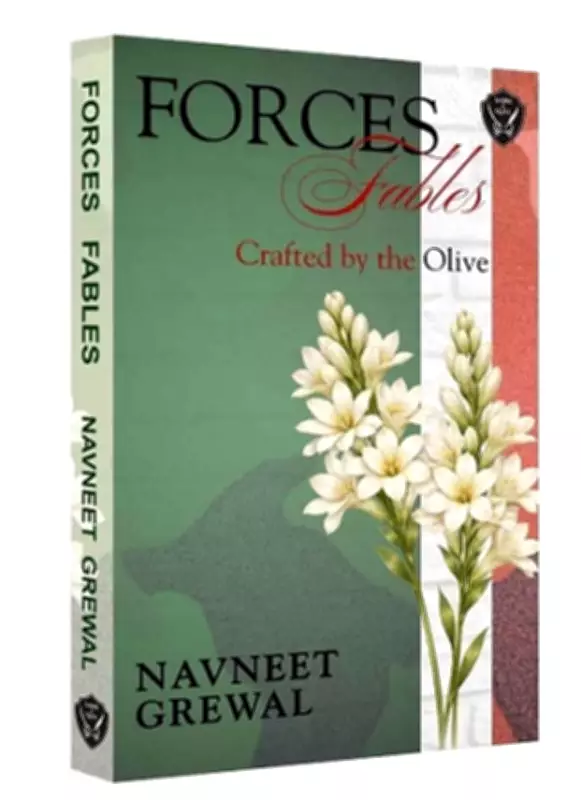
In 'Forces Fables', Navneet Grewal invites readers into the distinct social world of the Indian Army, focusing on the traditions, institutions, and enduring human bonds that shape military life for soldiers and their families. The book, published by Sabre & Quill and priced at Rs 399, offers 196 pages of reflections, anecdotes, and observations that go beyond combat and discipline.
Beyond the Parade Ground
At a time when public understanding of the armed forces is largely shaped by news headlines, memoirs of military operations, and popular culture, Grewal’s book turns attention to the quieter aspects of service life. Rather than recounting tales of conflict, she focuses on the institutions, customs, and relationships that sustain military communities across the country.
Structured as a series of reflections, 'Forces Fables' introduces readers to the ecosystem of cantonment life. Officers’ messes, military hospitals, schools, canteens, and residential colonies emerge as spaces where discipline coexists with camaraderie and professional commitments are balanced by a strong sense of community. Through these descriptions, the author seeks to bridge the gap between military and civilian worlds.

Fellowship and Mobility
A recurring theme is the spirit of fellowship that distinguishes military life. Frequent transfers, operational demands, and geographical mobility create circumstances that often foster unusually strong social bonds. Grewal captures this dimension effectively, portraying military units not merely as professional organisations but as close-knit communities bound by shared experiences and mutual support.
Among the more engaging sections are those dealing with postings across different regions of India. Military families frequently adapt to new languages, cultures, and environments, making service life a continuous journey of discovery. The author highlights how this mobility broadens horizons and cultivates resilience, while also reinforcing a sense of national integration that transcends regional identities.
Institutions and Support Systems
The book also offers useful insights into institutions familiar to service personnel but less understood by the general public. Army schools, welfare systems, and support structures receive considerable attention, illustrating how the armed forces have developed mechanisms that extend beyond operational requirements to address the needs of families and communities. These sections provide readers with a fuller understanding of the social infrastructure that supports military life.
A distinctive feature of the book is the inclusion of poetry interwoven with prose. Written in English, Hindi, and Punjabi, these poems provide moments of reflection and emotional depth. While some readers may prefer a more continuous narrative, the verses add a personal dimension to the text and reflect the author’s effort to blend observation with creative expression.
Sarva Dharma Sthal and Veterans
Particularly relevant is the discussion on the Sarva Dharma Sthal, the shared place of worship found in many military establishments. In an era when social and religious divisions frequently dominate public discourse, this tradition stands out as an example of coexistence and collective identity. Grewal presents it as one of the enduring strengths of military culture, where unity of purpose takes precedence over differences of faith or background.
The chapters dealing with veterans are equally noteworthy. The author portrays military service not simply as a profession but as a lifelong identity that continues long after retirement. The enduring connections among former servicemen reinforce the book's central message that the armed forces are sustained not only by organisational structures but also by relationships forged through shared experiences.
Limitations and Strengths
If the book has a limitation, it is that its perspective remains largely appreciative of the institution it portrays. Readers looking for a more probing examination of the challenges and complexities of military life may find the treatment selective. However, the author’s objective is clearly not critical analysis but cultural interpretation, and the book is best read in that context.

What distinguishes 'Forces Fables' is its focus on the human dimension of military life. By shifting attention away from rank, protocol, and operations, it highlights the everyday experiences that shape the lives of soldiers and their families. In doing so, it illuminates a world that remains largely unfamiliar to many civilians despite the central role the armed forces occupy in national life.
Informative and accessible, the book offers a readable account of the traditions, institutions, and relationships that lie behind the uniform. For readers interested in understanding the social fabric of the military beyond its public image, the book provides a useful and often insightful introduction.