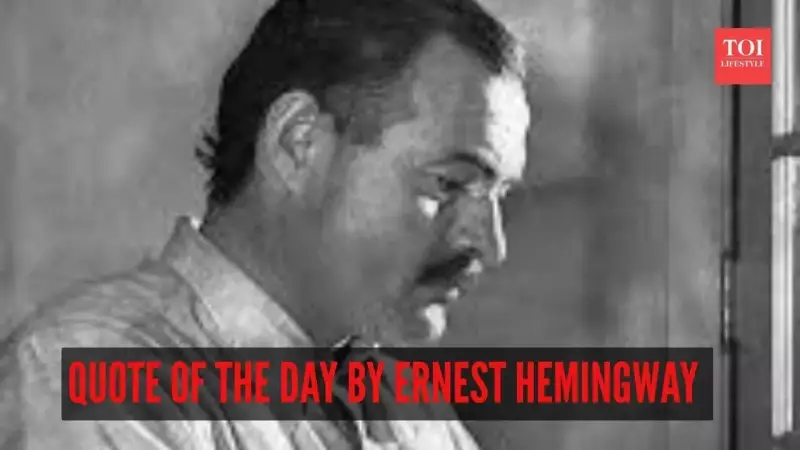
Ernest Hemingway stands as a towering figure in American literature, a novelist and short story writer whose revolutionary style left an indelible mark on fiction and journalism. Born Ernest Miller Hemingway in 1899 in Oak Park, Illinois, he first honed his craft as a reporter, a training ground that profoundly influenced his direct, unadorned approach to writing.
The Hemingway Style: A Revolution in Prose
Hemingway's unique literary voice was characterized by short sentences, simple vocabulary, and a deliberate lack of decorative language. Yet, this apparent simplicity conveyed deep, compelling emotion. This technique, famously known as the "iceberg theory," proposed that the true weight of a story lies beneath the surface of the written words, felt rather than explicitly stated. His work, marked by intense themes of love, loss, courage, and dignity, reshaped modern literature and influenced countless authors, from Raymond Carver to Cormac McCarthy.
Timeless Novels and Global Recognition
Hemingway's body of work is a collection of seminal reads that have stood the test of time. His experiences in major conflicts like World War I and the Spanish Civil War infused his writing with authentic portrayals of violence and human resilience. The world remembers him for masterpieces such as 'The Sun Also Rises', 'A Farewell to Arms', 'For Whom the Bell Tolls', and the profound 'The Old Man and the Sea'. In 1954, his powerful contribution was globally recognized when he was awarded the Nobel Prize for Literature.

Nuggets of Wisdom and an Iconic Philosophy
Hemingway's plainspoken style turned his narratives into vessels of hard-won truth. His characters—from the persevering fisherman Santiago to the war-torn soldiers—face brutal worlds but strive to act with grace and honesty. Through them, Hemingway measured life by "grace under pressure" and loyalty. One of his most iconic quotes encapsulates his worldview: "Every man's life ends the same way. It is only the details of how he lived and how he died that distinguish one man from another."
This powerful reminder underscores the universality of death while elevating the significance of our daily choices—how we love, work, and face fear. For Hemingway, these "details" are the essence of a life story, an invitation to live with courage and integrity, knowing that our actions carve our unique legacy. His fiction remains a timeless guide, offering invaluable insight into the human condition and the dignity of enduring struggle.