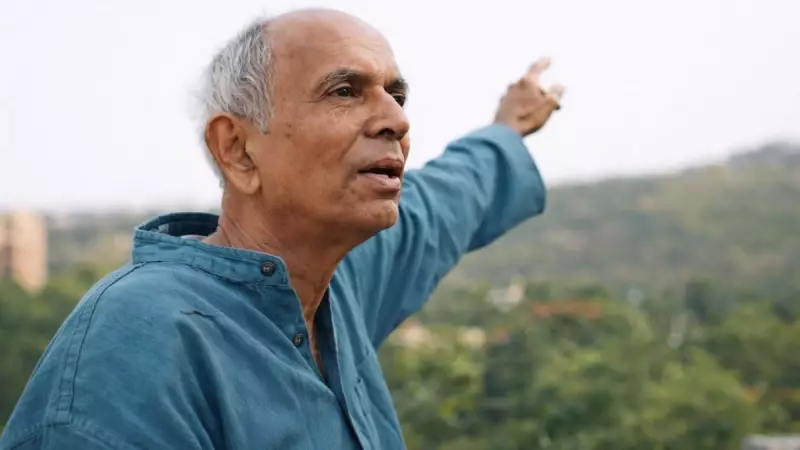
Eminent Indian ecologist and environmentalist Madhav Gadgil passed away on Wednesday, January 8, 2026, in Pune. He was 83 years old. The news of his demise was confirmed by his family, marking the end of an era for India's scientific and environmental conservation community.
A Storied Career in Ecology and Conservation
Madhav Gadgil was a towering figure in the field of ecology. Born on May 24, 1942, he dedicated his life to studying and protecting India's rich biodiversity. He served as a professor at the prestigious Indian Institute of Science (IISc) in Bengaluru and founded the Centre for Ecological Sciences there. His research work was extensive and influential, shaping national policy discussions on environment and development.
Gadgil's most notable public contribution was his role as the chairman of the Western Ghats Ecology Expert Panel (WGEEP). The panel, formed by the Ministry of Environment and Forests in 2010, submitted its landmark report in 2011. This document, popularly known as the 'Gadgil Report', recommended stringent measures to protect the fragile ecosystem of the Western Ghats, a UNESCO World Heritage Site. The report proposed classifying the region into three ecologically sensitive zones with graded restrictions on industrial and developmental activities.

A Legacy of Awards and Recognition
Throughout his distinguished career, Madhav Gadgil received numerous national and international accolades for his pioneering work. His awards stand as a testament to his contributions to science and society.
Some of his most prestigious honors include:
- Padma Shri (1981): One of India's highest civilian awards, conferred by the Government of India.
- Shanti Swarup Bhatnagar Prize for Science and Technology (1983): A top scientific award in India, recognizing his outstanding contributions to biological sciences.
- Volvo Environment Prize (1999): A global environmental award celebrating his exceptional work in sustainable development.
- International Cosmos Prize (2006): A prestigious Japanese prize awarded for his achievements in ecological research.
He was also an elected fellow of several renowned academies, including the Indian National Science Academy, the Indian Academy of Sciences, and The World Academy of Sciences (TWAS).
The Enduring Impact of the Gadgil Report
The WGEEP report remains Madhav Gadgil's most debated and impactful legacy. While environmentalists hailed it as a visionary blueprint for conservation, it faced significant opposition from various state governments and industrial interests in the region, who argued it was too restrictive for economic growth.
The report's recommendations were later reviewed by another committee led by Dr. K. Kasturirangan, which proposed a diluted version. However, the core principles of the Gadgil Report continue to be a reference point in all discussions concerning the Western Ghats. The report emphasized community-led conservation and the sustainable use of natural resources, ideas that have gained greater urgency in the face of climate change and frequent ecological disasters in the region.
Madhav Gadgil's passing leaves a profound void in India's environmental discourse. He was not just a scientist but a public intellectual who courageously advocated for evidence-based policy. His work continues to inspire a new generation of ecologists and activists committed to protecting India's natural heritage. His death in Pune, a city close to the Western Ghats he fought to protect, adds a poignant note to his remarkable life's journey.