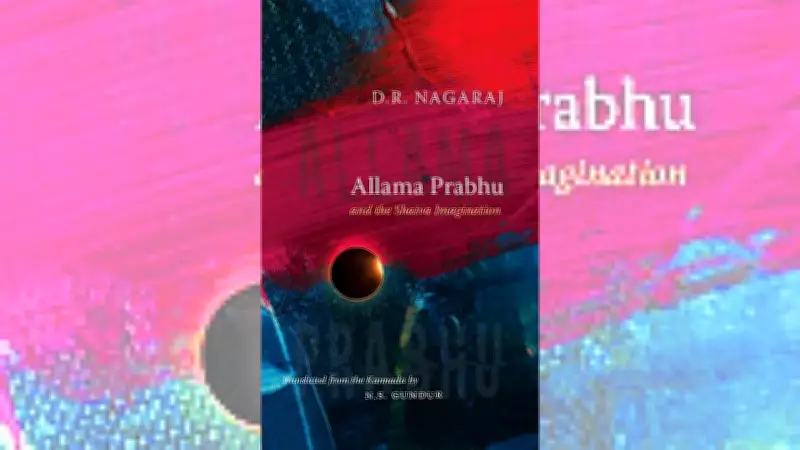
In 'Allama Prabhu and the Shaiva Imagination', author Gurucharan Gollerkeri delves into the life and teachings of the 12th-century mystic poet Allama Prabhu, who remains an enigmatic figure in the Bhakti movement. The book, published on 5 July 2026, presents Allama Prabhu as a radical thinker whose poetry and philosophy challenge conventional religious structures.
The Mystic's Path of Silence
Gollerkeri argues that Allama Prabhu offers no doctrine to follow and no system to inhabit. Instead, his works guide readers to the edge of silence, where language and logic dissolve. The mystic's vachanas (sayings) are characterized by paradoxical imagery and a rejection of ritualistic worship, emphasizing direct experience of the divine.
Allama Prabhu's Legacy in the Shaiva Tradition
The book situates Allama Prabhu within the broader Shaiva tradition, particularly the Virashaiva movement in Karnataka. Unlike other saints, Allama Prabhu did not establish a following or write extensive commentaries. His poetry, preserved in oral tradition, reflects a deep engagement with the concept of shunya (void) and the body as a temple.

Literary and Philosophical Analysis
Gollerkeri, a scholar of Kannada literature, provides a close reading of Allama Prabhu's vachanas, highlighting their linguistic innovation and philosophical depth. The book includes translations and interpretations that make the mystic's work accessible to modern readers. According to Gollerkeri, Allama Prabhu's poetry anticipates later developments in Indian philosophy, including non-dualism and deconstruction.
The author emphasizes that Allama Prabhu's teachings are not meant to be systematized. Instead, they invite readers to question their own assumptions about religion, identity, and reality. This approach, Gollerkeri suggests, is what makes Allama Prabhu's work timeless and relevant today.
Critical Reception and Impact
Since its release, 'Allama Prabhu and the Shaiva Imagination' has been praised for its scholarly rigor and accessible writing. Critics note that the book fills a gap in English-language literature on the Virashaiva tradition. The work is expected to spark new interest in Allama Prabhu among students of Indian philosophy and mysticism.
In conclusion, Gollerkeri's book is a valuable contribution to the study of Bhakti poetry and Shaiva thought. It challenges readers to move beyond conventional interpretations and embrace the transformative power of silence.