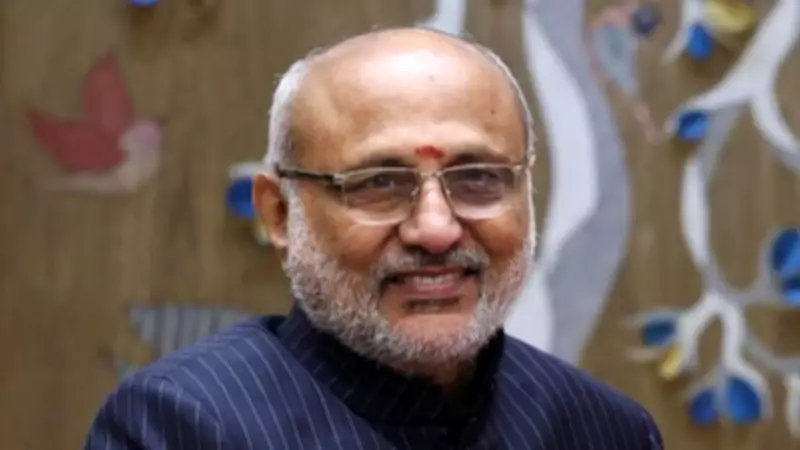
Vice President Stresses Need for Modern University Syllabi to Meet Global Demands
Vice President Jagdeep Dhankhar has issued a compelling call to action for universities across India, urging them to overhaul their educational frameworks by adopting modern and scientifically advanced syllabi. This initiative aims to better equip students to tackle the complex challenges facing the world today, from technological disruptions to environmental crises.
Addressing Contemporary Challenges Through Education
During a recent address, the Vice President highlighted that the traditional academic structures are no longer sufficient in a rapidly evolving global landscape. He emphasized that universities must pivot towards curricula that integrate cutting-edge scientific knowledge and practical applications. This shift is crucial for nurturing a generation of innovators and problem-solvers who can contribute meaningfully to both national development and international progress.
The Vice President pointed out that a modernized syllabus should not only focus on theoretical knowledge but also on fostering critical thinking, creativity, and adaptability among students. By doing so, educational institutions can play a pivotal role in driving India's growth as a knowledge-based economy, aligning with global standards and expectations.

Implications for Higher Education in India
This push for syllabus modernization comes at a time when India is striving to enhance its higher education sector to compete on the world stage. The Vice President's remarks underscore the importance of aligning academic programs with the needs of industries and society at large. Key areas for focus include:
- Integration of emerging technologies such as artificial intelligence, biotechnology, and sustainable energy solutions into course content.
- Emphasis on interdisciplinary studies that bridge gaps between science, humanities, and social sciences.
- Development of skill-based learning modules that prepare students for real-world applications and employment opportunities.
By adopting such measures, universities can ensure that graduates are not only well-versed in their fields but also capable of addressing pressing global issues like climate change, healthcare disparities, and economic inequalities.
Moving Forward with Educational Reforms
The Vice President's advocacy for a modern scientific syllabus is part of a broader vision to revitalize India's education system. He called for collaborative efforts between government bodies, academic institutions, and industry leaders to design and implement these changes effectively. This approach is expected to enhance the quality of education, boost research and innovation, and position India as a leader in global academia.
In conclusion, the call to action by Vice President Jagdeep Dhankhar serves as a timely reminder of the critical role that universities play in shaping the future. By embracing modern, scientific syllabi, India can empower its youth to meet the world's needs and drive sustainable development for years to come.