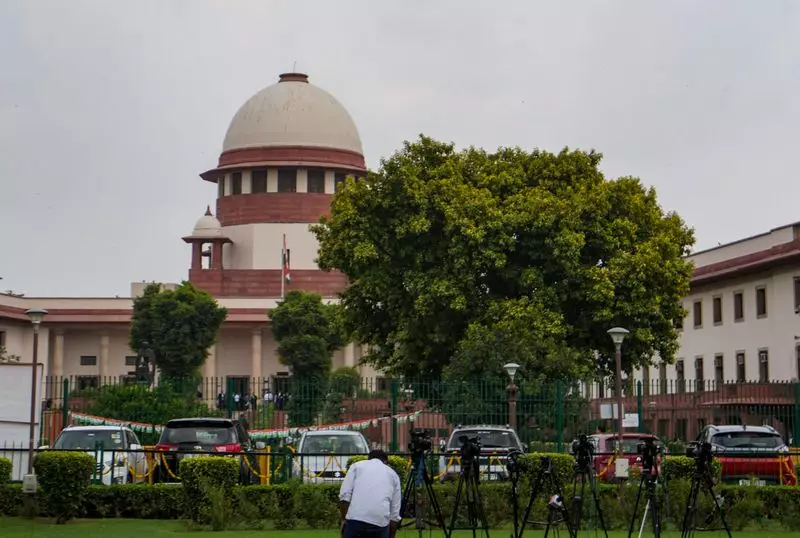
The Supreme Court of India delivered a stern rebuke to the Punjab government on Tuesday for its attempt to alter the admission criteria for MBBS courses after the selection process had already commenced. The apex court emphasized that such a move creates uncertainty and undermines the fairness of the entire admission procedure for medical aspirants.
Court Upholds Original Merit List, Quashes Government Notification
In a significant ruling, a bench comprising Justices Abhay S Oka and Ujjal Bhuyan set aside a Punjab government notification issued on November 7, 2023. This notification had sought to change the rules governing admissions to MBBS and BDS seats under the state quota at Baba Farid University of Health Sciences (BFUHS) in Faridkot. The court upheld the original merit list prepared by the university based on the criteria announced at the start of the process.
The legal battle centered on admissions for the NEET PG 2023 session. The Punjab government's last-minute notification aimed to introduce new reservation parameters. However, the Supreme Court found this action arbitrary and violative of the principles of natural justice, as it would have unfairly impacted candidates who had applied based on the originally published rules.

The Core of the Legal Dispute
The controversy began when the state government attempted to modify the reservation roster and eligibility conditions after Baba Farid University had already initiated counselling based on its prospectus. The university, along with several affected students, challenged the government's notification in the Punjab and Haryana High Court.
While the High Court had initially stayed the government's order, the Supreme Court's final judgment provides a definitive conclusion. The bench made a crucial observation, stating, "Once the process of selection starts, the rules cannot be changed mid-way." This principle is fundamental to maintaining the integrity and transparency of competitive admission processes, especially in highly sought-after fields like medicine.
Implications and Broader Message
The Supreme Court's decision has several immediate and long-term consequences. Primarily, it protects the interests of candidates who were selected in the original BFUHS merit list, allowing their admissions to proceed without disruption. The ruling also reinforces legal precedents that prevent authorities from shifting the goalposts after an examination or selection process is underway.
This case highlights the critical need for state governments and educational institutions to finalize and publish clear, unambiguous admission policies before inviting applications. Any subsequent changes can lead to costly legal battles and, more importantly, shatter the dreams and careful planning of thousands of students. The court's strong stance serves as a warning to all administrative bodies to adhere to procedural discipline and fairness in academic admissions.
For future medical aspirants in Punjab and across India, this judgment reaffirms that the rules of the game cannot be altered once the play has begun, ensuring a level playing field in the intensely competitive arena of medical education.