Traditional Dhaba at Panjab University Defies LPG Crisis with Wood-Fired Tandoor
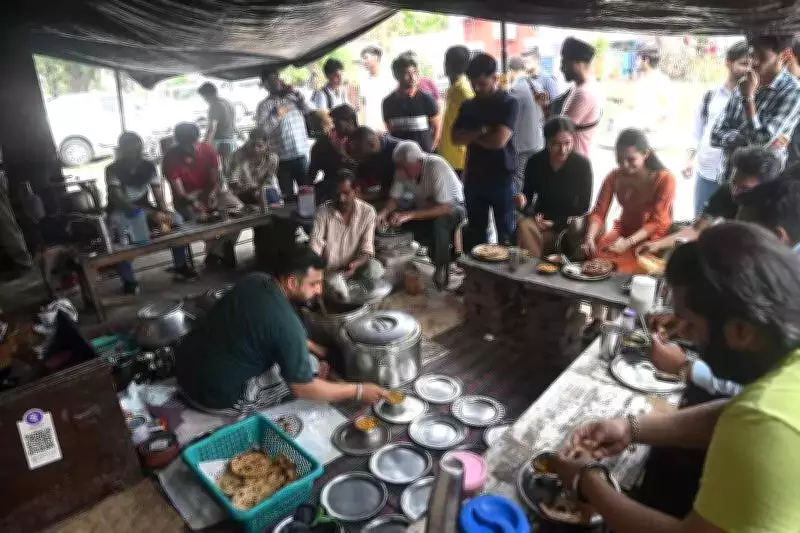
As a severe LPG cylinder shortage grips Panjab University in Chandigarh, forcing most canteens, messes, and food vendors to resort to the black market at inflated prices, a nearly three-decade-old dhaba on campus stands as a beacon of resilience. This establishment continues to serve students without disruption by relying on a traditional wood-fired tandoor, a method that has insulated it from the ongoing gas supply crisis.
Decades-Old Method Proves Its Worth
The dhaba, which has been operating inside the university for approximately 28 years, prepares staple dishes such as dal, roti, and vegetables using a tandoor and firewood. According to the owner, the outlet only recently began incorporating LPG cylinders for supplementary cooking, but the core meals have always been crafted using the traditional wood-fired setup. "We have been using a tandoor and firewood for years. LPG came later and we only used it for some additional cooking. Now that cylinders are becoming difficult to get, it has not affected us much because our main cooking still happens on wood fire," the dhaba owner explained. This adherence to age-old techniques has provided a crucial buffer against the current supply disruptions.
Widespread Struggle Among Other Food Outlets
In stark contrast, the majority of food outlets across the Panjab University campus remain heavily dependent on LPG cylinders, facing significant operational challenges. Canteen operators and contractors running establishments along major campus roads and academic blocks report that they are managing to serve food only by arranging cylinders through informal channels, often at exorbitant prices. A contractor operating a canteen on the Administrative Block road highlighted the worsening situation, noting that regular supply has become increasingly uncertain in recent days. "Normally, one cylinder lasts us just about a day because we cook continuously. For tomorrow, we will have to arrange something again. If we don't get a cylinder, the kitchen simply cannot run," he stated.

He further revealed that as the shortage intensifies, many vendors have turned to the black market, where cylinders are now fetching nearly Rs 2,000 each. "Now, cylinders are coming for nearly Rs 2,000 each. Everyone is arranging from wherever they can because we cannot shut the canteens," he added, underscoring the desperation among food service providers.
Hostel Messes and Smaller Vendors Hit Hard
Hostel mess operators across the university also confirm that while meals are still being prepared and served to students, procuring cylinders has become increasingly difficult. Several mess staff members mentioned having to call multiple suppliers or rely on personal contacts to secure gas cylinders at short notice, a process that adds stress and uncertainty to daily operations.
Smaller food vendors are among the worst affected, as they often lack backup cylinders or the resources to navigate the informal market. Sanjay, who runs a shop near Gate No. 2 serving roti, rice, sabzi, and daal, had to reduce his menu on a recent Friday due to a lack of gas cylinders. "Today, I was only making paranthas. I do not have a cylinder for tomorrow and right now I am not getting one anywhere," he said, illustrating the precarious position of smaller operators in the face of the crisis.
A Lesson in Sustainability and Tradition
With LPG supplies becoming scarce and prices soaring in the informal market, most kitchens across the Panjab University campus are operating under a cloud of uncertainty. In this challenging environment, the decades-old dhaba running on a wood-fired tandoor continues to cook the traditional way, demonstrating how heritage methods can offer practical solutions in times of modern supply chain failures. This contrast not only highlights the dhaba's unique advantage but also sparks conversations about sustainability and the value of preserving traditional cooking techniques in an era of frequent resource shortages.