Northwestern University's $75 Million Agreement with Trump Administration Sparks Constitutional Debate
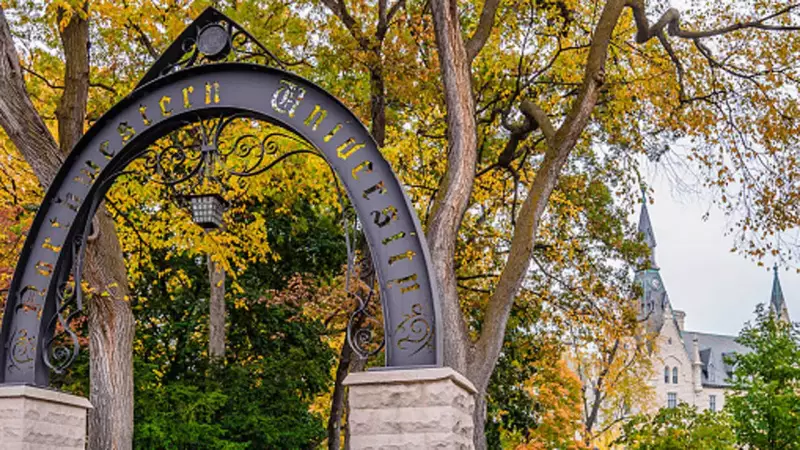
The recent agreement between Northwestern University and the Trump administration, involving a $75 million payment in exchange for the restoration of nearly $790 million in frozen federal research funding, has ignited significant scrutiny from constitutional scholars and free speech advocates across the United States. This controversial deal raises profound questions about the boundaries of government influence over higher education institutions and their autonomy in academic matters.
Funding Restoration Tied to Speech and Admissions Conditions
Under the terms of the agreement, Northwestern University has committed to implementing several substantial changes that directly impact campus life and admissions processes. The university has agreed to bar the use of personal statements, diversity narratives, or references to racial identity in admissions decisions where such materials could potentially be interpreted as justifying discrimination. This represents a significant shift in how the institution approaches holistic admissions evaluations.
The deal further imposes restrictions on campus demonstrations and displays, including:

- Limiting banners, flyers, and chalking activities to designated areas only
- Prohibiting overnight demonstrations across all university property
- Canceling a previous arrangement with pro-Palestinian protesters
- Reversing policies adopted under that understanding, including plans for a dedicated space for Muslim and North African students
University officials have also agreed to certify ongoing compliance with these terms to the federal government, creating an ongoing oversight mechanism that some legal experts argue compromises institutional independence.
Legal Experts Warn of First Amendment Implications
Northwestern law professor Heidi Kitrosser has been particularly vocal in her criticism of the arrangement, stating that "Northwestern has allowed its institutional judgment in terms of academic freedom, in terms of student speech, in terms of admissions criteria to be overridden by the demands of the federal government." She described the university as agreeing to the terms "at the barrel of a gun," highlighting the coercive nature of funding restoration as leverage.
Kevin Goldberg, vice president of the Freedom Forum, expressed concerns about the agreement's language, noting it lacks the precision needed to withstand First Amendment scrutiny. He pointed to a federal court ruling involving Indiana University, where similar restrictions on overnight demonstrations were struck down, suggesting Northwestern's agreement might face similar legal challenges.
University Leadership Defends Institutional Autonomy
In response to mounting criticism, interim president Henry Bienen released a video statement rejecting claims that the university had surrendered its autonomy. "I would not have signed anything that would have given the federal government any say in who we hire, what they teach, who we admit or what they study," Bienen asserted. "Put simply, Northwestern runs Northwestern."
However, this position has been challenged by constitutional lawyer and Northwestern alumnus Stephen Rohde, who described the agreement as "a sad day for higher education." Rohde argued that the university has significantly limited its ability to adjust policies affecting students and faculty, potentially setting a dangerous precedent for other institutions.
Supreme Court Context and Alternative Approaches
The debate occurs against the backdrop of recent Supreme Court decisions that have shaped the legal landscape regarding government influence on private entities. Professor Kitrosser cited the Court's 2024 decision in National Rifle Association of America v. Vullo, which held that government officials may not coerce private entities to suppress disfavored speech. She contrasted this with Murthy v. Missouri, where claims of government pressure on social media companies were dismissed due to evidentiary challenges.

Rohde suggested Northwestern could have followed Harvard University's approach, which successfully challenged the Trump administration's funding freeze in federal court. In September, Harvard won a ruling that found the administration violated the university's First Amendment rights by freezing funds, demonstrating an alternative path that preserved institutional autonomy while addressing funding concerns.
The Northwestern agreement represents a complex intersection of federal funding, institutional autonomy, and constitutional protections that will likely continue to generate debate within academic and legal circles for the foreseeable future.