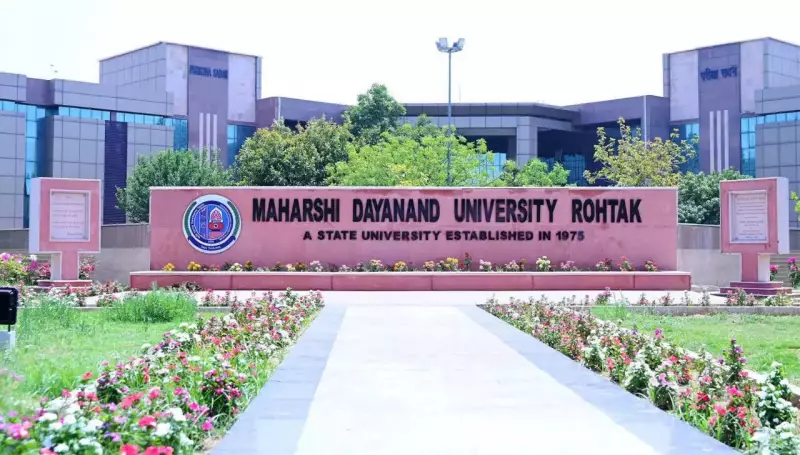
In a significant move to revamp higher education, Maharshi Dayanand University (MDU) in Rohtak is crafting a pioneering academic reform blueprint. This initiative gains momentum as the university celebrates its Golden Jubilee year and basks in the recent honour of receiving the Gold Category Award for NEP implementation from the Haryana State Higher Education Council.
From Rigid Exams to Real-World Learning
The proposed framework, tentatively named 'Design Your Degree', seeks to dismantle the traditional exam-centric model. Officials aim to replace it with a system where projects, portfolios, internships, and community-linked assignments form the core of learning and evaluation. The goal is to create a more flexible structure that empowers student choice while maintaining robust academic standards.
Currently, the proposal is being redrafted to finely tune it to the Indian context and address regional needs. The university has entrusted its Centre for Curriculum Design and Development (CCDD) with the task of providing academic and technical support. The CCDD will play a crucial role in guiding programme design, outcome mapping, credit architecture, and common assessment frameworks.

A Smorgasbord of Choices for Students
Under the new plan, students will enjoy unprecedented freedom to shape their academic journey. They will be able to select from elective baskets and skill tracks that align with their personal interests and career aspirations. This will enable unique cross-disciplinary combinations.
The proposed areas of study range from entrepreneurship, business innovation, and data analytics to AI-enabled applications, communication skills, tourism, sustainability, and creative domains. To ensure students navigate these choices effectively, the structure will include clear credit pathways, defined prerequisites, and dedicated academic advising. This will help students systematically build majors, minors, and competency-based skill outcomes.
Ensuring Quality and Local Relevance
University sources confirmed that the CCDD will develop standard templates for course outlines, project rubrics, and quality assurance mechanisms. This step is vital to maintain uniformity across various departments while still encouraging pedagogical innovation.
MDU officials describe this proposal as a cornerstone of a larger Golden Jubilee-year academic renewal agenda. The overarching vision is to tightly link classroom learning with real-world problem-solving and enhance graduate employability. A key part of the strategy involves strengthening collaborations with industry and public institutions across Haryana.
These partnerships will allow students to work on locally relevant issues such as heritage conservation, tourism promotion, entrepreneurship, sustainability projects, digital service delivery, and community development.
The university is now developing a detailed roadmap that will cover pilot departments, specific elective baskets, new assessment formats, and rollout timelines. This comprehensive plan will be presented to the university's statutory bodies for formal approval as per established norms, marking a potential new chapter for MDU and its students.