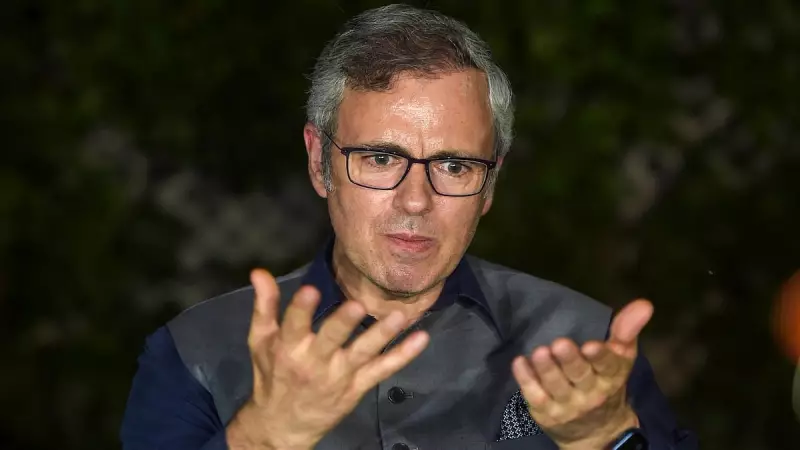
In a significant move addressing the concerns of aspiring doctors, the Jammu and Kashmir government has announced a plan to accommodate affected medical students through the creation of additional seats. Chief Minister Omar Abdullah made this crucial declaration, highlighting the administration's commitment to resolving educational disruptions.
Supernumerary Seats: A Solution for Displaced Students
The core of the announcement revolves around the use of supernumerary seats. These are extra seats created beyond the sanctioned intake capacity of medical colleges, specifically to absorb students whose academic journey has been impacted due to unforeseen circumstances. The Chief Minister's directive aims to provide a clear pathway for such students to continue their medical education without losing precious academic years.
This decision is expected to bring relief to numerous students and their families who have been facing uncertainty regarding their professional futures. The government's intervention underscores a proactive approach to safeguarding student interests in the union territory's healthcare education sector.

Accountability for Medical College Standards
Alongside the remedial measure, Chief Minister Omar Abdullah struck a firm note on quality assurance. He explicitly stated that accountability must be fixed if standards were not maintained at the Shri Mata Vaishno Devi Medical College.
This remark points towards an underlying issue concerning the maintenance of educational benchmarks at the institution. By linking the solution for students with a demand for institutional accountability, the government signals a dual focus: immediate redressal for affected individuals and long-term reforms to uphold the quality of medical education in Jammu and Kashmir.
Implications and the Road Ahead
The announcement, made on 08 January 2026, sets a clear administrative precedent. It demonstrates the government's role in mediating educational crises and ensuring that student welfare is prioritized. The creation of supernumerary seats, while a practical solution, also brings to light the challenges in managing capacity and quality in professional colleges.
The focus on Shri Mata Vaishno Devi Medical College suggests specific concerns that may have prompted this high-level statement. Stakeholders will now watch for the implementation mechanism for the supernumerary seats and any subsequent actions taken to investigate and rectify the standards at the mentioned college.
For the medical students of Jammu and Kashmir, this development offers a ray of hope and a tangible plan to overcome academic hurdles, allowing them to stay on course to become the next generation of healthcare professionals for the region and the nation.