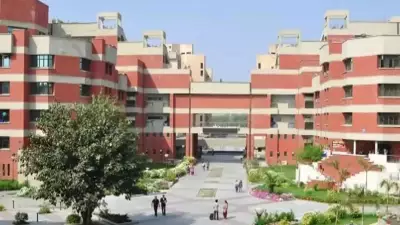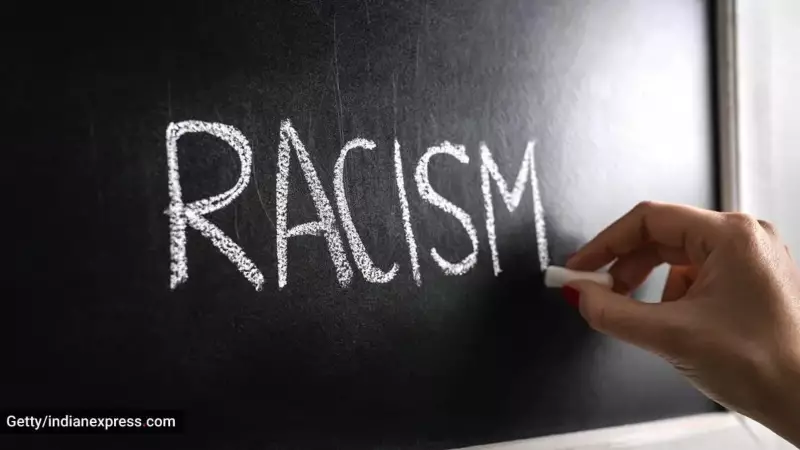
An incident of casual racism directed at a university professor during an examination has sparked a renewed conversation about the pervasive nature of racial prejudice in Indian society. The episode, involving a faculty member from the Northeast at Delhi University, underscores how deeply embedded discriminatory attitudes remain, even within premier educational institutions.
A Personal Account from the Examination Hall
On a routine day last week, a professor with 25 years of teaching experience at the University of Delhi walked into an examination hall for invigilation duty. From the very first desk, the professor, who is from the Northeast, heard cries of "ching-chong" deliberately meant to be overheard. This occurred despite the professor holding the principal authority in the room and serving as the nodal officer for Northeast students in the college.
The student involved was a typical urban middle-class youth studying at a premier university, an environment shared with many peers from the Northeast. The brazenness of the act, performed without fear of consequence against a teacher, raised alarming questions about the student's daily interactions with his classmates from the region. The professor accepted a weak apology from the student, who insisted there was no racist intent, and allowed him to continue with his exam.

The Broader Pattern of Discrimination and Violence
This personal incident is not an isolated one but part of a widespread pattern faced by people from India's northeastern states. They are routinely subjected to racial slurs and adjectives like "Nepali", "chinky", "momo", and "Chinese". The discrimination extends beyond words to physical spaces: educational institutions, local neighbourhoods, markets, and public transport.
Tragic cases act as grim reminders of where such bigotry can lead. The murder of Nido Tania from Arunachal Pradesh in Delhi's Lajpat Nagar and the brutal killing of Anjel Chakma from Tripura in Dehradun highlight the severe consequences of unchecked racism. Tania's death in 2014 led to the formation of the Bezbaruah Committee, whose recommendations resulted in some concrete measures.
These included amending the Indian Penal Code to make racial slurs a cognisable offence, creating nodal police stations and helplines, appointing special prosecutors, and setting up the Special Police Unit for North East Region (SPUNER) in Delhi Police. However, the response to Anjel Chakma's case revealed persistent gaps. He succumbed to his injuries after 18 days in the hospital, with a senior police officer reportedly downplaying the attack as remarks made "in jest."
The Path Forward: Institutional Sensitisation
The incident in the DU examination hall points to a critical need for systemic change. One proposed solution is mandatory sensitisation programs for students, staff, and all members of institutions. The goal is to foster an understanding that even so-called "harmless" throwaway remarks and name-calling are unacceptable and perpetuate a culture of discrimination.
While initiatives like nodal officers and special police units have instilled some confidence, there remains a palpable lack of demonstrable institutional and political will to combat this menace effectively. The normalisation of casual racism in everyday interactions reflects a societal blind spot that requires urgent and continuous address. The fight, as underscored by this professor's experience, must move beyond reacting to extreme violence and focus on dismantling the everyday bigotry that enables it.