In a groundbreaking educational initiative, all 1.3 lakh primary schools across Uttar Pradesh will undergo comprehensive assessment under the NIPUN School Assessment framework. This qualitative exercise represents the first statewide implementation of its kind, focusing on evaluating children's performance across a diverse range of experiences and activities rather than traditional testing methods.
Teacher-Led Assessment Process
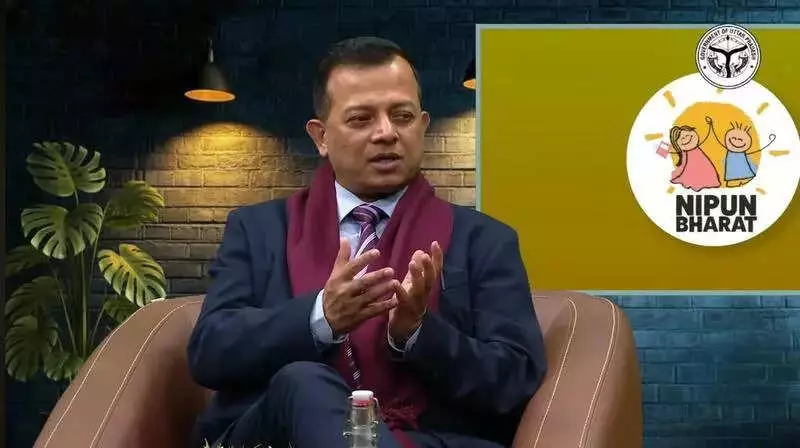
Addressing over six lakh teachers and education officials through a dedicated YouTube session, Additional Chief Secretary for Basic and Secondary Education Partha Sarthi Sen Sharma emphasized the critical role educators play in this assessment process. "Teachers should ensure 100% student participation in the assessment," Sharma stated during his virtual interaction, "while creating a comfortable environment where children feel no pressure from the assessment process."
Foundational Learning Focus
Sharma stressed that teachers occupy a central position in ensuring children achieve proficiency in foundational literacy and numeracy skills. "Significant structural reforms have been implemented under the NIPUN Bharat Mission," he explained, highlighting several key initiatives:

- Transformation of classroom environments to support learning
- On-site support for teachers through Academic Resource Persons (ARPs)
- Continuous capacity building programs for educators
Given these comprehensive reforms, Sharma emphasized that "teachers must take responsibility for making children and their schools NIPUN" by actively participating in the assessment process.
Assessment Implementation Details
Scheduled to commence on January 27, the NIPUN assessment will be conducted by trainees pursuing the Diploma in Elementary Education (DElEd). Sharma provided clear guidelines for the assessment process:
- The assessment must be conducted with complete transparency and impartiality
- The primary objective is identifying learning gaps rather than punitive measures
- The focus remains on identifying deficiencies to implement corrective actions
"The objective of this assessment is to identify learning gaps in children, not to take any punitive action," Sharma clarified. "Our focus is not on identifying which school is performing well or where there are shortcomings, but on identifying deficiencies through the assessment so that corrective measures can be taken."
Broader Educational Goals
Beyond the immediate assessment, Sharma outlined several interconnected educational priorities for Uttar Pradesh:
- Curbing student dropouts between Classes 5 and 6, and between Classes 8 and 9
- Future expansion of the NIPUN Bharat Mission to Classes 3 to 5
- Ensuring structured efforts to help children acquire expected grade-level competencies
- Developing subject-specific competencies for higher classes
This comprehensive approach reflects the government's commitment to creating a robust educational foundation that supports students throughout their academic journey while addressing systemic challenges in the state's education landscape.