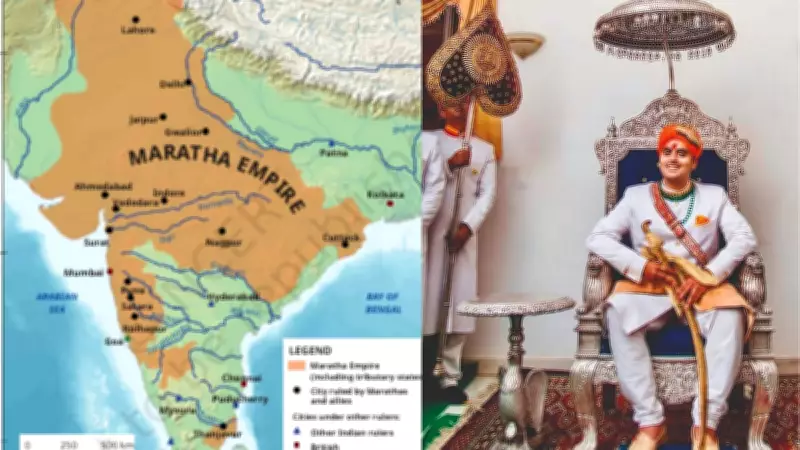
NCERT Withdraws Controversial Maratha Empire Map from Class 8 Textbooks
The National Council of Educational Research and Training (NCERT) has taken decisive action by removing a contentious map from its Class 8 history textbooks. This map, which illustrated the territorial extent of the Maratha Empire in the year 1759, has been excised from the Hindi digital edition following significant objections raised over its historical accuracy, particularly concerning the depiction of regions within Rajasthan.
Map Controversy Sparks Widespread Objections
The controversy erupted when the map in question portrayed Jaisalmer and certain other parts of present-day Rajasthan as being under Maratha control during the specified period. This representation quickly drew sharp criticism from various quarters, including members of erstwhile royal families and prominent politicians from Rajasthan. They argued that the map presented a misleading narrative, suggesting Maratha dominance and taxation in areas where historical evidence does not support such claims.
Allegations of Historical Inaccuracies and Factual Errors
Critics of the map have been vocal in their assertion that it contains serious factual inaccuracies. They contend that there are no credible historical records or scholarly accounts that substantiate the Maratha Empire exercising control, administration, or imposing taxation over Jaisalmer in 1759. The depiction was labeled as baseless and potentially misleading for students, raising concerns about the integrity of educational content and the importance of factual precision in history textbooks.

NCERT's Response and Removal of the Map
In response to the mounting objections and the debate over historical accuracy, NCERT has proceeded to remove the controversial map from the digital version of the Class 8 Hindi textbook. As of now, the council has not issued an official statement or clarification detailing the specific reasons behind this removal. The action highlights the ongoing scrutiny and sensitivity surrounding historical narratives in educational materials, emphasizing the need for rigorous verification and scholarly consensus before inclusion in curricula.
The removal underscores a broader commitment to ensuring that educational resources are free from contentious and unverified historical claims, thereby fostering a more accurate understanding of India's complex past among young learners.