Kannada Writer Sounds Alarm Over Government School Closures and Commercialization of Education
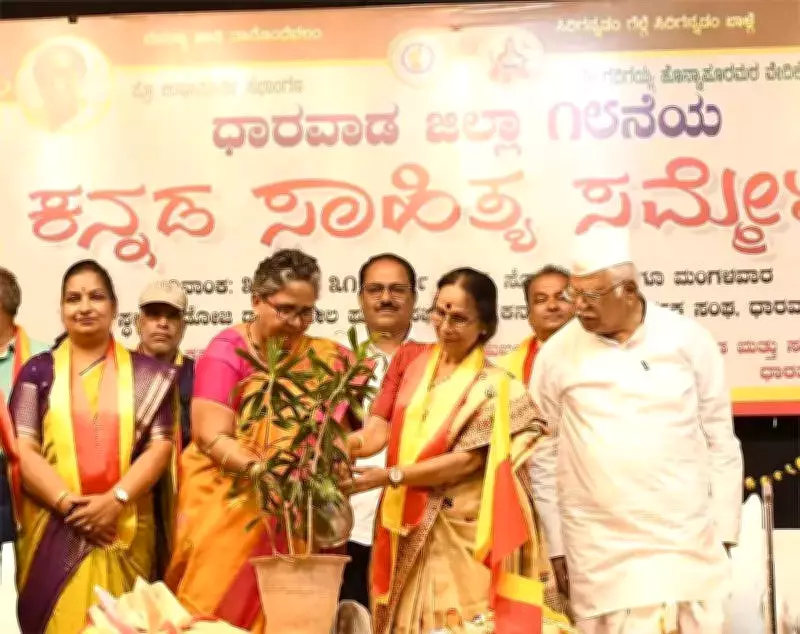
Senior writer and president of the 18th Dharwad District Kannada Sahitya Sammelana, Hema Pattenshetti, delivered a powerful address on Monday, highlighting Karnataka's troubling position at the forefront of a nationwide trend of government school closures. Presiding over the Sammelana at the Karnataka Vidyavardhaka Sangha, Pattenshetti vehemently opposed what she described as the government's move toward commercializing education, issuing a stark warning about the severe social consequences of treating education as a mere market commodity.
Unacceptable Closure of Kannada-Medium Schools
Pattenshetti emphasized that the shutting down of Kannada-medium schools is not only unacceptable but also poses a direct threat to the future of the language itself. She expressed deep concern over the lack of public resistance to these closures, stating that the language's very identity is at risk. "Kannada schools cannot be saved unless citizens unite and raise their voices," she asserted, calling for immediate collective action.
She stressed that safeguarding and nurturing Kannada schools must be a top government priority. Pattenshetti urged economists, intellectuals, and policymakers who support school closures to fully recognize the profound political and cultural implications of their stance. "Education must not be handed over to private business interests," she declared, advocating for education to remain a public good rather than a profit-driven enterprise.

Kannada as the Standard for Learning and Employment
Pattenshetti outlined a vision where Kannada serves as the standard for learning, the primary medium of instruction, and a key criterion for employment. She called on multinational companies operating in Karnataka to prioritize hiring Kannadigas, arguing that this is essential for securing the language's future. While acknowledging that technology and mobile platforms have expanded the use of Kannada, she raised critical questions about whether artificial intelligence can genuinely serve humanity's welfare, urging caution in its adoption.
Literature Must Engage with Society and Speak for the Oppressed
Inaugurating the event, former Akkamahadevi Women's University vice-chancellor Sabiha Bhumigowda emphasized that literature must transcend mere imagination and actively speak for oppressed, women, and marginalized communities. She noted the growing space for women's voices in literature, highlighting feminist thought as both a form of resistance and a pathway toward equality.
"Kannada is not just an emotion; it is a culture that teaches us how to live," Bhumigowda stated. "From Vachana literature to modern protest writing, it has consistently driven social change." She called for contemporary literature to combine rigorous research with creativity and urged that literary discussions reach grassroots levels rather than remaining confined to formal, elite platforms.
Call for Peace Amid Global Conflicts
Referencing global conflicts, including tensions involving Iran, the United States, and Israel, Bhumigowda expressed grave concern over the loss of innocent lives. She urged people everywhere to oppose war and actively promote peace. Welcoming the increased participation of women in anti-war movements, she called for collective efforts to uphold harmony and foster a more peaceful world.
The Sammelana served as a platform for these urgent calls to action, blending cultural preservation with social advocacy and highlighting the critical role of language and literature in shaping a just and equitable society.