JEE Main 2026 Session 1 Results Announced by National Testing Agency
The National Testing Agency (NTA) has officially declared the results for the Joint Entrance Examination Main (JEE Main) Session 1 of 2026, concluding the initial phase of India's premier engineering entrance test. This announcement marks a significant milestone for hundreds of thousands of aspiring engineers across the nation and beyond.
Exam Participation and Conduct Details
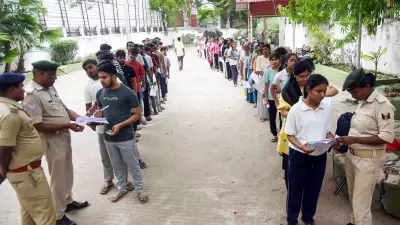
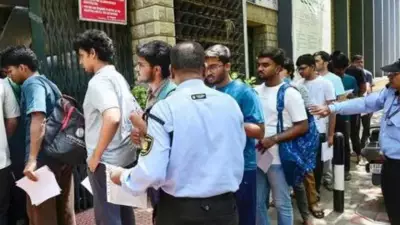
This year's examination witnessed massive participation, with 13,55,293 candidates registering and 13,04,653 appearing for the test, resulting in an impressive attendance rate of 96.26%. The Computer Based Test (CBT) mode was implemented across 658 examination centers located in 326 cities worldwide, including 15 international cities outside India. To ensure accessibility, the exam was conducted in 13 languages, encompassing English, Hindi, Tamil, Telugu, and several other regional languages.
Perfect Scorers and Category-Wise Representation
In a remarkable achievement, 12 candidates secured a perfect 100 percentile score in Paper 1 for Bachelor of Engineering and Bachelor of Technology programs. A perfect score not only positions these candidates strongly for top All India Ranks but also guarantees their eligibility for the prestigious JEE Advanced examination, the gateway to the Indian Institutes of Technology (IITs).

The examination reflected broad social representation across various categories:
- General category: 4,52,825 candidates
- General Economically Weaker Sections: 1,60,958 candidates
- Other Backward Classes Non Creamy Layer: 5,17,336 candidates
- Scheduled Castes: 1,29,902 candidates
- Scheduled Tribes: 43,632 candidates
Among the 12 perfect scorers, 11 belong to the General category while one hails from the Other Backward Classes Non Creamy Layer category. The top performers include Shreyas Mishra from Delhi, Shubham Kumar from Bihar, Anay Jain from Haryana, and candidates from Andhra Pradesh, Rajasthan, Odisha, Maharashtra, Gujarat, and Telangana.
The Remarkable Case of Identical Scoring Twin Brothers
Beyond the national statistics, a particularly fascinating story has emerged from Bhubaneswar, Odisha. Twin brothers Mahroof Ahmed Khan and Masroor Ahmed Khan achieved identical scores in Session 1, creating a unique narrative within an examination system fundamentally designed for ranking and differentiation.
The brothers undertook their preparation journey in Kota, Rajasthan, the renowned hub of India's engineering entrance coaching ecosystem. Both describe their preparation as highly disciplined and systematically structured over an extended period.
Mahroof Ahmed Khan shared with ANI, "Luckily, there weren't too many difficulties. It was quite smooth sailing. All the teachers helped tremendously. I simply followed the guidance provided by instructors and completed all assigned work diligently. Nothing extraordinary, just consistent effort." He emphasized that he has been preparing for this examination for five years, acknowledging that "significant hard work has been invested, and Kota has undoubtedly contributed substantially to our preparation."
Masroor Ahmed Khan described experiencing phases of difficulty during preparation. "I encountered challenges; sometimes I obtained lower marks due to avoidable errors. I discussed these issues with my teachers to improve," he explained. He added, "Studying NCERT textbooks proves beneficial for JEE preparation. I would like to acknowledge Allen Institute, my parents, my family, and my personal dedication and perseverance."
Shared Preparation Methodology and Family Support
Both brothers emphasized their collaborative study approach and synchronized schedules. Mahroof revealed, "From the beginning, we studied together, resolving doubts collectively. We motivated each other during periods when results were unsatisfactory. This fostered healthy competition and enhanced our overall performance."
Masroor echoed this sentiment, stating, "We maintained identical study timings and constantly encouraged one another. We learned extensively from each other's strengths and approaches."

Mahroof also highlighted the crucial role of family support in their journey. "Our mother currently resides with us in Kota. She left her employment specifically to support our preparation," he shared. Looking toward the future, he added, "My immediate objective is to excel in JEE Advanced and subsequently pursue computer science at IIT Bombay. Ultimately, I aspire to become an Indian Administrative Service officer."
Examination Timeline and Next Steps
The JEE Main Session 1 was conducted between January 21 and January 28, 2026. Results for Paper 2, covering Bachelor of Architecture and Bachelor of Planning programs, will be announced separately at a later date. All candidates can now access their official scorecards through the NTA's designated website.
Broader Implications and Cultural Context
While the examination naturally highlights top percentile achievers, as rank determines admission to National Institutes of Technology, Indian Institutes of Information Technology, and other Government Funded Technical Institutions, the identical scores of the Khan brothers provide an alternative perspective on this results cycle.
The JEE ecosystem extends beyond mere competition, encompassing family decisions, coaching migration patterns, and sustained discipline over years. Kota represents one prominent node within this ecosystem, while Bhubaneswar symbolizes the numerous origin points from which families relocate in pursuit of educational opportunities.
The twins' experiences reflect patterns observable throughout India's entrance examination culture. Structured coaching methodologies, NCERT textbook mastery, regular teacher consultations, and peer comparisons remain fundamental components of preparation strategies. In this distinctive case, the primary peer happened to be a sibling.
The results now pave the way for the subsequent stage: JEE Advanced. For numerous candidates, this represents another rigorous filtering process. For Mahroof and Masroor Ahmed Khan, it constitutes the next shared milestone in their educational journey.
In an examination year characterized by exceptional attendance rates and twelve perfect percentiles, the brothers' identical scores serve as a poignant reminder that competitive systems are shaped not solely by rankings but also by daily routines, collaborative partnerships, and persistent effort sustained over extended periods.