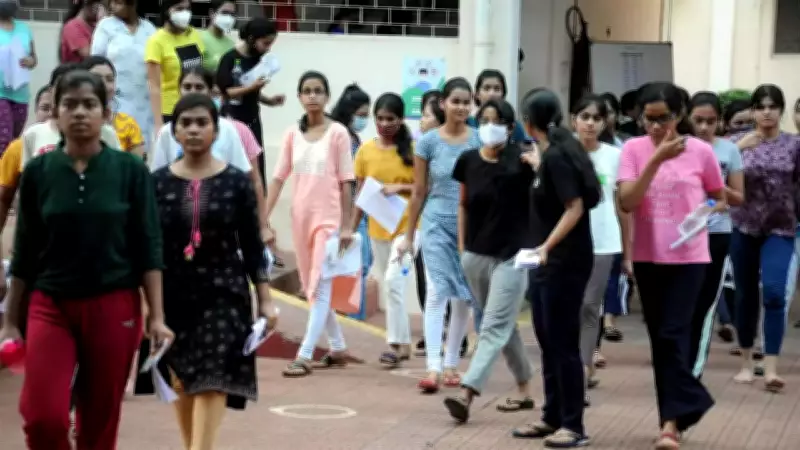
It's that familiar February ritual that unfolds across India—lakhs of JEE Main aspirants anxiously refreshing their browsers, awaiting clarity on their performance. The National Testing Agency (NTA) has officially released the provisional answer key and candidate response sheets for JEE Main 2026 Session 1, marking a pivotal moment for engineering hopefuls nationwide.
JEE Main 2026 Answer Key: Your First Glimpse at Performance
Released on February 4, 2026, the provisional answer key for Paper 1 (BE/BTech) is now accessible on the official NTA portal at jeemain.nta.nic.in. This release provides candidates with their initial opportunity to assess not just their probable scores, but to begin serious contemplation about their academic trajectory. Alongside the answer key, students can review their recorded responses and, crucially, have the option to challenge any answers they believe to be incorrect. The window for submitting these objections closes sharply on February 6, 2026, at 11:50 PM.
Why the Provisional Answer Key is a Strategic Tool, Not Just a Curiosity
For countless students, this moment represents the transition from intensive preparation to informed reflection. The provisional answer key enables candidates to compute their expected raw score out of 300 well before percentiles or ranks are announced. This early estimation is instrumental in making critical decisions: whether to intensify efforts for Session 2, to shift focus entirely towards JEE Advanced preparation, or to begin exploring alternative pathways within engineering education. Essentially, this document is less about validating the past and more about strategically planning the future.

JEE Main 2026 Score Calculator: A Step-by-Step Guide to Your Probable Score
With the answer key and response sheet in hand, the next logical step is accurate calculation. For Paper 1, JEE Main adheres to a definitive marking scheme: four marks are awarded for each correct answer, one mark is deducted for every incorrect response, and unattempted questions carry zero marks.
How to Calculate Your JEE Main 2026 Score Accurately
To answer the pressing question, "What is my likely score?", follow this meticulous process:
Step 1: Understand the Marking Scheme Thoroughly
For Paper 1 (BE/BTech):
- +4 marks for every correct answer
- –1 mark for every incorrect answer
- 0 marks for unattempted questions
Note: There is no negative marking for numerical questions if left unattempted.
Step 2: Match Answers with Precision
Open your response sheet and the provisional answer key simultaneously. Carefully tick correct answers, cross incorrect ones, and clearly identify unattempted questions. Accuracy here is paramount, as a single miscount can significantly alter your score expectations.
Step 3: Perform the Calculation
Apply this straightforward formula:
Estimated JEE Main Score = (Number of Correct Answers × 4) – (Number of Incorrect Answers × 1)
This computation yields your raw score out of the maximum 300 marks.
Step 4: Interpret Your Score Through a Career Lens
While percentiles will follow later, your raw score offers immediate insight:

- 220+: Indicates a strong trajectory towards NITs, IIITs, or IITs (via JEE Advanced).
- 180–220: Positions you well for NITs, top state colleges, and signifies a zone for serious JEE Advanced preparation.
- 140–180: Opens doors to good GFTIs and private universities, with clear scope for improvement in Session 2.
- Below 140: Suggests a need to rethink strategy, strengthen foundational concepts, and target Session 2 with renewed vigor.
Raising Objections: A Prudent Approach When Necessary
If a candidate genuinely believes an answer in the provisional key is erroneous, the NTA provides a structured online mechanism to challenge it. The process involves selecting the specific question ID, choosing what you believe is the correct option, uploading supporting academic proof in a single PDF file, and paying a non-refundable fee of ₹200 per question challenged. All challenges must be submitted online before the strict deadline of February 6, 2026, at 11:50 PM.
Procedure to Submit an Objection:
- Log into your account on the official portal, jeemain.nta.nic.in.
- Navigate and click on the "Challenge(s) regarding Answer Key" link.
- Select the relevant question ID from the list provided.
- Choose the correct option as per your understanding.
- Upload your supporting documentary proof consolidated into a single PDF.
- Save your claim details carefully.
- Proceed to pay the fee of ₹200 per question.
- Submit the challenge and retain the confirmation for your records.
Important Considerations:
- The challenge fee is strictly non-refundable.
- No objections will be entertained after the February 6 deadline.
- The NTA does not provide individual updates on the acceptance or rejection of challenges.
- The final answer key will be prepared after a comprehensive review by subject experts.
The Deeper Significance of This Phase in Your JEE Journey
This provisional answer key is far more than a simple score indicator; it serves as a critical career checkpoint. It empowers you to determine the required intensity for Session 2 preparation, shapes your confidence level for JEE Advanced, informs the initial shortlisting of potential colleges, and provides a form of emotional closure or a powerful source of motivation. Historical trends show that students who honestly interpret their Session 1 data have successfully transformed average scores into outstanding Session 2 performances.
The Strategic Takeaway Often Overlooked
Annually, many students perceive the answer key as a final verdict. In reality, it is a diagnostic report. It highlights what strategies worked, which areas need improvement, and how decisively you need to adjust your preparation. Some of the most impressive JEE results have originated from students who used this precise phase to recalibrate their approach strategically, rather than succumbing to panic.
As the initial phase of JEE Main 2026 concludes, the most astute strategy involves careful calculation, strategic thinking, and the enduring perspective that successful engineering careers are built over years of dedicated effort—not decided by the outcome of a single examination.