ABVP Stages Protests Over Inclusion of Jinnah Chapter in Jammu University's Political Science Syllabus
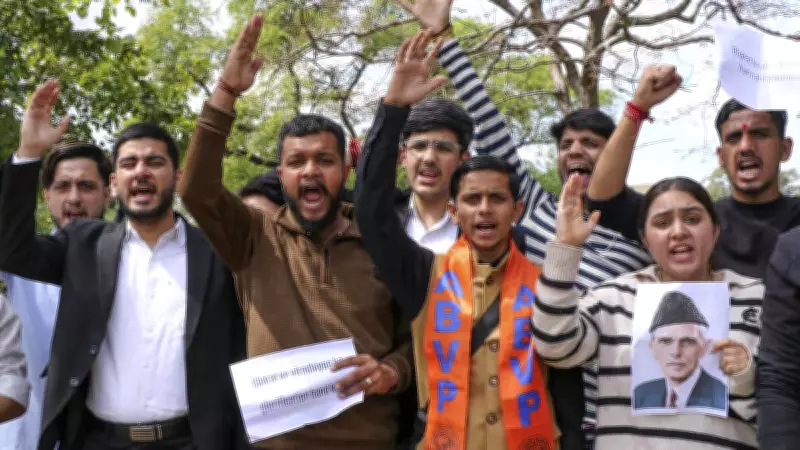
The Akhil Bharatiya Vidyarthi Parishad (ABVP), the student wing affiliated with the Rashtriya Swayamsevak Sangh (RSS), has launched significant protests against Jammu University's decision to include a chapter on Muhammad Ali Jinnah in its political science syllabus. The demonstrations, which have drawn attention across academic and political circles in Jammu and Kashmir, highlight ongoing debates about historical narratives and educational content in Indian universities.
University Defends Syllabus, Citing UGC Guidelines and Academic Precedents
In response to the protests, Jammu University has firmly defended its curriculum, asserting that the chapter on Jinnah is not an isolated addition but part of a broader academic framework. University officials have clarified that this content aligns with the guidelines set by the University Grants Commission (UGC), India's apex body for higher education coordination and standards.
The university emphasized that similar chapters on Jinnah are included in the political science syllabi of several other universities across India, reflecting a standard approach to studying modern Indian history and the partition era. This stance underscores the institution's commitment to maintaining academic rigor and adhering to national educational norms, despite the political sensitivities surrounding Jinnah's role in the subcontinent's history.

Background and Implications of the Controversy
The inclusion of Jinnah, the founder of Pakistan, in an Indian university syllabus has sparked controversy due to his polarizing legacy in the context of India's independence and partition. The ABVP's protests argue that such content may promote divisive narratives, while the university counters that it is essential for a comprehensive understanding of political developments in South Asia.
This incident raises broader questions about academic freedom, curriculum design, and the influence of political ideologies on education in India. It also touches on issues of historical interpretation and how educational institutions balance diverse perspectives while following regulatory frameworks.
As the situation unfolds, stakeholders including students, faculty, and political groups are closely monitoring developments, with potential implications for syllabus revisions and academic policies in other universities. The university's adherence to UGC guidelines suggests a focus on standardized education, but the protests indicate ongoing tensions in shaping historical discourse within India's educational landscape.