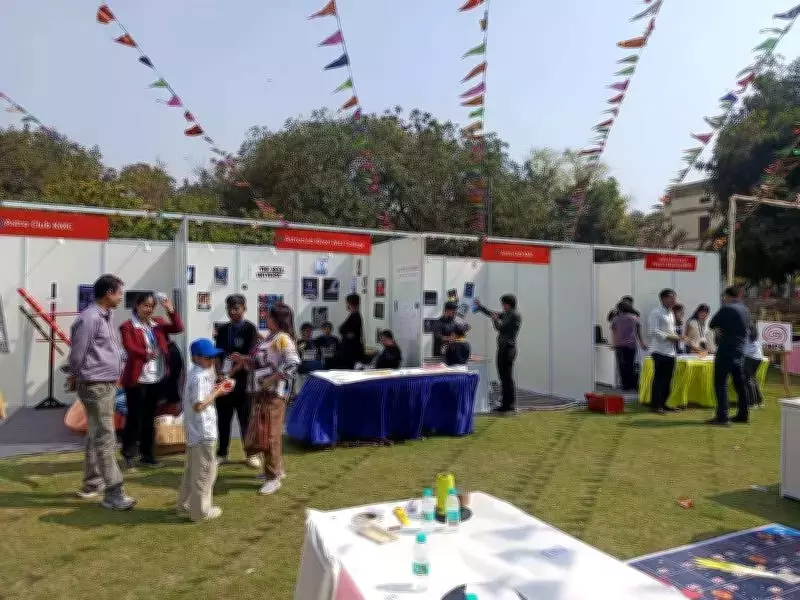
Students Explore Planetary Weight Differences at National Science Day Celebration
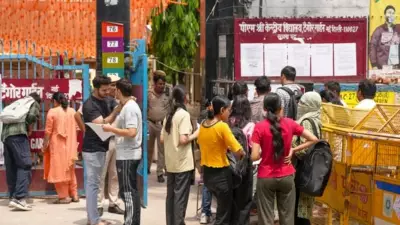
In New Delhi, a group of young science enthusiasts made a fascinating discovery about their own bodies during the Vigyan Utsav event held on Saturday. Organized by the Prime Minister's Museum and Library (PMML) to mark National Science Day, the gathering featured a unique pavilion titled "Know your weight on different planets."
Rachna's Astronomical Weight Revelation
Fifteen-year-old Rachna, with an actual weight of 46 kilograms on Earth, was astonished to find that her weight increased significantly when calculated for the surface of Neptune. According to the exhibit, weight on Neptune is 1.19 times the weight on Earth, making her feel heavier in this theoretical scenario. Conversely, when she computed her weight for Venus, where it is 0.91 times the Earth weight, she was thrilled to see it drop below 46 kg.
Rachna was among several youngsters who participated in this interactive activity, learning firsthand how weight varies across seven different planets in our solar system. The experience was not a space voyage but an engaging educational session designed to spark curiosity about astronomy and physics.

Science Behind the Weight Variations
The posters at the pavilion provided a clear scientific explanation for these differences. They stated that a person weighs more on Neptune than on Venus due to Neptune's stronger surface gravity, which results from its higher mass. This hands-on demonstration helped students grasp complex concepts like gravitational force in a tangible way.
Interactive Learning and Exhibits
Beyond the planetary weight station, the day-long event, themed ‘A Carnival of Curiosity,’ offered a rich array of activities for children. Free virtual reality shows transported participants to immersive scientific worlds, while ‘Nukkad Nataks’ (street plays) conveyed scientific messages in an entertaining format.
Hands-on science experiments and physics games were conducted, with ‘Do It Yourself’ STEM kits provided by organizations such as Vigyan Vyanjan and KMC Astroclub, the astronomy club of Kirori Mal College. These kits encouraged practical learning and innovation among the young attendees.
Promoting Scientific Temper in the AI Age
PMML director Ashwani Lohani emphasized the importance of such events in today's world. He remarked, "Such events showcase the deep roots of democracy in the country besides promoting scientific temper in this age of artificial intelligence." The celebration aimed to foster a culture of inquiry and critical thinking among the youth.
Additional Highlights and Tributes
The fair also featured displays of science and educational books, telescopes, and DIY kits from various innovators. Inspirational hand-made paintings of pioneering physicist Dr. C V Raman and missile-cum-space scientist and former President A P J Abdul Kalam were exhibited, offering role models for the children.
In a parallel tribute, PMML celebrated the 130th birth anniversary of former Prime Minister Morarji Desai with a panel exhibition detailing his life and contributions. This added a historical dimension to the scientific festivities, highlighting the intersection of governance and education.
The Vigyan Utsav successfully blended entertainment with education, using interactive methods to make science accessible and exciting for the next generation. By engaging students in activities like calculating planetary weights, the event reinforced the value of scientific exploration in everyday life.