Visakhapatnam's Economic Transformation Sparks University Innovation
Visakhapatnam, the coastal city in Andhra Pradesh, is experiencing an unprecedented wave of major investment announcements across multiple high-growth sectors. This surge includes substantial commitments in data centers, IT development hubs, semiconductor manufacturing, pharmaceuticals, hospitality, steel production, green hydrogen initiatives, tourism development, aviation infrastructure, and port-led logistics operations.
Government Vision and Global Interest Converge
With the state government actively positioning Visakhapatnam as a future technology and industrial powerhouse, experts believe this evolving economic landscape presents a significant strategic opportunity for Andhra University. The institution can align its academic and research priorities with these emerging sectors to remain relevant and competitive.
In recent months, global technology giants including Google, Reliance Industries, Sify Technologies, Accenture, Cognizant, Tata Consultancy Services, IBM, and Capgemini have either announced projects or received invitations to establish large-scale IT campuses, data centers, and global capability centers throughout the region. Industry observers predict these investments could fundamentally transform Visakhapatnam into a vibrant knowledge and technology ecosystem over the coming decade.

Centennial Opportunity for Academic Reinvention
As Andhra University approaches its centenary celebration in April, many stakeholders believe this milestone presents a timely opportunity for the institution to innovate and reposition itself strategically. Strengthening industry partnerships, expanding collaborative research initiatives, and introducing cutting-edge academic programs in fields such as:
- Artificial intelligence and machine learning
- Quantum computing technologies
- Semiconductor manufacturing processes
- Digital infrastructure development
could help the university maintain relevance within the rapidly evolving economic landscape of Andhra Pradesh and beyond.
Data Center Ambitions and Infrastructure Development
The state government has ambitious plans to transform Visakhapatnam into India's largest data center hub, targeting a combined capacity of approximately six gigawatts. Announcements for nearly three gigawatts have already been confirmed, with the full six-gigawatt proposal supported by plans for subsea cable landing stations along the coastline. This infrastructure development would significantly enhance global digital connectivity and increase Vizag's appeal for large-scale data infrastructure investments.
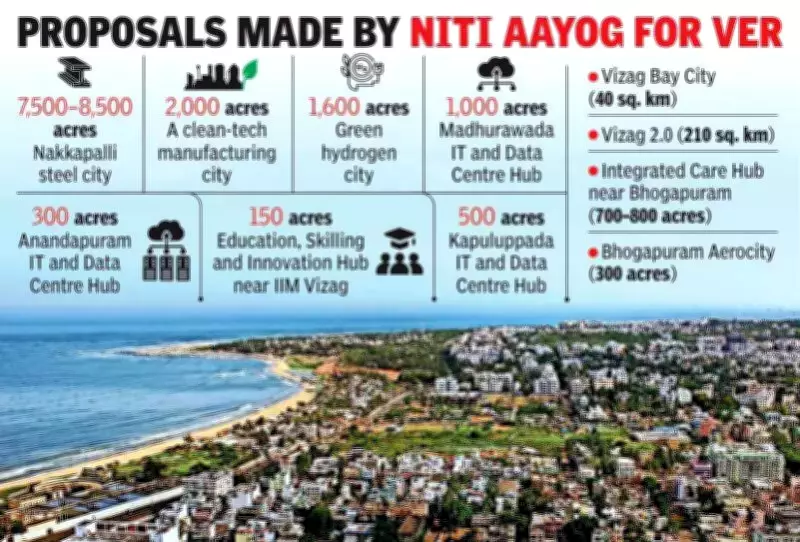
Similarly, the NITI Aayog-prepared Visakhapatnam economic region plan has proposed developing full-fledged IT hubs in strategic areas including Kapuluppada, Madhurawada, and Anandapuram. These emerging technology corridors are expected to attract substantial investments in IT services, electronics manufacturing, and digital infrastructure development.
University Leadership Responds to Industry Demands
Speaking about these developments, Andhra University Vice-Chancellor Prof G P Rajasekhar emphasized the institution's increased focus on new-age academic programs. "Taking advantage of the National Quantum Mission, the university recently introduced a BTech program in quantum computing," Prof Rajasekhar explained. "We have constituted an advisory board for this program with experts from Tata Consultancy Services, Bhabha Atomic Research Centre, and distinguished alumni as members."
The university plans to establish a quantum computing laboratory with support from this committee while simultaneously identifying an expert teaching pool from industry for various technology programs. Curriculum revision committees are being formed to update undergraduate and postgraduate courses with stronger emphasis on practical skills, innovation methodologies, and emerging technologies.

Hands-On Learning and Research Initiatives
"At the first-year level, students will receive hands-on exposure through 'do-it-yourself' laboratories that allow experimentation with different technologies," Prof Rajasekhar continued. "Wherever funding opportunities exist, we are actively pursuing them. Seven departments have applied for Department of Science and Technology FIST funding, while six research proposals have been submitted under the quantum computing mission, including one for an undergraduate quantum computing laboratory."
The vice-chancellor added that alumni have stepped forward to support establishment of a semiconductor laboratory, demonstrating how Andhra University is planning multiple innovations to align with emerging technological developments in the region.
These comprehensive efforts position Andhra University to not only respond to Visakhapatnam's economic transformation but to actively participate in shaping the skilled workforce and research ecosystem required to sustain this growth into the future.