UPSC Essentials: Mains Answer Practice for GS Paper 2 – Week 141
Written by: Nitendra Pal Singh
New Delhi, February 11, 2026 – Are you gearing up for the Civil Services Exam 2026? This week's answer-writing practice focuses on two critical topics: the strategic significance of India-Seychelles relations and the integration of Sikkim into India. Designed to bolster your conceptual clarity and answer-writing skills, this initiative offers structured guidance, essential key points, and self-evaluation prompts. Do not overlook the points to ponder and engage with the comment section below for further discussion.
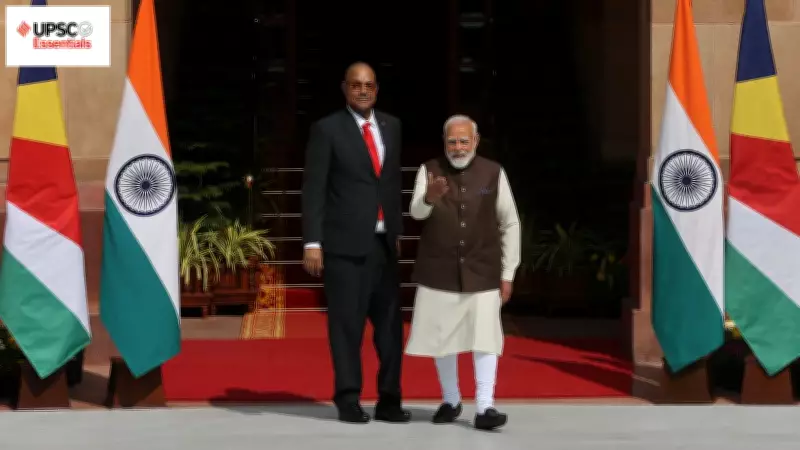
Question 1: Discuss the Strategic Significance of India-Seychelles Relations in the Context of India’s Indo-Pacific Vision
Relevance: This question aligns with themes such as India and its neighbourhood, the Indian Ocean Region (IOR), and Indo-Pacific policy. It gains importance amid China's expanding presence in the IOR, India's SAGAR doctrine, the Colombo Security Conclave, and broader maritime security concerns.

Note: This is not a model UPSC answer but a framework to guide your thought process for crafting comprehensive responses.
Introduction: The relationship between India and Seychelles transcends mere diplomatic exchanges, rooted in historical ties, cultural intermingling, and shared democratic values. As maritime neighbours, Seychelles holds a pivotal role in advancing India's MAHASAGAR Vision, which emphasizes maritime cooperation and regional stability in the Indo-Pacific.
Body: Incorporate the following points to enrich your answer:
- India and Seychelles have developed a robust architecture of defence and security cooperation, crucial for combating piracy and economic offences in the strategic Indian Ocean region.
- Their ties are people-centric, contributing significantly to peace, security, and stability in the Western Indian Ocean Region.
- Recent developments highlight enhanced collaboration in renewable energy, climate solutions, marine research, capacity-building, and data-sharing initiatives.
- Seychelles' full membership in the Colombo Security Conclave strengthens regional maritime security efforts, alongside key agreements like the Joint Vision for Sustainability, Economic Growth and Security through Enhanced Linkages (SESEL).
- Seven Memoranda of Understanding (MoUs) were signed, covering areas such as pharmacopoeial cooperation, meteorological collaboration, cultural exchanges, digital transformation, ocean observation, and civil servant training.
Conclusion: The Ministry of External Affairs reaffirmed the special partnership between India and Seychelles, underscored by a $175 million Special Economic Package. This support aims to address Seychelles' developmental needs in public housing, infrastructure, mobility, capacity-building, and maritime security, marking a milestone during the 50th anniversary of diplomatic relations.
Question 2: “Sikkim’s Integration into India Serves as a Distinct Example of the Confluence of Democratic Aspirations and Strategic Statecraft.” Discuss This Statement in the Context of India’s Federal Structure
Relevance: This topic pertains to the functions and responsibilities of the Union and States, with a focus on constitutional provisions such as Article 2, Article 371F, and the 35th and 36th Constitutional Amendments.
Note: This section provides a thought process to integrate into your answers, not a definitive model response.
Introduction: Sikkim's journey from a British-influenced kingdom to integration into India illustrates a complex interplay of democratic movements and strategic governance. Early British engagements, like the Treaty of Titalia in 1817, established Sikkim as a client state, setting the stage for future political transformations.
Body: Consider these points for a detailed analysis:

- Historical tensions, including the Anglo–Sikkimese War of 1861 and internal conflicts among Lepcha, Bhutia, and Nepali communities, shaped Sikkim's political landscape.
- The Indo–Sikkim Treaty of 1950 granted India control over external affairs, defence, and communications while allowing internal autonomy, but growing dissatisfaction among the Nepali-speaking majority led to demands for democratic reforms.
- The political crisis peaked in 1973 with widespread protests, culminating in the Tripartite Agreement that curtailed the monarchy's powers and increased Indian involvement.
- The 36th Constitutional Amendment in 1975 formally integrated Sikkim as India's twenty-second state, ending its monarchy and aligning it with India's federal structure, ensuring political stability and economic development.
Conclusion: Since integration, Sikkim has played a vital role in India's defence and foreign policy in the Himalayan region, exemplifying how democratic aspirations and strategic statecraft can converge within India's constitutional framework.
Points to Ponder
Reflect on India's relations with other Indian Ocean Island Countries and the broader implications for maritime security. Additionally, explore the integration of other princely states into India to draw comparative insights.
This practice session aims to deepen your understanding and enhance your answer-writing proficiency for the UPSC Mains examination. Stay updated with more resources and previous year questions to further solidify your preparation.