Student Volunteers Bring Order to Chennai Metro's Busiest Hub
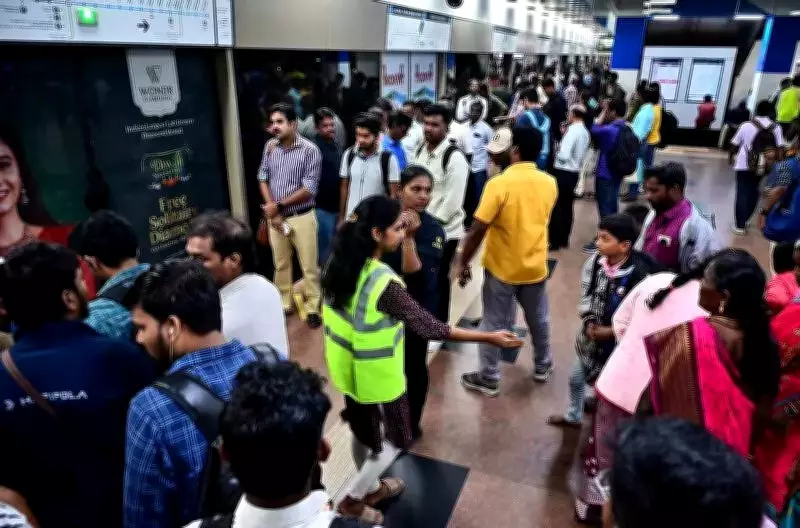
At the typically chaotic Central Metro station in Chennai, a quiet revolution is unfolding on Platforms 5 and 6. Amid the morning rush, sociology students Khushi and Anita stand calmly at the train doors, gently holding back commuters who rush to board and urging them to form orderly queues while allowing passengers to alight first.
Academic Training Meets Real-World Application
"It's fascinating to connect with people from diverse backgrounds, and our academic training in sociology genuinely helps us interact with them effectively," explained Khushi. Her fellow volunteer Anita added that most commuters cooperate willingly once the basic rules are clearly explained to them.
These two students are part of a larger contingent of 64 volunteers from Sri Kanyaka Parameswari College who have been strategically deployed at Chennai's busiest metro interchange. This innovative crowd management initiative was launched by Chennai Metro Rail Limited (CMRL) after officials observed that disorderly boarding practices were significantly increasing train dwell times and disrupting scheduled operations during peak hours.

Structured Programme with Clear Objectives
The student volunteers regulate passenger movement on the Wimco Nagar–Airport line platforms between 8 AM and 11 AM on alternate days. Their comprehensive responsibilities extend beyond simple crowd control to include guiding commuters on optimal routes, actively promoting queue discipline, and ensuring orderly boarding and alighting procedures.
Before their deployment, all volunteers underwent specialized training in crowd handling techniques, effective passenger engagement strategies, and detailed metro regulations. This preparation has proven crucial to their success in managing one of the city's most challenging transit environments.
Beyond Classroom Learning
Despite the pressures of the ongoing exam season, numerous students have described their volunteering experience as profoundly rewarding. Bummika B, the college's cultural secretary, emphasized how the programme offers invaluable learning opportunities that extend far beyond traditional classroom settings.
"This initiative has significantly helped improve my communication and leadership skills, and I can already observe tangible changes occurring on the platforms," she noted with evident satisfaction.
Visible Behavioral Transformation
M Pavithra, a dedicated member of the specialized women's team known as the pink squad deployed for crowd management duties, reported that commuter behavior began transforming within mere days of the programme's implementation.
"Earlier, these platforms were consistently chaotic and disorganized. Now, many passengers independently check the platform markings and voluntarily line up without prompting," she observed, highlighting the programme's rapid impact.
Official Recognition and Future Expansion
Station controller Suresh A confirmed that students have proven more effective than regular staff in spreading awareness about proper metro etiquette. "Passengers consistently listen better to them and respond more positively to their guidance," he acknowledged.
CMRL officials estimate that approximately 70% of commuters now conscientiously follow platform guidelines, though they note that escalator etiquette improvements are progressing at a somewhat slower pace. Encouraged by these positive results, CMRL plans to extend the successful programme to Alandur and Teynampet stations for an additional three months, with NCC-trained students being deployed during evening peak hours to maintain consistency.
This innovative partnership between educational institutions and public transportation authorities demonstrates how structured volunteer programmes can effectively address urban mobility challenges while providing students with practical, skill-enhancing experiences that benefit both individuals and the broader community.