India's Education System Undergoes Fundamental Transformation Under NEP 2020
India's education landscape is experiencing a profound and systematic transformation driven by the implementation of the National Education Policy 2020. A significant paradigm shift is occurring where employability and entrepreneurship are no longer considered peripheral additions but have become essential, non-negotiable outcomes of the educational process.
Mindset Shift Across All Stakeholders
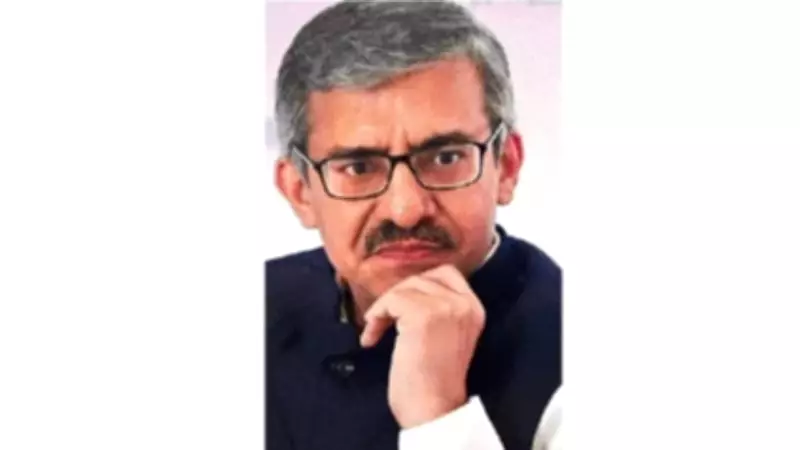
Vineet Joshi, Secretary of Higher Education, emphasized this revolutionary change during the TOI JPMorgan Chase roundtable on jobs and skills. "Now, everywhere you go — whether to schools, colleges, universities, or even research institutions — you find people discussing initiatives connected to everyday requirements and practical applications," Joshi stated. He argued that the policy has successfully catalyzed a major shift in mindset among all stakeholders, including educators, parents, students, and government institutions.
This represents a departure from traditional academic priorities toward a more holistic, application-oriented approach. The government has established several enabling frameworks to support this transition, most notably the National Credit Framework and specialized entrepreneurship-oriented degree programs. Educational regulators are not merely permitting such innovations but are actively encouraging institutions to adopt and integrate them into their core offerings.

Balancing Academic Rigor with Practical Skills
Despite this encouraging progress, Joshi acknowledged that the Indian education system remains heavily weighted toward academic content. Even in institutions where skill-based learning has been introduced, the majority of instructional time continues to be devoted to conventional academic subjects and theoretical knowledge. This highlights the ongoing challenge of achieving an optimal balance between foundational education and practical skill development.
Joshi cautioned against curriculum reforms that attempt to chase every short-term market fluctuation. "Today there is some requirement, you study accordingly, and then tomorrow something else emerges. What is needed more are individuals who are exceptionally flexible, possessing the ability to learn, unlearn, and relearn continuously," he explained. This philosophy emphasizes developing adaptable learners over narrowly specialized technicians.
Real-World Examples of Adaptive Success
The Secretary illustrated this principle with a compelling example from India's premier institutions. He highlighted how top students from the Indian Institutes of Technology frequently enter fields like finance without any formal academic preparation in those disciplines. Despite this apparent mismatch, they often achieve remarkable success due to their cultivated ability to adapt, analyze complex problems, and perform under diverse circumstances.
This demonstrates that the ultimate goal of education reform under NEP 2020 is not merely to teach specific skills but to foster cognitive flexibility and problem-solving capabilities that transcend particular industries or job roles. The policy envisions creating graduates who can navigate an unpredictable economic landscape with confidence and competence.
The transformation is ongoing, with institutions across the country gradually aligning their structures, pedagogies, and assessment methods with these new priorities. While challenges remain in implementation and cultural adaptation, the direction is clear: India is building an education system designed for the demands of the 21st-century global economy.