Kerala Pioneers Inclusive Assessment Framework for Higher Education
Thiruvananthapuram: In a landmark move toward educational equity, the Higher Education Reforms Implementation Cell has developed comprehensive guidelines to establish specialized assessment mechanisms for students with disabilities across universities. This initiative represents a significant departure from traditional uniform evaluation methods that have long created barriers for diverse learners.
Minister Announces Transformative Educational Reforms
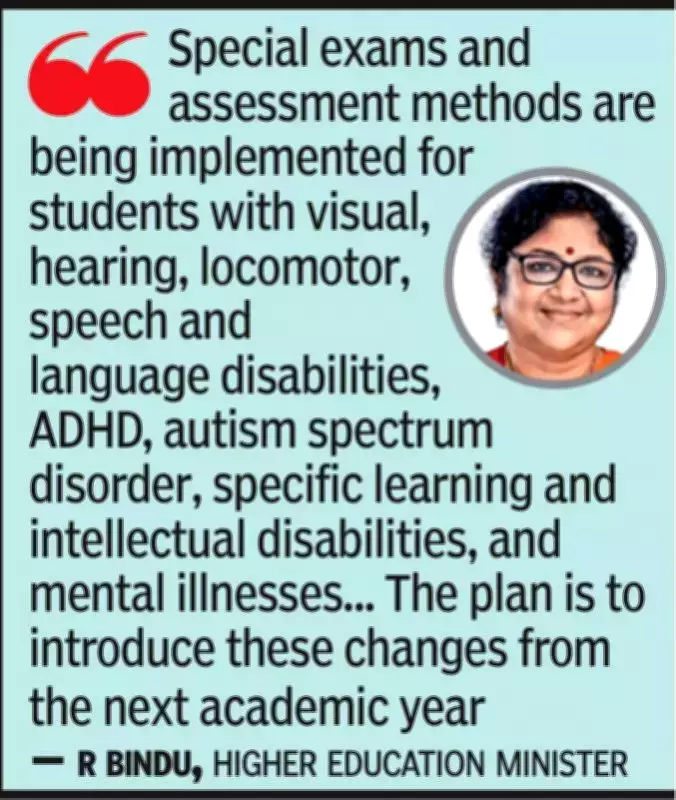
Higher Education Minister R Bindu revealed at a Tuesday press conference that these detailed guidelines will be distributed to universities for immediate implementation. The reforms are integrated within the recently launched four-year undergraduate programme (FYUGP), marking a systematic approach to inclusive education rather than piecemeal accommodations.
"The conventional practice of applying identical assessment methods to all students creates substantial limitations for persons with disabilities," Minister Bindu emphasized. "Traditional evaluation formats—including time-restricted written exams, oral presentations, standard practical tests, and assessments demanding rapid responses—present structural obstacles that have nothing to do with students' knowledge or capabilities."

Comprehensive Disability Categories Addressed
The new framework specifically addresses multiple disability categories with tailored assessment approaches:
- Visual disabilities including blindness and low vision
- Hearing disabilities encompassing deaf and hard of hearing individuals
- Locomotor disabilities affecting physical movement
- Speech and language disabilities
- Attention deficit hyperactivity disorder (ADHD)
- Autism spectrum disorder (ASD)
- Specific learning disabilities (SLD)
- Intellectual disabilities
- Mental illnesses requiring specialized assessment approaches
Minister Bindu confirmed that discussions about these inclusive assessment methods began alongside FYUGP implementation planning, with the goal of introducing these transformative changes starting from the next academic year.
Technology-Driven Assessment Innovations
The University Grants Commission has published foundational documents that will enable universities and higher education institutions to develop their own customized guidelines. The reforms will affect both continuous internal assessments and semester examinations, introducing flexible alternatives to traditional written submissions.
"Our approach maximizes technological solutions wherever feasible," Bindu explained. "For mathematics assessments, a student with locomotor disabilities who experiences writing challenges can demonstrate problem-solving abilities through digital writing boards or screen-recorded equation solutions."
In chemistry courses, students with hearing impairments could create visual modules explaining chemical bonding or produce instructional videos with comprehensive subtitles. The assessment flexibility extends across disciplines, recognizing that different subjects require different accommodation strategies.
Multi-Faceted Accommodation Framework
The guidelines establish a comprehensive accommodation system including:
- Extended time allowances for semester examinations
- Permission for assistive devices during assessments
- Alternative question formats tailored to different disabilities
- Specially equipped examination hall facilities
- Continuation of the existing scribe system with enhanced guidelines
Teachers will receive significant autonomy to select the most appropriate assessment methods based on individual student backgrounds and institutional resources. To support this transition, specialized training programs will be developed for faculty members, ensuring they possess the skills and understanding to implement these inclusive assessment practices effectively.

This initiative represents Kerala's commitment to creating an educational environment where assessment measures true learning rather than testing conformity to standardized evaluation methods. By recognizing that disability accommodations represent educational innovation rather than compromise, the state positions itself at the forefront of inclusive higher education reform in India.