Inside India's Metric Raj: How Global Rankings Are Reshaping Higher Education
In recent years, India's higher education landscape has undergone a profound transformation, driven by the relentless pursuit of global recognition. This phenomenon, often termed the "Metric Raj," refers to the increasing influence of international university rankings on policy-making, institutional strategies, and academic priorities across the country. As Indian universities strive to climb the charts, the ripple effects are reshaping everything from research funding to student admissions.
The Rise of Ranking-Driven Policies
Government initiatives, such as the Institutions of Eminence (IoE) scheme, exemplify this shift. Launched to elevate select universities into world-class institutions, the program ties funding and autonomy to performance metrics aligned with global benchmarks. Institutions like the Indian Institutes of Technology (IITs) and the University of Delhi have revamped their curricula, boosted research output, and forged international collaborations to meet these standards. This focus on rankings has spurred a competitive environment, pushing universities to prioritize areas that score highly in evaluations, such as publications in top-tier journals and faculty citations.
Impact on Institutional Reforms
At the institutional level, the Metric Raj has catalyzed significant reforms. Universities are increasingly adopting data-driven approaches to track and improve their performance. For instance, many have established dedicated offices for ranking compliance, tasked with monitoring metrics like student-faculty ratios, international diversity, and industry income. This has led to enhanced infrastructure, such as state-of-the-art laboratories and digital libraries, aimed at boosting research capabilities. However, critics argue that this emphasis on quantifiable outcomes may overshadow holistic education, potentially narrowing academic focus to measurable parameters at the expense of critical thinking and innovation.

Challenges and Criticisms
Despite the progress, the Metric Raj faces scrutiny. Some educators contend that global rankings, often dominated by Western institutions, may not fully capture the unique socio-economic contexts of Indian higher education. There are concerns about a "one-size-fits-all" approach, where universities might prioritize short-term gains over long-term sustainability. Additionally, the pressure to perform can lead to ethical dilemmas, such as the temptation to manipulate data or overemphasize research in English-language publications, potentially marginalizing regional scholarship. These challenges highlight the need for a balanced strategy that integrates global standards with local relevance.
Future Prospects and Global Integration
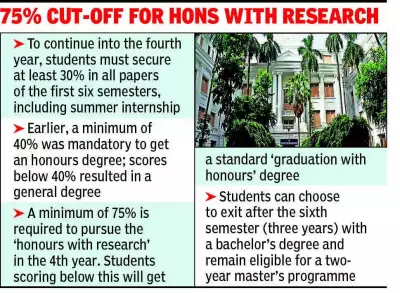
Looking ahead, India's engagement with global rankings is set to deepen, with implications for its position in the international education arena. The National Education Policy (NEP) 2020 further reinforces this trend by advocating for multidisciplinary education and research excellence, aligning with ranking criteria. As Indian universities continue to adapt, there is potential for increased global partnerships and student exchanges, fostering a more interconnected academic community. Ultimately, the Metric Raj represents a pivotal chapter in India's higher education evolution, where the quest for global recognition is driving both innovation and introspection in equal measure.