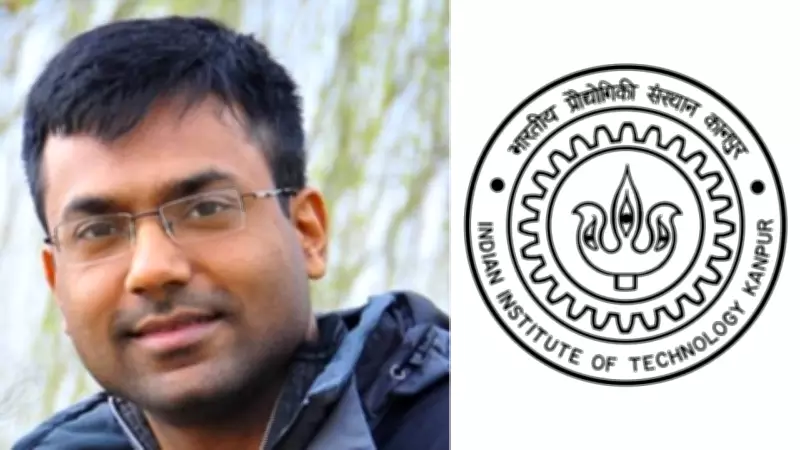
From IIT-JEE Topper to Pioneering Neuroscientist: Nitin Gupta's Remarkable Career Shift
In the year 2000, when Nitin Gupta achieved the extraordinary feat of securing All India Rank 1 in the intensely competitive IIT-JEE examination and subsequently enrolled at the prestigious Indian Institute of Technology Kanpur, the anticipated trajectory seemed clear. The expectation was that this brilliant student would follow the well-trodden path of becoming a high-achieving engineer, likely destined for a prominent career in the technology industry.
Instead, Gupta's professional journey took a quieter, more intellectually demanding direction—leading him into sophisticated laboratories, complex neural circuits, and the profound mysteries of how the brain generates behavior. Today, as an Associate Professor at IIT Kanpur, he operates at the fascinating intersection of neuroscience, computational biology, and behavioral science, investigating how fundamental sensory signals—including something as basic as smell—are transformed into decisions and actions.
An Early Departure from Conventional Expectations
Gupta completed his BTech in Computer Science from IIT Kanpur in 2004. However, even during his undergraduate years, his intellectual curiosity had already begun extending beyond traditional engineering boundaries. This intellectual evolution gained concrete form at the University of California San Diego, where he pursued a PhD in Bioinformatics and Systems Biology under the guidance of Professor Pavel Pevzner.

His doctoral research focused on computational mass spectrometry, where he developed sophisticated algorithms for protein identification and statistical validation. This significant work contributed to early advancements in the emerging field of proteogenomics, aimed at refining genome annotations and enhancing understanding of protein-level biological processes.
Concurrent industry experiences at Amgen and Genomatica provided him with valuable exposure to both large-scale pharmaceutical research and startup-driven biotechnology ventures. These experiences effectively grounded his computational expertise within practical, applied biological systems, creating a strong foundation for his future scientific explorations.
Transitioning from Computational Biology to Neuroscience
Gupta's pivotal shift into neuroscience commenced with a brief postdoctoral phase at UCSD, where he worked in the cognitive neuroscience laboratory of Professor Adam Aron. During this period, he employed Transcranial Magnetic Stimulation (TMS) to investigate motivation-linked signals within the human motor system. This marked a substantial transition from molecular data analysis to the direct study of brain function and cognition.
A more extensive postdoctoral tenure at the National Institutes of Health (NIH) between 2010 and 2014 significantly deepened this scientific transition. Working within the Laboratory for Sensory Coding and Neural Ensembles under Dr. Mark Stopfer, Gupta concentrated on electrophysiology, specifically examining how patterns of spiking activity across neuronal populations give rise to sensory perception.
This critical phase represented both a methodological and conceptual pivot: moving from analyzing biological datasets to directly interrogating and understanding neural circuits and their functional mechanisms.
Establishing a Neuroscience Research Program at IIT Kanpur
In 2014, Gupta returned to his alma mater, IIT Kanpur, as an Assistant Professor and was subsequently promoted to Associate Professor in 2020. Since his return, he has successfully established and developed a comprehensive research program that seamlessly integrates Neuroscience with Computational Biology, combining rigorous experimental approaches with sophisticated computational methodologies.
His research fundamentally focuses on understanding how neural circuits generate behavior, with particular emphasis on how organisms process sensory inputs and translate them into appropriate behavioral responses.

Decoding Behavior Through Olfactory and Sensory Systems
A central and significant strand of Gupta's research examines olfaction (the sense of smell) using insect models, particularly mosquitoes. His laboratory investigates how neural circuits distinguish between competing sensory cues—such as human odors versus chemical repellents—and how these distinct signals translate into behavioral outcomes like attraction or avoidance.
This innovative approach enables precise mapping between neural activity patterns and behavioral outputs, providing valuable insights that extend beyond simple organisms to address broader, fundamental questions in brain science. Furthermore, this research carries important implications for public health, particularly in understanding vector behavior and developing more effective disease control strategies.
Extending Neuroscience Beyond the Laboratory: Mental Health Applications
Alongside his core research endeavors, Gupta has actively engaged with practical applications in mental health. He has contributed to developing TreadWill, a digital cognitive behavioral therapy (CBT) platform specifically designed to make evidence-based mental health interventions more accessible and widely available.
His teaching and research activities now also encompass mental health and stress management topics, reflecting a meaningful shift toward applying neuroscience principles in real-world, socially relevant contexts.
A Career Defined by First Principles Rather Than Convention
Gupta's unconventional professional path, which has taken him from securing the top rank in the IIT-JEE to becoming an accomplished neuroscientist, represents a significant departure from the traditional career trajectories typically followed by engineering toppers. His journey has consistently revolved around addressing a fundamental scientific question: How does the brain convert sensory signals into actions and decisions?
This persistent investigation, pursued through ventures into diverse scientific fields including computation, biology, and behavioral science, highlights an important and evolving shift within contemporary scientific research paradigms. Gupta's career exemplifies how interdisciplinary approaches and intellectual curiosity can lead to groundbreaking contributions at the frontiers of science.