Higher education is undergoing a visible transformation. While not abrupt, the shift is evident in how students learn and what institutions prioritize. A few years ago, strong theoretical grounding sufficed, with practical application deferred to the workplace. That gap is now harder to ignore. As roles evolve, especially with the growing use of artificial intelligence, there is a clearer expectation that students should apply what they know. This is influencing universities to design academic environments emphasizing application, adaptability, and exposure beyond the classroom.
AI as Part of the Learning Environment
Artificial intelligence is no longer confined to being a subject of study. In many institutions, it is gradually becoming part of the learning process itself. Adaptive systems, data-led feedback, and AI-enabled tools are used to understand how students learn and where they need support. This allows for a more responsive approach, where learning is not entirely uniform across a classroom. While these systems are still evolving, they are starting to shape a more personalized academic experience that extends beyond fixed teaching formats.
A Stronger Focus on Experiential Learning
There is a clear move towards application-driven learning. Projects, internships, and simulations are becoming central to how students engage with their subjects. Instead of studying concepts in isolation, they work through real or near-real scenarios where outcomes are not always straightforward. This shift improves understanding and builds familiarity with ambiguity, decision-making, and problem-solving—skills increasingly important in professional settings.

Rethinking Campus Infrastructure
Infrastructure is also evolving. Beyond classrooms and lecture halls, there is greater focus on spaces that enable collaboration, experimentation, and independent work. Laboratories, digital resources, and innovation centers are used more actively as part of the learning process, rather than remaining support facilities. The idea is less about creating advanced spaces and more about how effectively those spaces encourage exploration and application.
The Role of Global Exposure
International collaboration is becoming another important part of higher education. Partnerships with institutions in other countries enable student exchanges, joint research, and cross-cultural learning experiences. These interactions offer exposure to different academic systems and ways of thinking, influencing how students approach problems. As work environments become more global, this kind of exposure is increasingly relevant.
How Institutions Are Responding to These Shifts
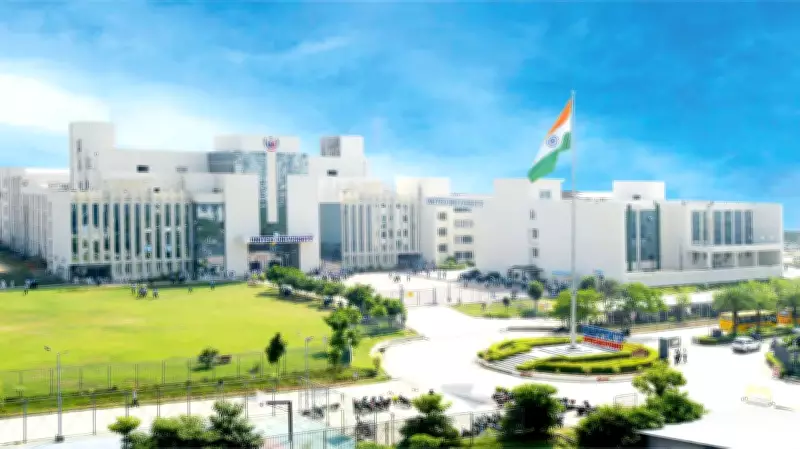
Some universities are beginning to bring these elements together into a cohesive academic approach. United University, Prayagraj, is one example, integrating AI-enabled learning, experiential formats, and global exposure within its academic structure. The university has incorporated artificial intelligence into its classrooms and learning systems, allowing for more data-informed academic support. At the same time, there is a consistent emphasis on experiential learning through projects, internships, and simulation-based assignments that encourage practical application. The campus includes laboratories, digital learning resources, spaces for research and innovation, and incubation support for students interested in developing early-stage ideas. In terms of global engagement, the university has established collaborations with institutions across the Philippines, Thailand, Indonesia, and the UAE, enabling exchange programs, joint initiatives, and broader academic interaction. Alongside academics, there is also a focus on sports, cultural activities, and creative engagement, contributing to overall student development.

What This Shift Means for Higher Education
Taken together, these changes point towards a broader shift in how education is approached. The emphasis is shifting from knowledge acquisition to application, adaptability, and exposure. Learning environments are becoming more dynamic, and expectations from students are gradually expanding. For many, this makes the learning process more demanding but also more aligned with real-world conditions. As higher education continues to evolve, the focus will likely remain on how effectively institutions prepare students not just to understand their fields but to work within them.
Disclaimer: This article has been produced on behalf of United University by Times Internet's Spotlight team.