Gandhinagar's Transformation into Gujarat's Premier Government Job Coaching Hub
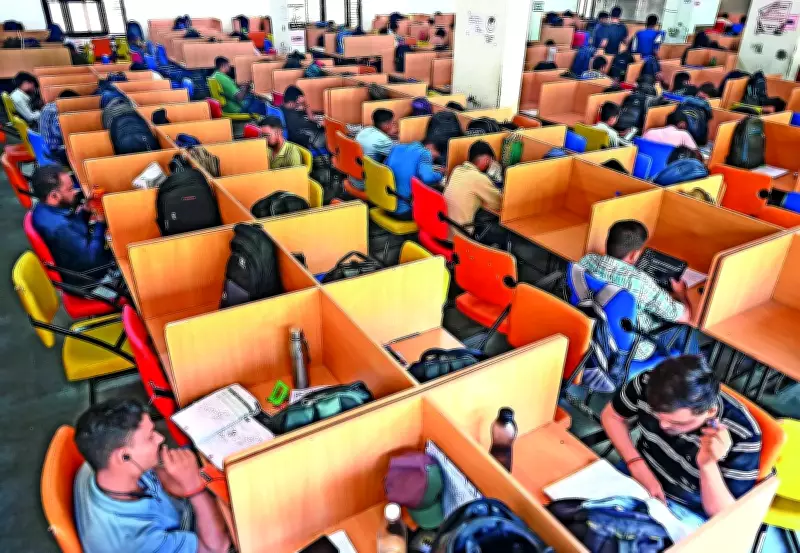
Every evening, as dusk settles over Gandhinagar's Sector 6, a dozen private reading rooms begin filling with determined students. These young aspirants arrive burdened with books and fueled by a singular ambition: securing a coveted government position. This daily ritual represents just one facet of a comprehensive ecosystem that has transformed Gujarat's capital into the state's undisputed nerve center for competitive exam preparation.
The Dawn-to-Midnight Grind for Government Employment
The preparation journey for these students is both rigorous and prolonged, typically spanning four to six years of regimented study. This structured approach is orchestrated by a coaching industry that has firmly entrenched itself within Gandhinagar's otherwise sedate bureaucratic landscape. Students migrate from rural talukas across Gujarat, while entire neighborhoods reshape themselves to accommodate and profit from this growing population of sarkari job seekers.
Families often divert life savings to cover coaching fees, lodging, and essential expenses, demonstrating the significant financial investment behind this careerist ambition. The proximity to recruitment institutions provides psychological motivation, with Gandhinagar housing key job-producing machinery including the Gujarat Public Service Commission (GPSC), Gujarat Subordinate Service Selection Board (GSSSB), and Police Bharti Board.

Government Service Returns as Primary Career Choice
A remarkable structural shift has occurred in career preferences among Gujarat's youth. "Government service used to be the third or fourth choice in Gujarat," observes Pankaj Kotak, a former bureaucrat and real estate expert. "The brightest traditionally pursued medicine, engineering, pharmacy, or commerce tracks like MBA, CA, and CS. Now, the first preference is a government job—even doctors and engineers actively seek these positions."
Kotak attributes this transformation to growing perceptions of instability in once-secure professions. "Setting up clinics has become challenging due to expensive real estate, while the private sector no longer guarantees steady returns," he explains. This changing landscape has made government employment increasingly attractive for its perceived security and stability.
The Infrastructure Supporting Aspirants
Today, Gandhinagar functions as a major coaching hub with more than 180 institutes catering to government job aspirants. The "Kudasan-Sargasan" stretch operates as the primary nerve center, hosting over 30 institutes within a 5-kilometer radius. Different areas specialize in various exam categories: Infocity focuses on management and technology-based exams, while older sectors like 6, 11, 16, and 21 retain their dominance in banking and local competitive exam preparation.
The coaching market organizes around three major streams. The largest segment prepares candidates for Gujarat state services through GPSC exams for Class 1 and 2 officers (deputy collectors, DySPs, mamlatdars, section officers) and high-volume Class 3 positions. A second cluster caters to banking and insurance aspirants targeting IBPS, SBI, and RBI exams, along with specialized tests for NABARD and Railway Recruitment Boards. The third pillar focuses on uniformed services, covering state police recruitments and national-level defense examinations.
Community Support and Residential Infrastructure
A defining feature of Gandhinagar's ecosystem is the robust support from community organizations. Communities including Patidars, Anjana Patels, Thakors, Prajapatis, Ahirs, Solanki Rajputs, Vankars, and Bharwads have established hostels that function as residential coaching centers. The Patidar community has been particularly proactive, with facilities like Sardardham near Vaishnodevi Circle and Vishv Umiya Dham operating educational centers in Gandhinagar and Ahmedabad's Nikol area.

According to Vishv Umiyadham Foundation president R P Patel, student demand has increased by 25%. "Our operations are entirely based on social service and community welfare," he states. "By absorbing substantial costs, we ensure quality exam preparation remains accessible to all." The foundation dedicates approximately 70% of its library resource budget to high-speed internet and digital reading rooms, with the remaining 30% allocated to traditional book procurement and maintenance.
The Economics of Aspiration
Coaching institutes charge annual fees ranging from Rs 15,000 to Rs 30,000 for general government exams, Rs 20,000 to Rs 50,000 for civil services preparation, and significantly higher amounts for premium programs. Meanwhile, private reading rooms command up to Rs 2,800 monthly—a substantial expense for many students.
Jigar Desai, a BCom graduate from Mehsana, exemplifies the financial challenges aspirants face. His family's dairy and farming income has become unstable due to fluctuating milk prices and unreliable minimum support prices for crops. "The private sector was shaken during COVID, and jobs disappeared, but government salaries continued," he explains, highlighting why government employment has become increasingly attractive.
The PG Economy and Future Projections
The sustained demand for paying guest facilities has created a thriving PG economy in Gandhinagar over the past five years. Kiran Patel of Credai Gandhinagar notes this demand is driven by both university students and exam aspirants. Sunil Dareja, who operates a PG facility, estimates approximately 100 dedicated service providers in the city and surrounding areas, while another operator, Saurabh Purohit, places the PG resident population at over 70,000.
The Gujarat government plans to provide over 2 lakh jobs by 2033 to fill vacancies caused by retirements. According to a 10-year recruitment calendar, approximately 20,699 people will be recruited annually across state departments and district administrations. The GSSSB alone will recruit around 2 lakh candidates over the next decade, with annual intake rising to 15,000-18,000 positions.
However, some officials express concerns about preparation timelines. A senior Gujarat administration department official notes that approximately 70% of candidates begin preparation only after graduation, potentially losing crucial early years. Additionally, there are allegations about emerging nexuses between some coaching centers and advocates who exploit aspirants through rumors and frivolous litigation.
Despite these challenges, Gandhinagar's transformation into Gujarat's premier government job coaching hub appears complete. From community-run hostels to specialized coaching clusters and a robust PG economy, the city has developed a comprehensive ecosystem supporting thousands of aspirants in their pursuit of government employment—a pursuit that has regained its status as the primary career ambition for Gujarat's youth.