Elon Musk's Wisdom: The Critical Difference Between Schooling and True Education
In contemporary society, education is frequently associated with degrees, prestigious universities, and formal learning systems. Many individuals form judgments about others based on their alma mater or academic credentials. However, this perspective often fails to capture the complete essence of learning. Elon Musk's insightful quote brings attention to a fundamental yet crucial distinction between education and schooling. It suggests that education transcends the confines of classrooms, textbooks, and esteemed institutions.
Understanding the Meaning Behind Elon Musk's Quote
Elon Musk, the visionary leader behind companies like Tesla and SpaceX, has frequently discussed unconventional learning methods. His personal journey reflects a blend of formal education and autonomous learning. The quote emphasizes that while schooling provides structure, numerous alternative pathways to knowledge exist. This concept gains significance in today's digital era, where online courses, digital platforms, and hands-on experiences have democratized access to information. It prompts a straightforward question: Is education defined by the institution attended, or by the knowledge acquired and its practical application?
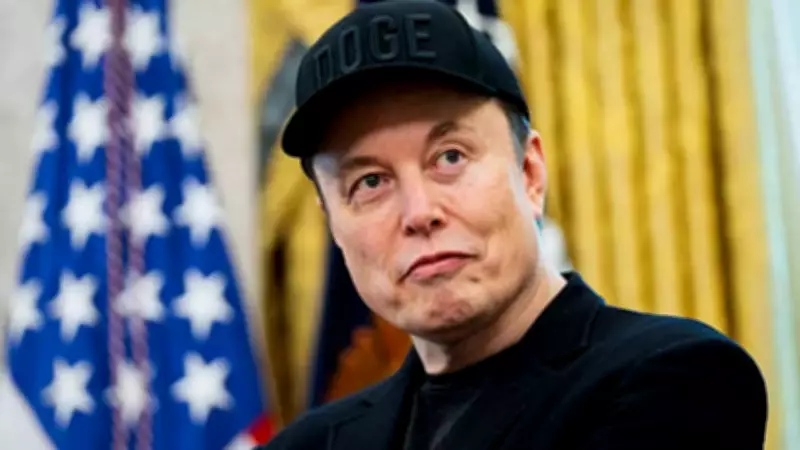
Quote of the day by Elon Musk: “Don't confuse schooling with education. I didn't go to Harvard but the people that work for me did.”
The quote clarifies that two commonly conflated ideas are not identical. Schooling refers to formal enrollment in educational institutions, adherence to prescribed curricula, and attainment of degrees or certifications. In contrast, education is a broader concept encompassing learning from experiences, reading, observation, and problem-solving. Musk's statement, "Don't confuse schooling with education," implies that formal learning is merely one component of the educational process. Attending a renowned university does not guarantee a comprehensive education; true education depends on the depth of knowledge and its effective utilization.

The second part of the quote adds another layer, illustrating that attendance at a specific school does not always correlate with real-world success. Skills, innovative ideas, and practical performance often hold greater importance than institutional affiliations.
Schooling Versus Real-World Learning
Formal schooling offers distinct advantages, including structured learning environments, access to expert instructors, and recognized qualifications. It establishes foundational knowledge in subjects such as mathematics, science, and languages. However, real-world learning operates differently, involving the resolution of actual problems, navigation of challenges, and experiential growth. This type of learning may lack a predefined path but enhances understanding of how knowledge applies in practical scenarios.
Musk's quote addresses this dichotomy, suggesting that education is about the effective application of learning, whereas schooling focuses on the acquisition process.
The Role of Self-Learning in Modern Education
In recent years, self-learning has gained prominence. With internet access, individuals can explore new subjects, study diverse fields, and investigate ideas without classroom constraints. Elon Musk has publicly advocated for extensive reading and learning from varied sources, demonstrating that education can flourish outside traditional systems.
Self-learning enables personalized focus on interests and skill development at one's own pace. It fosters a lifelong curiosity, which is essential for intellectual growth and adaptability.
Why Formal Degrees Are Not the Sole Measure of Knowledge
Degrees serve as common metrics for educational attainment, indicating completion of structured programs and adherence to academic standards. Yet, they do not always reflect comprehensive competency. Examinations frequently overlook skills like creativity, critical problem-solving, and adaptability, which are typically honed through repeated practice and experience.
The quote encourages looking beyond formal qualifications to assess genuine capabilities, warning that an overemphasis on degrees can yield an incomplete picture of an individual's potential.

A Closer Look at Elon Musk’s Educational Journey
Elon Musk attended the University of Pennsylvania, earning degrees in physics and economics. He later enrolled in a PhD program at Stanford University but departed shortly to pursue entrepreneurial ventures. This decision marked a shift from formal academia to real-world application, highlighting that hands-on experience often shapes practical knowledge more profoundly than theoretical study alone.
His path illustrates that multiple routes to education exist, with formal learning providing a foundation but experiential learning driving innovation and problem-solving.
The Role of Curiosity in Lifelong Learning
Curiosity is a powerful driver of learning, motivating individuals to seek knowledge, ask questions, and discover solutions. Unlike formal schooling with rigid curricula, curiosity facilitates flexible and self-directed education. Musk's quote indirectly supports this notion by distinguishing schooling from education, underscoring the importance of an inquisitive mindset and continuous learning.
Individuals who maintain curiosity often engage in lifelong education, regardless of formal academic involvement.
Learning in the Modern Digital Age
The landscape of learning has transformed significantly. Digital libraries, online educational platforms, and instructional videos have expanded access to information, blurring the lines between formal and informal education. People can now learn from diverse sources, including online courses, tutorials, and real-world projects.
This evolution aligns perfectly with Elon Musk's quote, reflecting an era where education is no longer confined to traditional systems but is enriched by digital resources and experiential opportunities.
Skills That Extend Beyond Textbooks
Many essential skills in today's workforce, such as communication, teamwork, critical thinking, and adaptability, are not always taught in formal education settings. These competencies are typically developed through experience rather than academic instruction, proving vital for collaboration and problem-solving in professional environments.
The quote highlights the significance of these skills, implying that education encompasses more than mere academic knowledge—it includes practical abilities that enhance real-world effectiveness.
Why This Message Matters Today
As global industries evolve and new skills emerge, the distinction between schooling and education becomes increasingly relevant. Continuous learning is essential for adapting to change and addressing novel challenges. Musk's message serves as a reminder that education does not conclude with a degree; it is an ongoing process of growth and adaptation.
This perspective encourages individuals to embrace lifelong learning, ensuring they remain competitive and capable in a dynamic world.
A Broader View of Success and Learning
While education is often viewed as a pathway to success, the application of knowledge is equally critical. Individuals from varied educational backgrounds can achieve success by cultivating relevant skills and maintaining a proactive attitude. The quote reinforces that there is no single route to education; it can be attained through schooling, self-study, or real-world experiences.
This broader understanding helps recognize that education is not monolithic but multifaceted, shaped by diverse learning methods and personal initiative.
Other Notable Quotes by Elon Musk
- “When something is important enough, you do it even if the odds are not in your favour.”
- “Persistence is very important. You should not give up unless you are forced to give up.”
- “I think it is possible for ordinary people to choose to be extraordinary.”
- “Some people don’t like change, but you need to embrace change if the alternative is disaster.”
A Simple Takeaway from Elon Musk's Quote
Elon Musk's quote delivers a clear and impactful message: schooling and education are not synonymous. Formal education offers structure and foundational knowledge, but true learning extends beyond it. By prioritizing skills, curiosity, and real-world experience, individuals can deepen their understanding and capabilities. The message advocates that degrees are not the ultimate measure of education, emphasizing the importance of continuous knowledge acquisition.
In essence, education is not solely about where one studies; it is about how one learns, evolves, and applies knowledge to influence the surrounding world.
About the Author
TOI Tech Desk
The TOI Tech Desk is a dedicated team of journalists committed to delivering the latest and most relevant news from the world of technology to readers of The Times of India. TOI Tech Desk’s news coverage spans a wide spectrum across gadget launches, gadget reviews, trends, in-depth analysis, exclusive reports and breaking stories that impact technology and the digital universe. Be it how-tos or the latest happenings in AI, cybersecurity, personal gadgets, platforms like WhatsApp, Instagram, Facebook and more; TOI Tech Desk brings the news with accuracy and authenticity.